Review · PHOTOGRAPHY WORKSHOPS & LESSONS
Wildlife Photography Workshop in Richmond Park in London
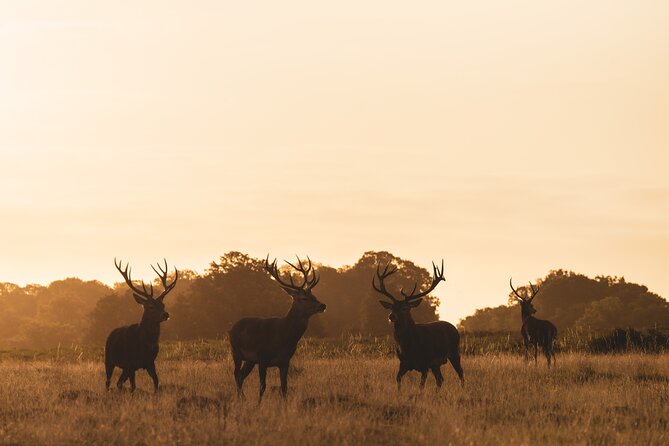
Richmond Park gives this workshop a fine London twist: within a short trip of the city, you are working outdoors among red deer, fallow deer, lakes, oak trees, birch groves, and ferns. Matthew Williams-Ellis teaches you to think about creating a photograph, not simply pointing a camera at an animal. I especially like the evening timing, which brings softer light, and the small maximum group of eight, which should leave room for useful one-to-one help.
I also like that the session works for mixed abilities. Matthew can cover basic camera skills, then move into manual settings, framing, and birds in flight for people who already know their way around a camera. The main caution is practical: this is a walking session in a large park, and the meeting point is at the park entrance, so you must plan your route and your way out before the gates close.
Key points at a glance
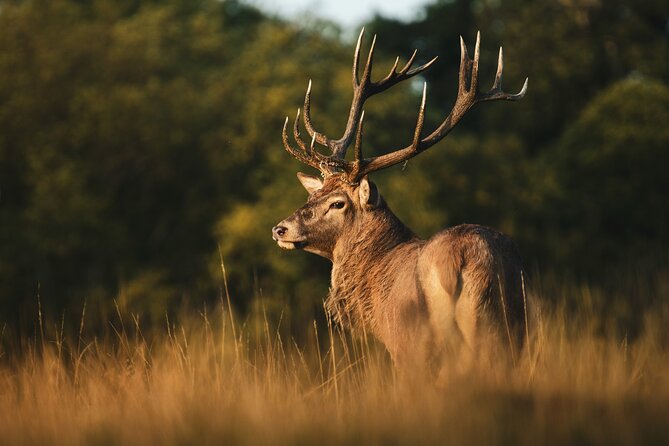
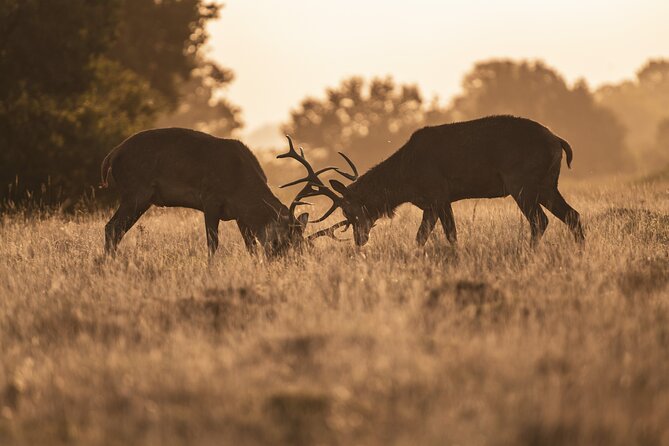
- Red and fallow deer in a royal park: Photograph Richmond Park’s well-known deer with oak trees, silver birch, ferns, and lakes as backdrops.
- Evening light: The later timing is chosen to give you more attractive light for wildlife and nature images.
- Teaching beyond camera buttons: Expect help with composition, framing, lighting, and the thought process behind a strong photograph.
- A small, mixed-ability group: The maximum is eight people, with instruction suited to beginners and more experienced photographers.
- Bird photography may be part of the session: Previous outings have included kestrels, woodpeckers, and a little owl, as well as help with manual settings for birds in flight.
- A three-hour London escape: You make your own way to Queen’s Road, Richmond, then finish back at the meeting point.
Why Richmond Park works so well for wildlife photography
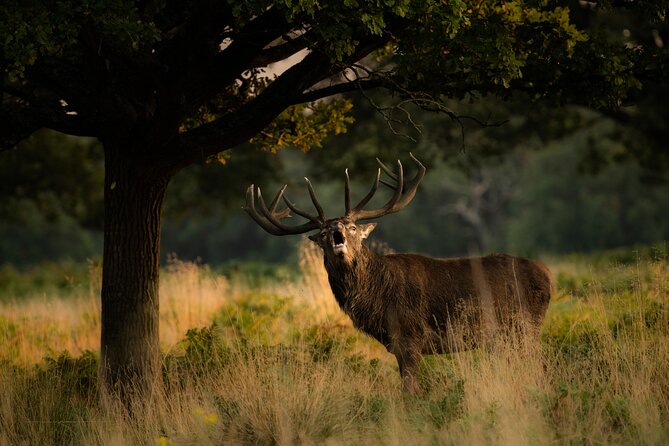
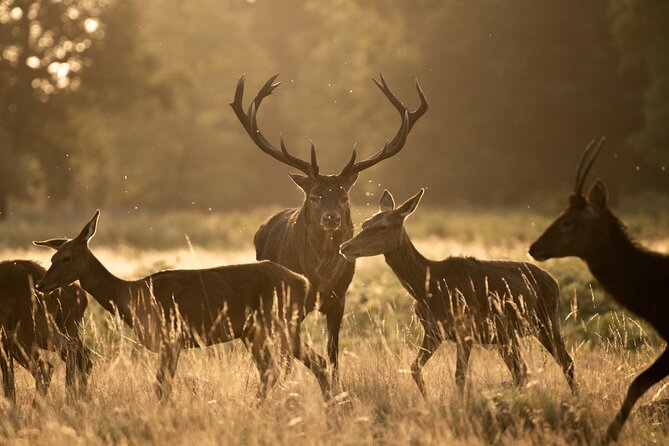
Richmond Park is a rare place to practise wildlife photography without leaving London. You are not confined to a zoo enclosure or a single viewing platform. The park offers open ground, wooded areas, water, and mature trees, giving you several kinds of subject and background during one short session.
The main attraction is the red and fallow deer. They provide the obvious wildlife focus, but they are not the only reason to bring a camera. The park’s silver birch copses, lone oak trees, ferns, and lakes can give your images shape and atmosphere even when an animal is not perfectly positioned.
That matters because good wildlife photography is not only about finding an animal. A deer against a dull background can make a weaker photograph than a smaller subject framed by a clean stand of birch trees or warm evening light. Matthew’s teaching focuses on that choice. He helps you consider where to stand, what to leave out, and how the setting supports the subject.
You should still keep expectations sensible. Wildlife does not perform on demand, and a three-hour walk cannot promise a particular animal or perfect pose. The park setting gives you real opportunities, but patience and luck remain part of the experience.
More Photography Workshops and Lessons in London
- Beginners Photography Course – Small Group Workshop
★ 5.0 · 8 reviews - London Photography Masterclass – Private Photography Lesson
★ 5.0 · 6 reviews - London Smartphone Photography workshop and tour
★ 5.0 · 5 reviews
Meeting Matthew at Queen’s Road
The workshop begins at Queen’s Road, Richmond, TW10 6JJ. You make your own way to the entrance, so this is not a door-to-door London excursion. Check your route before the day and allow time to find the meeting point without rushing into the session.
The activity ends back at the same meeting point. That makes the start and finish easy to understand, but it also creates one important planning task. Richmond Park is large, and the opening hours of individual gates can matter. One participant had difficulty getting out after gates were closed, despite asking about closing times in advance. Take that warning seriously and confirm the practical details before setting off.
The park is near public transport, but the supplied information does not give a specific station, bus route, or walking time. Use the address as your fixed reference point and check the latest transport information on the day. A mobile ticket is provided, and confirmation is sent within 48 hours of booking, subject to availability.
What the three-hour session teaches you
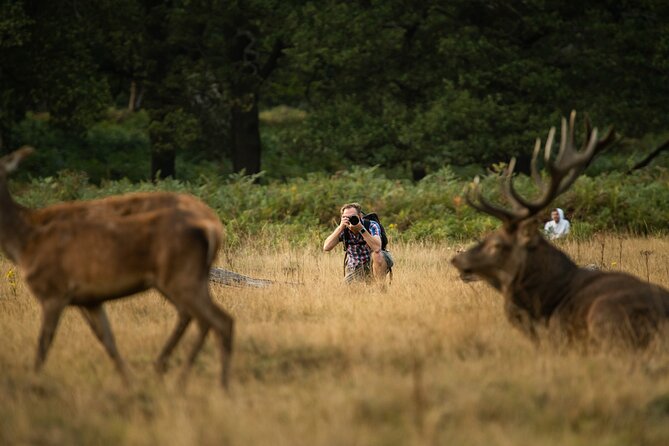
This is not just a walk with a camera. The stated aim is to improve both your technical control and your way of seeing. That split is important. Many new photographers learn which buttons to press but still struggle to decide why one frame works better than another.
Matthew covers the technical side in the field, where the lesson has an immediate purpose. You can work on settings while a subject is actually in front of you, rather than adjusting a camera indoors and hoping the information sticks. The exact settings will depend on the light, the subject, and your camera, but the teaching can include manual settings for moving birds.
Composition is another central part of the session. You can expect guidance on framing, lighting, and how to direct your photographic eye. The advice is meant to help you apply the same thinking after the workshop, in other parks and outdoor settings, rather than simply copy one formula in Richmond Park.
This should suit someone who has never photographed wildlife before. It also has enough range for a more experienced photographer who wants to improve composition or make better decisions in changing light. A previous session included a wide spread of ability, and Matthew handled that with a mix of basic technical instruction and more advanced advice.
Deer, birds, and the search for a strong frame
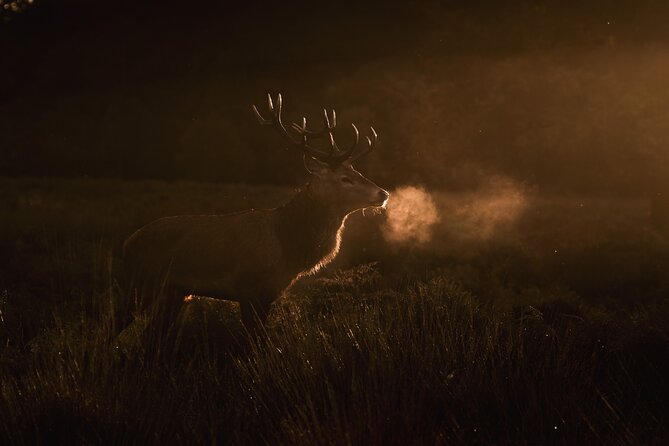
Red and fallow deer are the headline subjects, but the park’s wildlife can extend beyond them. One especially productive session included kestrels, woodpeckers, and a little owl. That gives you an idea of the range possible, but it should not be treated as a fixed promise for every date.
Bird photography can be demanding. Subjects move quickly, and the camera settings that work for a resting animal may not work for a bird in flight. Help with programming manual settings for birds in flight is a useful detail for anyone who wants to move beyond static portraits.
The most valuable part may be the link between animal behaviour and composition. You are not only waiting for a deer to appear. You are considering its position in the frame, the available light, the background, and the moment when the image feels balanced.
The park’s variety helps here. A lone oak can create a simple, bold setting. Ferns can add texture in the foreground. Silver birch trees can give a pale, clean background. A lake can open up the view and change how you use reflections or empty space. These details give Matthew material to discuss, even when wildlife is being uncooperative.
More Photography Workshops and Lessons in the UK
- Edinburgh Photography Masterclass – Private Photography Lesson
★ 5.0 · 40 reviews - The Scottish Highlands Photography Tour & Workshop
★ 5.0 · 3 reviews
Why the evening timing matters
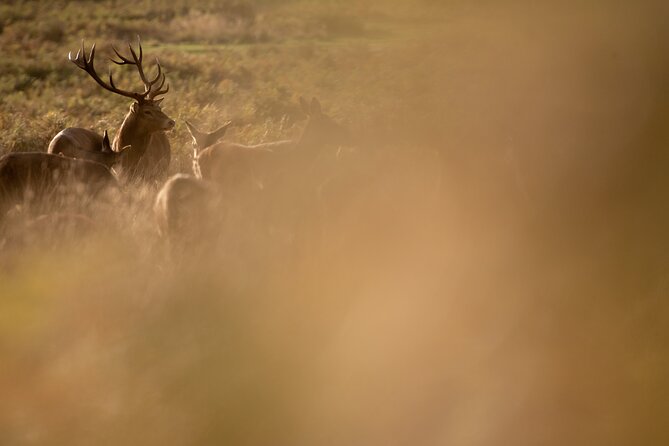
The workshop is held in the evening to make use of better light. Late-day light can be gentler than harsh midday sun, with more shape on animals and less risk of flat, washed-out images. It can also make the park itself more attractive, especially around trees, ferns, and open water.
The timing is a strength, but it affects your planning. Evening conditions can change, and the experience requires good weather. If poor weather forces a cancellation, you are offered another date or a full refund. You should also think about your route home before the session begins, particularly because of the warning about locked gates.
The evening format may be less convenient if you have a fixed dinner booking or another London activity afterward. The workshop lasts about three hours, and the finish is back at Queen’s Road, not at a central London station. Build in extra time rather than treating the end time as a precise connection point.
A small group with room for questions
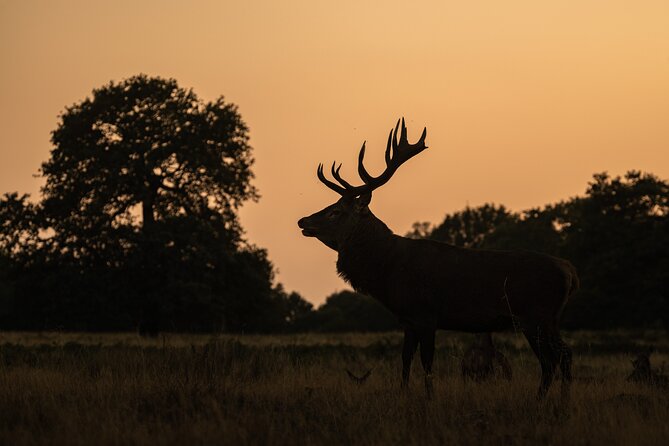
The maximum group size is eight. That is a useful limit for photography instruction because a large crowd can make it hard to see the guide’s camera demonstrations or ask about your own equipment.
A small group also helps when everyone is looking at the same subject from different skill levels. Beginners can ask about basic settings without being left behind, while more experienced photographers can raise questions about framing, lighting, or fast-moving birds.
The group is not a private lesson, so you will still share Matthew’s attention. The advantage is that you can learn from the questions and camera choices of other people. The previous feedback suggests that the size felt right, and that the mixed ability was handled well.
The session is offered in English. Service animals are allowed, and participants should have a moderate level of physical fitness. The information does not provide a precise distance, route surface, or number of hills, so you should be ready for a walk through a large park rather than a short stationary demonstration.
Is $161.56 good value?
At $161.56 per person, this is not a cheap park walk. The value depends on what you want from it. If you only want to see Richmond Park’s deer, visiting independently will cost less and give you more freedom with time.
The price makes more sense if you want instruction that changes how you use your camera. You are paying for a three-hour field lesson with an experienced guide, a maximum of eight people, and practical help while photographing real wildlife. The advice on composition and photographic decision-making may be useful long after the session ends.
It is particularly worthwhile if you own a camera but tend to rely on automatic settings, or if you understand exposure but struggle to produce images that feel intentional. The workshop can connect those two parts.
Value is less clear for someone seeking a guaranteed list of subjects. There is no promise of a particular deer encounter, bird, or perfect sunset. Nature photography always has an element of chance, and the cost should be judged as payment for teaching and access to a productive setting, not as a fee for a guaranteed collection of perfect images.
Who should book this workshop?
I would recommend it most strongly to three kinds of people:
- New wildlife photographers: You can learn basic technique in front of real subjects, with guidance when the situation changes.
- Camera owners who feel stuck: If you know the controls but your images lack structure, the focus on composition and photographic thought may help.
- Gift buyers: The session has worked well as a present, especially for someone who enjoys cameras and outdoor time.
It can also suit families or pairs with different levels of experience, provided both people are comfortable with the walking element and the shared group format. A parent and daughter enjoyed one session together, with the instruction ranging from nature photography basics to manual settings for birds in flight.
I would be more cautious about booking if you need a fully accessible route, a guaranteed animal sighting, or a tightly fixed finish time. The available information confirms moderate physical fitness is needed, but it does not give enough detail about the route to judge every mobility need.
What to know before you go
Bring the camera you actually want to learn to use. If you have several lenses or complicated equipment, the session may help you decide how to use it, but the supplied details do not specify what equipment is required or provided.
Wear clothing suitable for outdoor conditions and prepare for a walk. The activity depends on good weather, and the evening timing means conditions may feel different by the end of the three hours.
Pay close attention to the meeting point and gate times. Since you make your own way to Queen’s Road and return there at the end, the transport plan is part of your responsibility. Do not assume every park gate will remain open late.
You can cancel for a full refund if you do so at least 24 hours before the start time. Changes or cancellations inside that 24-hour window are not accepted for a refund. If bad weather cancels the experience, you can choose another date or receive your money back.
Should you book the Richmond Park workshop?
Book it if you want more than a pleasant walk with a camera. Matthew Williams-Ellis places the lesson in front of real deer and birds, then connects camera settings with composition, light, and deliberate choices. The small group and evening timing add real value.
Think twice if your main goal is a guaranteed wildlife checklist or a low-cost visit to the park. The price is high for simple sightseeing, and wildlife remains unpredictable. For anyone keen to improve, though, this is a focused London photography lesson with a strong setting and useful skills you can carry into future outings.
FAQ
Where does the wildlife photography workshop start?
It starts at Queen’s Road, Richmond, TW10 6JJ, UK. You make your own way to the park entrance.
Where does the workshop finish?
The activity ends back at the meeting point on Queen’s Road.
How long does the Richmond Park photography workshop last?
It lasts approximately three hours.
Is the workshop suitable for beginners?
Yes. The session covers photography basics as well as more advanced topics, and it can be adapted for a range of abilities.
How many people can join the workshop?
The maximum group size is eight people.
What wildlife might I photograph?
The workshop focuses on Richmond Park’s red and fallow deer. The park may also offer chances to photograph birds, with previous sessions including kestrels, woodpeckers, and a little owl.
What happens if the weather is poor?
The experience requires good weather. If it is canceled because of poor conditions, you are offered a different date or a full refund.
More Wildlife Trips around London
- Plettenberg Bay: Private Guided Wildlife Photography Tour
★ 4.9 · 49 reviews - Everglades: Birding, Wildlife, and Photography Expedition
★ 4.6 · 38 reviews - Longyearbyen: Wildlife Safari & Hiking Photography Tour
★ 4.4 · 27 reviews - San Pedro de Atacama: Wildlife Safari and Photography Tour
★ 5.0 · 17 reviews
Just added around London
- London: Professional Private Photoshoot and Edited Photos★ 5.0 · 4 reviews
- London Photoshoot 1 Hour – Customisable★ 5.0 · 40 reviews
- photoshoot London memories★ 4.2 · 6 reviews
- Photoshoot at Notting hill,Covent Garden,St Paul Cathedral★ 4.4 · 12 reviews
- Night Photography Tour in London★ 5.0 · 4 reviews
- London: A Unique Photoshoot Experience at Famous Sites★ 4.6 · 22 reviews
- London: West End Photography Walking Tour with Guide★ 5.0 · 2 reviews
- London: Private Photo Session at Iconic Landmarks★ 5.0 · 6 reviews
Photography Workshops & Lessons, side by side.
Paris Photography Masterclass – Private Photography Lesson
Read our review →
2-Hour Photography Class While Touring Downtown Santa Fe, Smart Phones Welcome!
Read our review →
Unique Rome by Night, Photo Tour and Workshop Under the Stars
Read our review →
Elevate Your Photography – Barcelona Private Tour & Workshop
Read our review →
Rome Photography Masterclass – Private Photography Lesson
Read our review →
Private (Phone) Photography Class in Park & Old Town
Read our review →
Venice Photography Masterclass – Private Photography Lesson
Read our review →