Review · PHOTOGRAPHY WORKSHOPS & LESSONS
Beginners Photography Course – Small Group Workshop
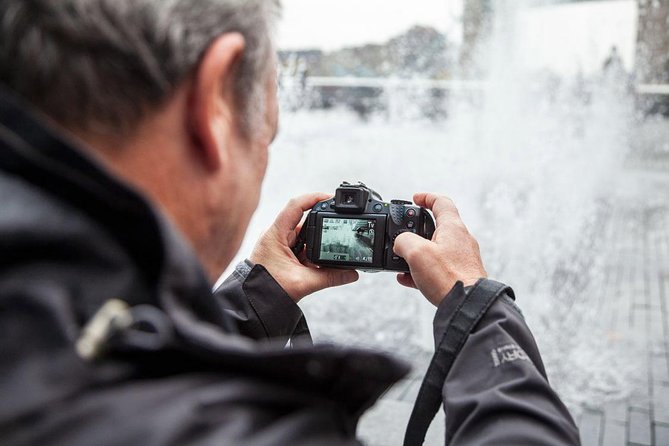
The best thing about this London workshop is its hands-on approach. You do not sit in a classroom memorizing camera terms. You walk from London Bridge to City Hall, Tower Bridge, and the Tower of London, making photos while Lou helps you change the settings on your own camera.
I like the tiny group size, limited to six people, and the way each person gets individual help. I also like the practical assignments, which turn ISO, aperture, shutter speed, focus, and composition from confusing words into tools you can use.
The main drawback is the price: $336.07 per person is a serious outlay for four hours. It can be good value if you own an intimidating camera and want personal tuition, but it is harder to justify if you only want a sightseeing walk or already understand manual settings.
Key points before you book
- Your own camera is the lesson plan: Tuition is geared to the camera you bring, not a generic model used by everyone.
- Six people is the maximum: The small group leaves room for questions and one-to-one help.
- You practise, rather than just listen: Short tasks cover ISO, shutter speed, aperture, focus, composition, and light.
- The route gives you strong subjects: City Hall, Tower Bridge, and the Tower of London offer different shapes, textures, distances, and lighting problems.
- Lou has helped complete beginners: Past course feedback describes her patient explanations and ability to sort out camera trouble, including a factory reset.
- Come prepared: Bring a fully charged battery, spare battery if you have one, and memory cards.
A London photo lesson built around your camera
This is aimed at the person who has owned a digital camera for years but still keeps it on Auto or Scene mode. It also suits someone who has inherited a camera, bought a DSLR, or feels lost among menus and buttons.
The teaching starts with the camera in your hands. That matters. General photography advice is useful, but it can stay abstract until you know which dial, button, or menu controls a setting on your particular model. Lou has experience with many cameras, and the instruction is adjusted to the equipment you bring.
You will work through the basic controls that shape a photograph. ISO affects how sensitive the camera is to light. Shutter speed affects how motion appears. Aperture affects the amount of light entering the lens and the area of the photograph that appears sharp. The value of learning these together is that you begin to see how one change affects the others.
You also practise focus, lens choice, framing, depth of field, and the way light changes a picture. That is a useful mix for a first course. It moves beyond simply explaining buttons and shows you why you might choose one setting over another.
The format is especially helpful if you learn by doing. You receive short assignments, make a picture, check the result, and then adjust the settings. That process is more likely to stick than a long talk about camera theory.
More Photography Workshops and Lessons in London
- London Photography Masterclass – Private Photography Lesson
★ 5.0 · 6 reviews - London Smartphone Photography workshop and tour
★ 5.0 · 5 reviews - Wildlife Photography Workshop in Richmond Park in London
★ 4.5 · 5 reviews
Starting near London Bridge and City Hall
The meeting point is London Bridge Station Approach Road, London SE1 9SP. From there, the workshop heads toward More London and City Hall, where the first main lesson takes place. The tour is described as a photography walking tour, so you should expect to be on your feet and using your camera outdoors.
City Hall is a useful opening setting because it gives you room to work with architecture, lines, reflections, open space, and changing viewpoints. Instead of rushing straight to a famous postcard angle, you can focus on how your camera handles different subjects.
The first section lasts about two hours, making it the longest teaching block. This is where the central camera controls receive the most attention. You will practise ISO, shutter speed, and aperture through short tasks, with Lou available to correct settings and answer questions as you go.
That two-hour period is important for complete beginners. You may need repeated explanations before the difference between aperture and shutter speed becomes clear. A small group helps here because the tutor can spend time with each person rather than moving on after one quick answer.
You can also ask about the exact problems you have been having. One person needed help with a camera that required a factory reset, while another arrived with an inherited camera and no idea how to use it. Those details suggest that the workshop is not limited to people who already know basic camera language.
At the same time, you should not expect a full course in every part of photography. Four hours can give you a strong start, but you will need to practise afterward. The course can show you how the controls work, but only repeated use will make them instinctive.
Tower Bridge: working with composition and light
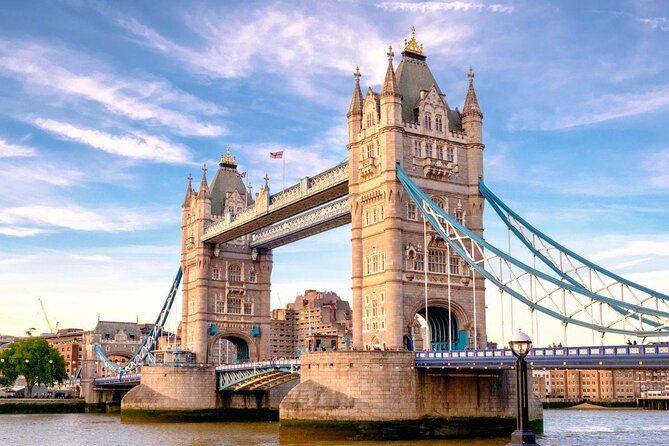
The next stop is Tower Bridge, photographed from across the river. This is a chance to apply the controls you have just practised to a large, familiar subject.
Here the lesson turns more strongly toward composition, framing, depth of field, and light. You learn that a good subject alone does not guarantee a good photograph. The position of the bridge in the frame, the amount of surrounding space, the focus point, and the available light all affect the result.
Tower Bridge also gives you a clear subject for testing different focal lengths and viewpoints. The workshop information does not promise a particular lens or equipment setup, so bring the lens you normally use and ask Lou how to make the most of it. She can advise on lens choices while you work.
This stop lasts about 30 minutes. That is enough for a focused exercise, but not enough to spend a long time waiting for one perfect light condition or trying every possible angle. You are paying for instruction, not an extended sightseeing session.
The short timing can be a benefit. You have to make decisions instead of endlessly circling the subject. You can test a setting, look at the image, and move on with a clearer understanding of what changed.
The Tower of London: using a historic subject
The final listed photography stop is the Tower of London, photographed from across the river. Like Tower Bridge, it gives you a recognisable London subject, but its shape and surface provide different problems to solve.
You will look at lens choices, shutter speed, composition, and light. The tutor can help you decide how to frame the building and how to use the available light effectively. This is also a good point to connect technical choices with travel photography. You are not just practising on a chart or studio object. You are learning how to handle the sort of major sight you may want to photograph on future trips.
The stop is planned for about 30 minutes. The Tower of London is viewed from across the river, so this is not a visit inside the fortress. Admission tickets are not included because the activity is a photo walk around the exterior viewpoints.
The route ends back at the meeting point. The supplied timing lists two hours at City Hall and 30 minutes at each of the two riverfront sights, while the overall activity is approximately four hours. You should allow the full stated duration for walking, explanations, camera adjustments, and practical exercises.
More Photography Workshops and Lessons in the UK
- Edinburgh Photography Masterclass – Private Photography Lesson
★ 5.0 · 40 reviews - The Scottish Highlands Photography Tour & Workshop
★ 5.0 · 3 reviews
What you can really learn in four hours
The most useful result is not one attractive picture of Tower Bridge. It is the ability to control what your camera does.
A beginner can reasonably expect to work on:
- ISO and how it affects exposure
- Shutter speed and motion
- Aperture and depth of field
- Focus modes and focusing techniques
- Basic composition and framing
- Lens choices for different subjects
- The effect of light on a photograph
- White balance, based on the course feedback
- Manual camera settings and how they interact
The teaching appears to be especially strong at making technical ideas memorable. Several people who had stayed on Auto or Scene modes came away with a clearer sense of how the settings relate to one another. One person described the difference between shutter speed, ISO, focus, and other controls as finally becoming easy to remember.
That is a good sign for anyone who has read a camera manual and understood very little of it. Lou can explain a setting, then show you the result on your own camera. If your model uses a different menu system from another person’s camera, the small group allows the lesson to be adjusted.
You should still be realistic. The course cannot make you an experienced photographer in one morning or afternoon. It can give you control and confidence, but the next step is practice. Take the same kind of picture at different shutter speeds. Change the aperture and compare the background. Try different ISO settings in changing light. That is how the lesson becomes useful after you leave London Bridge.
Why the six-person limit matters
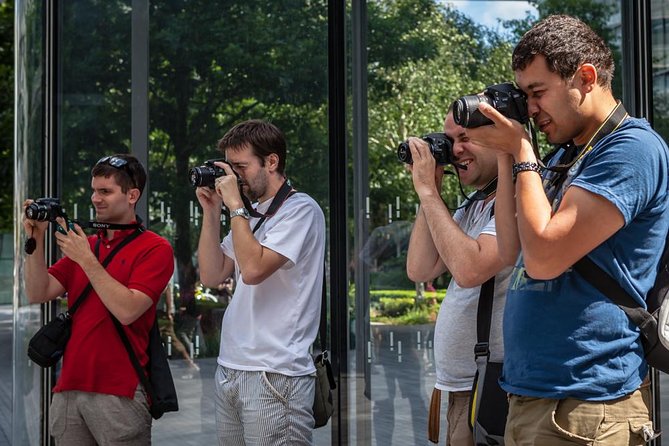
The maximum group size is one of the strongest features of this activity. Photography questions are often specific. You may need help finding a focus setting, changing a menu option, or understanding why a photograph is too dark. A large group would make that slow and awkward.
With six people, Lou can give individual attention while still keeping the session moving. The feedback describes a mixed group of camera makes and skill levels, yet the teaching kept people involved. That is useful if you are worried about being the least experienced person there.
The course also seems able to handle different starting points. You might arrive with no idea what aperture means, while someone else already knows a few basics but wants to move beyond Auto. The first person can get patient explanations, while the second can ask more detailed questions about manual control and composition.
Still, group tuition is not the same as a private lesson. The six-person limit is small, but you will share the tutor’s time. If you want every minute focused only on your camera, a private booking would be a different type of experience, and no private option is stated here.
The cost and what you receive
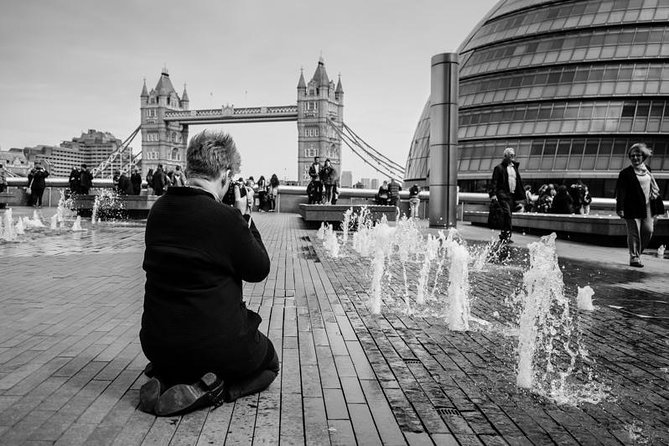
At $336.07 per person, this is not a cheap way to see London. You are not paying for entry to the Tower of London, a meal, or a long list of attractions. Food, drinks, and lunch are not included.
The price makes more sense if you treat the workshop as a focused camera lesson in real locations. You receive a professional photographer with extensive teaching experience, practical tuition, and a small group capped at six. The benefit continues after the tour because the skills apply to future holidays and everyday photographs.
Past course feedback points to that lasting value. People used the lessons later while travelling, experimented with shutter speeds and apertures, and felt more able to handle cameras that had previously seemed intimidating. That is a better measure of value than the number of London landmarks included.
I would book it at this price if you own a good camera, feel stuck on Auto, and want direct help with your exact model. I would think twice if you use only a phone, have little interest in manual controls, or mainly want a guided sightseeing tour.
Group discounts are available, though the supplied information does not state the discount amount or the number of people required. Ask for the current terms before booking if you are travelling with a group.
What to bring and how to prepare
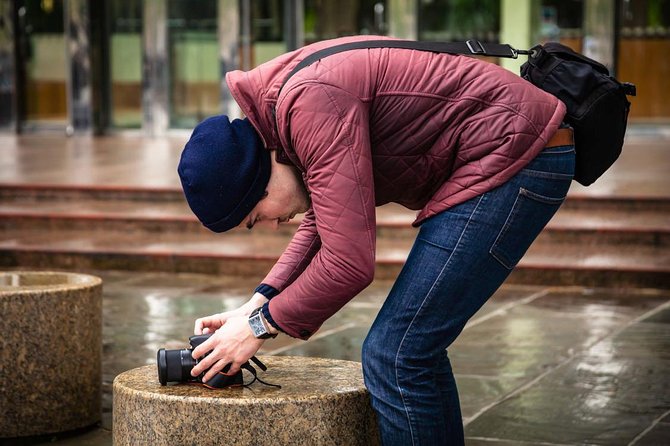
Bring your own digital camera, a fully charged battery, and memory cards. A spare battery is recommended if you have one. You should also know the camera brand and model, even if you do not know how to use it.
Do not worry about arriving with a polished portfolio. This is for beginners, including people who have inherited a camera or never moved beyond Auto and Scene modes. It is more useful to bring your actual questions and frustrations.
Wear something suitable for a walking activity. The tour takes place outdoors around London Bridge, City Hall, Tower Bridge, and the Tower of London. The supplied information does not give a weather plan, so check the forecast and be prepared for normal outdoor conditions.
The experience is offered in English. It is near public transportation, service animals are allowed, and most people can participate. The minimum age is 16.
You receive confirmation at booking. Free cancellation is available up to 24 hours before the start time for a full refund. Changes or cancellations made less than 24 hours before the start are not accepted for a refund, and the experience requires a minimum number of people. If the operator cancels because that minimum is not met, you are offered another date or experience, or a full refund.
Who should book this workshop
This is a strong fit for you if:
- You stay on Auto or Scene modes and want to take control.
- You have a new DSLR or digital camera that feels too complicated.
- You inherited a camera and need a clear starting point.
- You learn best through short tasks and immediate practice.
- You want to improve travel photographs rather than study theory alone.
- You appreciate direct help with the buttons and menus on your own model.
It is less suitable if you want a relaxed sightseeing walk with only occasional photography advice. The focus is learning, testing, adjusting, and asking questions. You will spend much of the time thinking about settings rather than simply admiring the views.
Should you book the London beginners course?
Book it if you want personal, practical instruction and your camera still feels like a machine you tolerate rather than a tool you control. The small group, camera-specific teaching, and real London subjects give the four hours a clear purpose.
The price is the key decision. At $336.07, this is best seen as a specialist lesson, not a standard city tour. If Lou can help you understand your camera, fix a troublesome setting, and give you skills you use on later trips, the cost may be worthwhile. If you already know ISO, aperture, shutter speed, focus, and composition, choose a more advanced course instead.
For a complete beginner who wants to leave Auto mode, this workshop offers a practical route forward, with Tower Bridge and the Tower of London providing far better practice subjects than a conference room.
FAQ
Where does the photography course start?
It starts at London Bridge Station Approach Road, London SE1 9SP, United Kingdom.
Where does the activity end?
The activity ends back at the meeting point.
How long does the workshop last?
The experience lasts approximately four hours.
What places do you photograph?
You work around City Hall and More London, then photograph Tower Bridge and the Tower of London from across the river.
What camera skills are covered?
The course covers ISO, shutter speed, aperture, focus, composition, framing, depth of field, lens choices, and the effect of light. Course feedback also refers to white balance and manual settings.
Do I bring my own camera?
Yes. You should bring your own digital camera. The teaching is geared to the camera you own.
What equipment should I bring?
Bring a fully charged battery, a spare battery if you have one, and memory cards.
How many people can join the workshop?
The maximum group size is six people.
Is there a minimum age?
Yes. The minimum age is 16.
Is food included?
No. Food, drinks, and lunch are not included.
Is the activity offered in English?
Yes. The workshop is offered in English.
Can I cancel for a full refund?
You can cancel at least 24 hours before the start time for a full refund. Cancellations or changes made less than 24 hours before the start are not accepted for a refund.
Just added around London
- London: Professional Private Photoshoot and Edited Photos★ 5.0 · 4 reviews
- London Photoshoot 1 Hour – Customisable★ 5.0 · 40 reviews
- photoshoot London memories★ 4.2 · 6 reviews
- Photoshoot at Notting hill,Covent Garden,St Paul Cathedral★ 4.4 · 12 reviews
- Night Photography Tour in London★ 5.0 · 4 reviews
- London: A Unique Photoshoot Experience at Famous Sites★ 4.6 · 22 reviews
- London: West End Photography Walking Tour with Guide★ 5.0 · 2 reviews
- London: Private Photo Session at Iconic Landmarks★ 5.0 · 6 reviews
Photography Workshops & Lessons, side by side.
Paris Photography Masterclass – Private Photography Lesson
Read our review →
2-Hour Photography Class While Touring Downtown Santa Fe, Smart Phones Welcome!
Read our review →
Unique Rome by Night, Photo Tour and Workshop Under the Stars
Read our review →
Elevate Your Photography – Barcelona Private Tour & Workshop
Read our review →
Rome Photography Masterclass – Private Photography Lesson
Read our review →
Private (Phone) Photography Class in Park & Old Town
Read our review →
Venice Photography Masterclass – Private Photography Lesson
Read our review →