Review · PHOTOGRAPHY WORKSHOPS & LESSONS
Unique Rome by Night, Photo Tour and Workshop Under the Stars
Rome after dark is a different city: fountains glow, ancient stone catches the light, and the big sights become far easier to frame without a daytime sea of people. This four-hour private walk with Giulio D’Ercole combines night photography lessons with a carefully chosen route from Castel Sant’Angelo to the Colosseum.
I like two things in particular. First, Giulio adjusts the instruction to your level, from first-time camera users to working photographers. Second, the walk gives you both practical shooting help and useful Roman history, so you are not simply collecting pretty pictures without knowing what you are looking at.
The main consideration is the price, $217.69 per person, plus any admission costs and possible equipment rental. You also need to be comfortable walking for four hours, starting at 9 p.m. and finishing around midnight.
What makes this Rome night tour worth considering
- A private route from the Tiber to the Colosseum: Your group gets Giulio’s direct attention instead of sharing the workshop with strangers.
- Hands-on night photography: You can work on exposure, composition, camera settings, angles, and low-light technique at the actual sites.
- Useful for any camera: Instruction can be adapted to a DSLR, mirrorless camera, compact camera, or iPhone.
- Six major Rome photo settings: The route includes Castel Sant’Angelo, St. Peter’s Square, Piazza Navona, the Pantheon, the Roman Forum viewpoint, and the Colosseum.
- A flexible teacher: Giulio has helped with camera failures, carried equipment for a participant with an injured ankle, and adjusted plans during thunderstorms.
- A late finish with transport nearby: The tour ends at the Colosseum Metro stop on Line B, though you should still plan your return journey before setting out.
Why Rome is better suited to night photography
Rome can be hard to photograph in daylight. The monuments are impressive, but harsh sun, tour groups, parked vehicles, and crowds often get in the way. At night, the city’s artificial lighting gives you a chance to work with reflections, shadows, warm stone, and bright architectural details.
You will not find every square empty. Rome remains active late into the evening, and some popular places still have people around. The difference is that you usually have more room to choose your angle and wait for a clearer frame.
The tour begins at 9 p.m. at Ponte Sant’Angelo, directly in front of Castel Sant’Angelo. From there, the route moves through central Rome and finishes at the Colosseum. The walking distance is not given, but the schedule includes eight stops and lasts about four hours, so comfortable shoes matter.
The private format is a real advantage here. Night photography often requires small adjustments: moving a few steps, waiting for a passerby to clear, changing the shutter speed, or trying a second composition. With only your own group, Giulio can spend time on those details instead of rushing everyone along.
More Photography Tours in Italy
- Rome: Vespa Photo Tour with Historic City Highlights
★ 5.0 · 395 reviews - Rome: Vespa Photo Tour with City Center Pickup
★ 5.0 · 239 reviews - Rome Night Photo Tour
★ 5.0 · 109 reviews
Castel Sant’Angelo and the Bridge of Angels
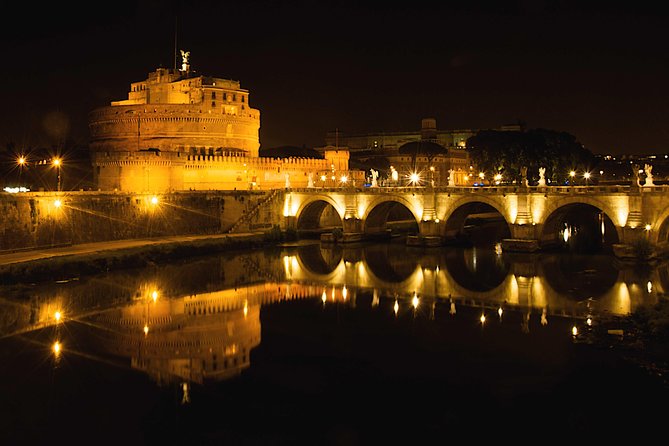
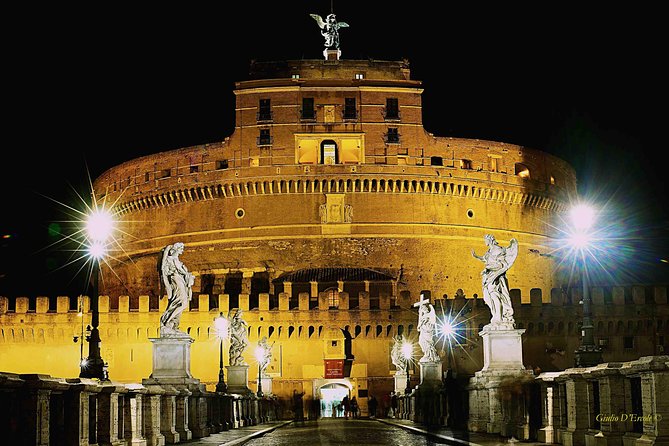
The opening scene is one of Rome’s most useful night photography setups. Castel Sant’Angelo rises beside the Tiber, while Ponte Sant’Angelo leads toward it with its line of angel statues. The river can reflect the illuminated bridge and fortress, creating a natural balance between the bright architecture and darker water.
This first stop lasts about 15 minutes. That is enough to make initial shots and get familiar with the camera, but not enough for a long technical lesson. I would treat it as a warm-up, especially if you are carrying a tripod or still deciding which settings to use.
The meeting point is easy to identify, and the bridge gives you an immediate sense of the evening ahead. Giulio can help you judge the strongest angle before the route moves toward Vatican City.
St. Peter’s Square after the crowds thin
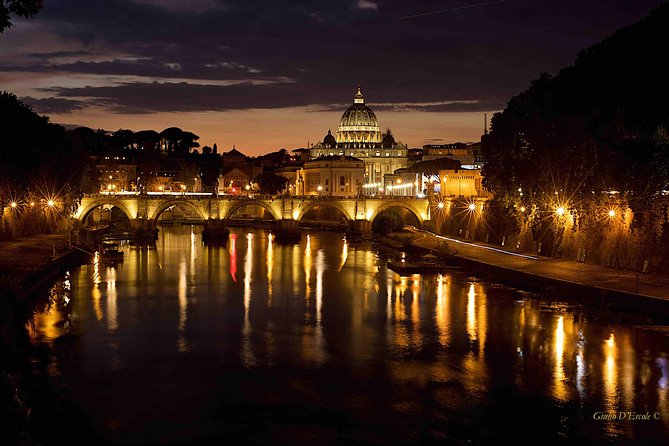
St. Peter’s Square receives about 30 minutes. The focus is the great colonnade, the fountain, and the facade of St. Peter’s Basilica. At night, the curved porches and open space offer strong opportunities for symmetry and wide compositions.
This is also a good place to learn how to manage bright lights against darker surroundings. Beginners often let the illuminated parts of a scene become too bright, while more experienced photographers may want to work with several exposures or more controlled framing.
Admission to St. Peter’s Basilica is not included, and this is an exterior photography stop rather than a visit inside the church. That keeps the evening moving and avoids turning the photo walk into a ticketed sightseeing tour.
Via dei Coronari and the old street view
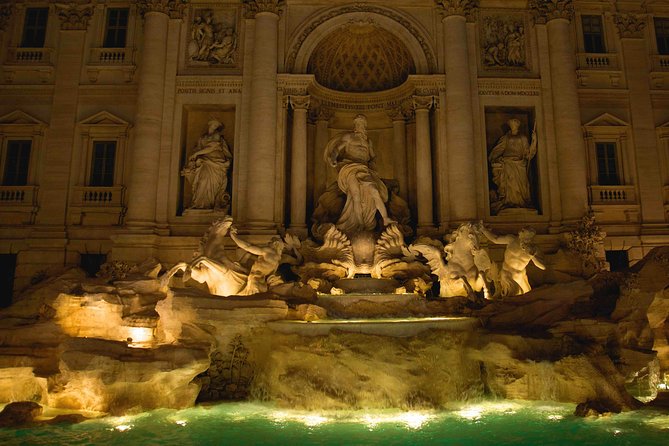
Via dei Coronari changes the mood. Instead of grand monuments, you photograph an elegant old street filled with smaller details, corners, facades, and textures. The stop lasts about 20 minutes.
This is where Giulio’s advice on composition can become especially useful. A narrow street gives you lines, repeating doorways, changing light, and small subjects that do not announce themselves as clearly as the Colosseum. You can practice finding a picture rather than simply pointing at a famous building.
If you only want landmark photographs, this stop may feel less important. I think it adds balance to the evening. Rome is not just its headline monuments, and the quieter street scenes can produce the images that feel most connected to the city itself.
More Photography Tours in Rome
- Vespa Rome Photography Tour by Local
★ 5.0 · 67 reviews - Rome by Day, Beauty and History Unique Photo Tour and Workshop
★ 5.0 · 36 reviews - Rome: Fiat 500 Vintage Photo Tour
★ 5.0 · 26 reviews - Unique Photo Tour and Workshop in Rome Dusk to Dawn
★ 5.0 · 23 reviews
Piazza Navona and the main photography lesson
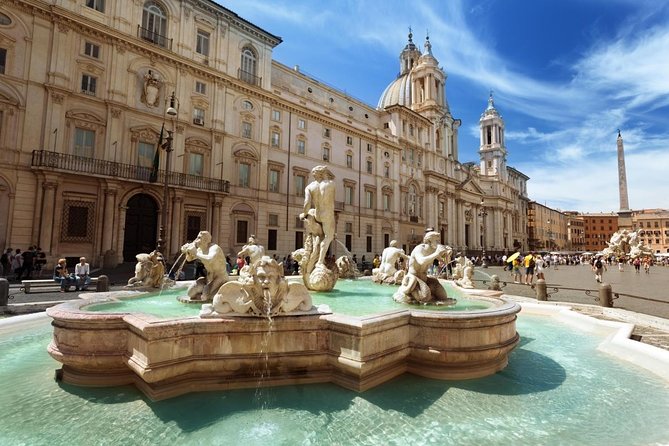
Piazza Navona receives the longest stop so far, about 40 minutes. This long oval piazza follows the shape of the ancient Stadium of Domitian and is framed by Baroque buildings and three fountains. Bernini’s Fountain of the Four Rivers is the main subject, but the surrounding architecture gives you plenty of alternatives.
This is the core workshop section. You can expect more than a quick suggestion to use a tripod or change your ISO. Giulio works with composition, exposure, lighting, and the way a photograph communicates a place. He can review what you are doing, suggest another position, and help you try again before leaving.
The private format matters most here. You have time to make several attempts rather than taking one rushed frame. If you are using a phone, the lesson can focus on framing, balance, perspective, and choosing the right moment. If you bring a more advanced camera, you can work more directly on manual settings and low-light control.
Piazza Navona can still have people around at night, so do not expect a completely empty set. The open layout does make it easier to find clean angles than during the busiest daytime hours.
The Pantheon and Piazza della Rotonda
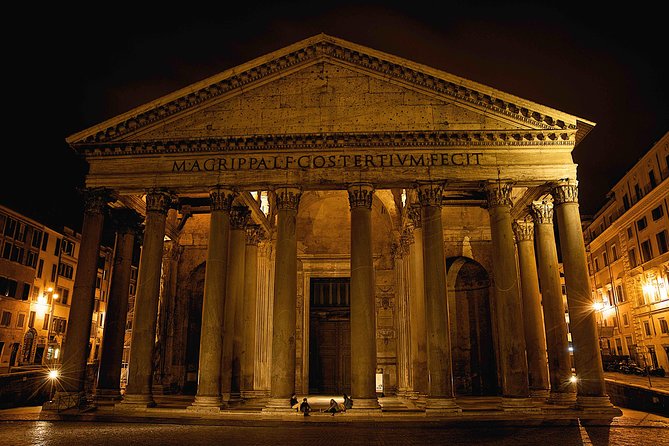
The Pantheon stop lasts about 20 minutes. This ancient Roman temple is one of the best-preserved buildings of its kind in Rome, and its relatively small square creates a more intimate setting than Piazza Navona.
You will photograph the Pantheon from different angles, including its massive entrance and the relationship between the classical building and the later surrounding architecture. The fountain in Piazza della Rotonda adds smaller subjects, including carved dolphins, sea creatures, and gargoyle-like details.
The challenge here is scale. It can be difficult to fit the entire facade into a frame from close range, especially with a phone or standard lens. That makes Giulio’s guidance useful because he can help you choose between a full building view, a detail, or a composition that includes the square.
Admission is not included. The scheduled stop is focused on exterior photography, not an interior visit.
Michelangelo’s Campidoglio at night
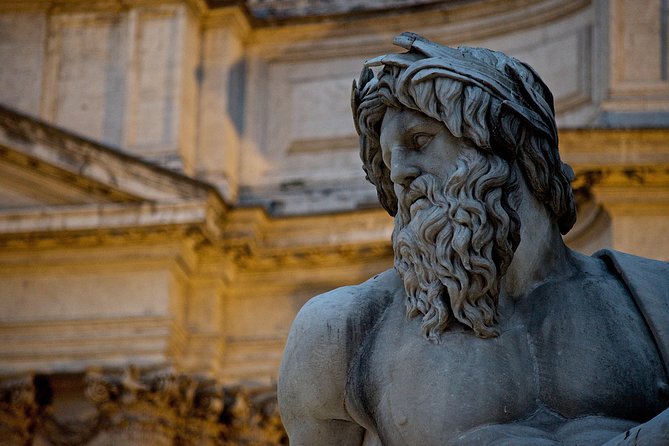
Piazza del Campidoglio receives about 20 minutes. Michelangelo designed the square with a strong sense of symmetry, and the central equestrian statue of Marcus Aurelius gives the composition a clear focal point.
The three surrounding buildings create several possible angles. You can photograph the whole design from the main approach, use the paving pattern to guide the eye, or concentrate on the facades and statue. This is a useful lesson in architectural composition because the square itself is designed to control how you see it.
The setting also offers a break from the bigger tourist stops. You still get an important Roman monument, but the experience is more about lines, proportion, and design than simply taking a souvenir photograph.
The Roman Forum from above
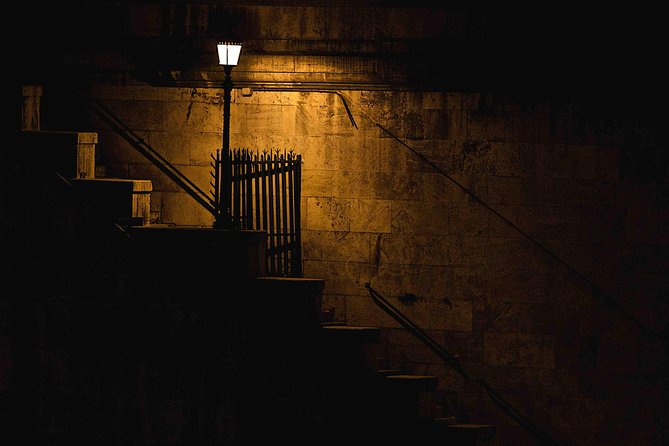
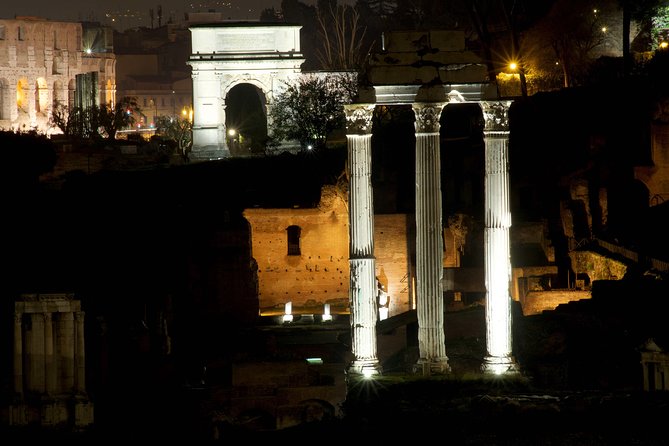
The Roman Forum viewpoint is a brief 15-minute stop. From above, you can frame columns, temples, and ancient ruins with the Colosseum visible in the distance.
This is a classic night composition, but it has a technical catch. The scene includes both dark ruins and bright city lights, so exposure can be tricky. You may need to decide whether the priority is the foreground stonework, the distant Colosseum, or a balanced frame that keeps both readable.
Because the stop is short, be ready when you arrive. Keep your camera accessible, and have your preferred lens or phone setting in mind. The viewpoint is about the overall scene rather than a long lesson.
The Colosseum finale at 11 p.m. or later
The tour ends at the Colosseum, with about 45 minutes assigned to the final stop. This is the largest block of time on the route, and it makes sense. The Colosseum and Arch of Constantine provide several strong compositions, especially when you can avoid the thickest daytime crowds.
You will photograph the amphitheater from outside. The supplied information refers to entry requirements for the Colosseum and Roman Forum, but admission is not included in the tour price, so check exactly what access is planned when booking. Bring the valid ID document that matches the booking name if entry is part of your arrangements.
The final section gives you time to work carefully. You can try a broad view of the Colosseum, a tighter frame of its arches, or a composition that includes Constantine’s Arch. The lighting can make the stone appear warm and dramatic, while the darker sky gives the monument more separation.
Ending at the Colosseum also makes the route feel complete. You begin beside the Tiber and finish with one of Rome’s most recognizable ancient sites. The nearest stated transport point is the Colosseum subway stop on Line B.
What Giulio adds beyond camera settings
Giulio D’Ercole is presented as a professional photographer and filmmaker who also teaches photography at college level. The useful part for you is not the title itself, but the teaching style described in practice: he asks about your equipment and experience, then adjusts the lesson instead of forcing everyone through the same script.
That makes the tour suitable for mixed groups. A couple could bring different levels of experience, and a family can arrange for a non-photographing partner or child to join. Children must be accompanied by an adult.
He has also helped when practical problems got in the way. Participants have had camera trouble, changed plans because of a thunderstorm, and needed assistance carrying a tripod and camera because of an injured ankle. Those details suggest a guide who pays attention to the person, not just the schedule.
You should still be realistic. Four hours is not enough to master night photography completely. You will get focused instruction at real locations, but your results will depend on your equipment, starting level, and willingness to practice.
Price, equipment, and what you receive
At $217.69 per person, this is not a budget sightseeing walk. It makes the most sense if you value private instruction, personal attention, and a guide who combines photography with Roman history.
The price includes the professional photographer guide and the private tour. It does not include souvenir photos, admission tickets, or rental equipment. If you do not have a camera, Giulio can rent Nikon gear and a tripod for 50 euros per kit, payable in cash.
Bring your own camera if possible. An interchangeable-lens camera gives you more control, but the instruction can also work with a phone. One participant specifically used an iPhone and received help with composition and reshooting, so you do not need expensive equipment to benefit.
The tour is offered in English, though the guide may also speak French, Italian, and basic Spanish. Group discounts and special arrangements are available for parties of more than two people.
Who should book this four-hour photo walk?
I would choose this tour if you want to improve your pictures while seeing the famous sights. It is especially suited to:
- Beginners who want direct help with settings and composition.
- Intermediate photographers who want better night images and fresh angles.
- Couples or families who prefer a private guide.
- Phone photographers who want to move beyond ordinary snapshots.
- Repeat visitors who have already seen Rome by day.
- People who enjoy history and conversation along with photography.
It is less suitable if you dislike walking late at night, want a seated tour, or are mainly interested in entering monuments. It is also not the best choice if your only goal is a quick set of posed photographs taken for you. The emphasis is on teaching you to make your own images.
Wear casual, comfortable clothing and shoes. The tour requires good weather, and if poor conditions cancel it, you can receive a full refund or choose another date. Cancellation is free up to 24 hours before the 9 p.m. start time.
Should you book the Rome by Night Photo Tour?
I would book it if photography is part of the reason you are coming to Rome, not just an optional extra. Giulio’s route gives you major monuments, smaller street scenes, practical instruction, and the freedom to stop long enough for a picture to improve.
The strongest value is the private teaching. You are paying for a guide who can adapt to your camera, explain the history behind the subject, help solve equipment problems, and keep working until you have a composition you understand.
If $217.69 feels high, compare it with the cost of a standard sightseeing tour plus a separate photography class. This combines both in one evening, but remember to budget for admission costs if you plan to enter any site and for the 50 euro equipment rental if you need a camera and tripod.
FAQ
What time does the Rome by Night Photo Tour start?
The tour starts at 9 p.m. at Ponte Sant’Angelo, beside Castel Sant’Angelo in Rome.
How long does the tour last?
The experience lasts approximately four hours and ends at the Colosseum.
Is this a private tour?
Yes. Only your group participates, allowing the photography instruction to be adjusted to your experience and equipment.
What locations does the tour visit?
The route includes Castel Sant’Angelo, St. Peter’s Square, Via dei Coronari, Piazza Navona, the Pantheon, Piazza del Campidoglio, a viewpoint over the Roman Forum, and the Colosseum.
Do I need to bring a camera?
You can bring your own camera or use an iPhone. If you do not have a camera, Nikon equipment and a tripod can be rented for 50 euros per kit, payable in cash.
Are admission tickets included?
No. Admission is not included for the listed sites. Each person must present valid identification matching the booking name for successful entry to the Colosseum and Roman Forum.
Can I cancel the tour?
You can cancel at least 24 hours before the start time for a full refund. If poor weather causes the tour to be canceled, you will be offered another date or a full refund.
More Photography Workshops and Lessons in Rome
- Paris Photography Masterclass – Private Photography Lesson
★ 5.0 · 112 reviews - 2-Hour Photography Class While Touring Downtown Santa Fe, Smart Phones Welcome!
★ 5.0 · 108 reviews - Elevate Your Photography – Barcelona Private Tour & Workshop
★ 5.0 · 78 reviews - Private (Phone) Photography Class in Park & Old Town
★ 5.0 · 53 reviews
More Photography Workshops and Lessons in Italy
- Rome Photography Masterclass – Private Photography Lesson
★ 5.0 · 67 reviews - Rome: Night Photo Tour and Workshop
★ 5.0 · 2 reviews - Venice Photography Masterclass – Private Photography Lesson
★ 5.0 · 46 reviews - Photo workshop in Venice with a local photographer!
★ 4.6 · 3 reviews
Just added around Rome
- Rome: Vespa Tour with Professional Photographer★ 5.0 · 17 reviews
- Rome: Vintage Car Tour with Professional Photographer★ 5.0 · 19 reviews
- Rome: Vespa Tour with Professional Photoshoot as Passenger★ 5.0 · 22 reviews
- Rome: Vespa Scooter Night Tour with Pro Photographer service★ 5.0 · 24 reviews
- Rome: Retro Fiat 500 car tour with Pro-Photographer★ 5.0 · 7 reviews
- Vespa Tour with Professional Photography in Rome★ 5.0 · 6 reviews
- Rome: Vespa Tour & Professional Photoshoot★ 4.9 · 18 reviews
- Rome: Fiat 500 Vintage Photo Tour★ 5.0 · 26 reviews
Photography Workshops & Lessons, side by side.
Paris Photography Masterclass – Private Photography Lesson
Read our review →
2-Hour Photography Class While Touring Downtown Santa Fe, Smart Phones Welcome!
Read our review →
Elevate Your Photography – Barcelona Private Tour & Workshop
Read our review →
Rome Photography Masterclass – Private Photography Lesson
Read our review →
Private (Phone) Photography Class in Park & Old Town
Read our review →
Venice Photography Masterclass – Private Photography Lesson
Read our review →
Custom Half-Day Photo Tour with Photography Lessons from Asheville
Read our review →