Review · PHOTOGRAPHY WORKSHOPS & LESSONS
London Photography Masterclass – Private Photography Lesson
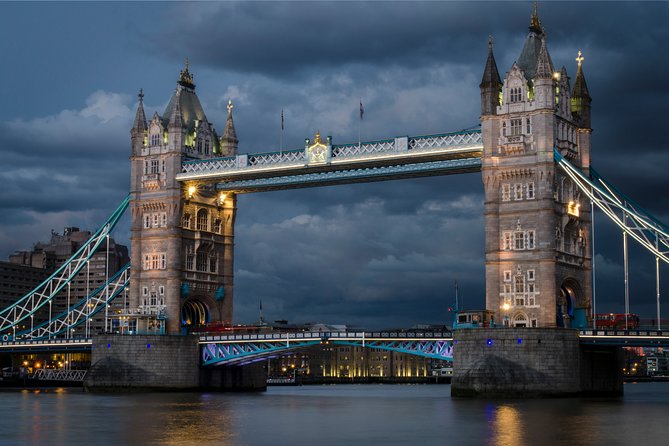
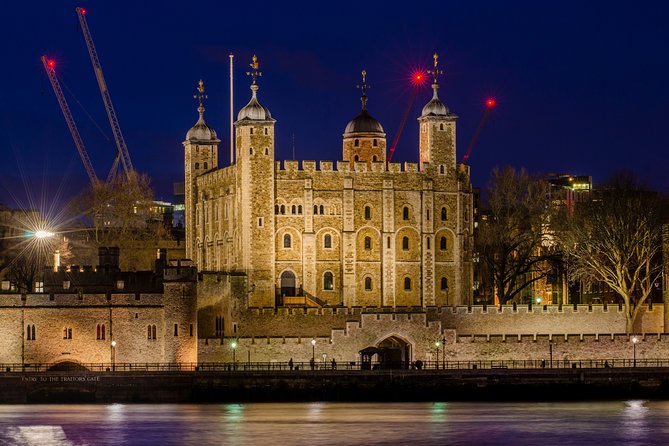
London is at its best through a camera lens, especially after dark. This private three-hour photography lesson takes you from Westminster to Tower Bridge, using famous sights such as St. Paul’s Cathedral, the London Eye, and the Shard as real-world classrooms. You do not just collect postcard views. You learn how to shape them.
I like the one-on-one format, since you can stop and ask about ISO, aperture, exposure time, or composition whenever you need. I also like the personal coaching style reported from guides such as Rose, Derrick, and Noemi, who adjusted the session to the photographer’s level and encouraged stronger images. The main catch is practical: the $218.21 price is per person, and you must bring your own camera and tripod.
Key points to know before you book
- Night photography is the specialty: Practice long exposures, light trails, light painting, and high ISO shooting around London’s illuminated landmarks.
- The lesson is private: Your group receives direct attention rather than sharing the route with strangers.
- The route covers major views: Expect Westminster Bridge, the Palace of Westminster, Waterloo Bridge, Southbank, St. Paul’s Cathedral, the Shard, and Tower Bridge.
- You receive active coaching: The guide can review images as you work and help you move beyond simply getting a usable shot.
- Rain does not end the lesson: Previous sessions made good use of wet conditions and reflections, though you should dress for London weather.
- You supply the equipment: A camera and tripod are not included, so prepare before meeting at St Thomas’ Hospital or County Hall.
Why this London photo lesson is different
Many London sightseeing walks ask you to look, listen, and keep moving. This one asks you to stop. You might spend time refining one frame, checking the result, and trying again with a different exposure or viewpoint.
That matters because London’s best photographs often need more than a quick point-and-shoot effort. Reflections along the Thames, moving traffic, bright signs, dark water, and strong architectural lines can fool a camera. A guide can help you understand why an image is too bright, too dark, flat, or blurred, then show you what to change.
The private format is the biggest advantage. If you already know the basics, you can work on location choices and creative decisions. If you are still learning, you can take time with the fundamentals without feeling rushed by a group.
The experience can focus on London by day or by night. The night option is the more distinctive choice, with instruction in long exposure, light trails, light painting, and high ISO work. Bring a tripod and a warm scarf for that version, but remember that the tripod itself is not supplied.
More Photography Workshops and Lessons in London
- Beginners Photography Course – Small Group Workshop
★ 5.0 · 8 reviews - London Smartphone Photography workshop and tour
★ 5.0 · 5 reviews - Wildlife Photography Workshop in Richmond Park in London
★ 4.5 · 5 reviews
Starting at Westminster Bridge
The meeting point is at St Thomas’ Hospital or County Hall, Stop D, London SE1 7EP. From there, the route begins at Westminster Bridge, one of the strongest places to frame the river and the city’s political center.
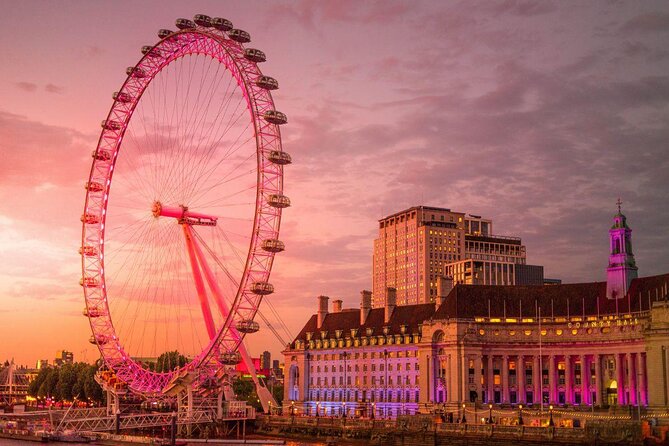
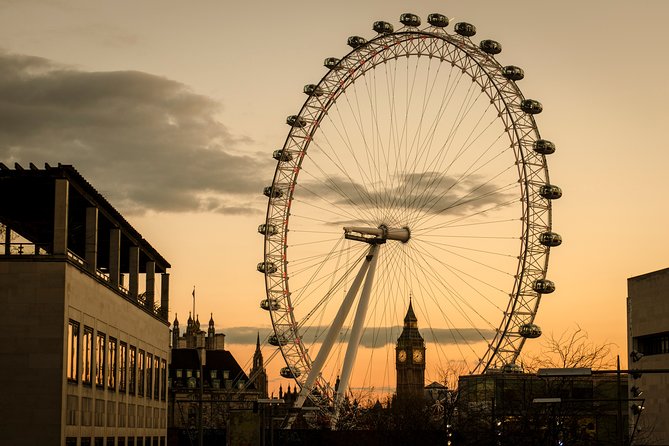
Westminster Bridge gives you several subjects in one view. The Palace of Westminster provides a detailed architectural backdrop, while the Thames adds open space and reflections. The London Eye brings a tall circular shape that can anchor a wider composition.
This is useful early in the lesson because you can work on framing before the route becomes more complex. Your guide may help you compare a broad city view with a tighter image focused on light, structure, or reflections.
At night, the area gives you a chance to see how artificial light changes the character of a familiar scene. Bright buildings can create exposure problems, so this is a sensible place to begin testing settings under guidance.
From Westminster to the London Eye
The Palace of Westminster is a natural subject for architectural photography. It has strong lines, repeated details, and a familiar outline, but familiar does not mean easy. A straight-on photograph can look ordinary if the composition is not carefully chosen.
The London Eye offers a different challenge. Its round form can be used as a central subject, a frame within the wider city, or a contrast to the sharper lines of Westminster. You may find that small changes in position make a large difference to how the wheel relates to the river and surrounding buildings.
This section also helps you understand the value of a local guide. The route is not only about reaching a famous sight. It is about finding a workable angle and knowing when to stop for it.
Household Division and the city’s formal side
The itinerary includes the Household Division, adding a more ceremonial and distinctly London subject to the route. This part breaks up the river views and gives you a chance to work with human activity, uniforms, movement, and formal surroundings.
Your guide can help you decide when to focus on a person or group and when to treat them as part of a larger scene. That kind of choice is often harder than changing a camera setting. You are learning what deserves attention in the frame.
The exact amount of time at each stop is not specified. Since the route includes ten named locations in about three hours, expect a brisk session with time divided between walking, shooting, and instruction rather than a long stay at every point.
More Photography Workshops and Lessons in the UK
- Edinburgh Photography Masterclass – Private Photography Lesson
★ 5.0 · 40 reviews - The Scottish Highlands Photography Tour & Workshop
★ 5.0 · 3 reviews
Waterloo Bridge and Southbank
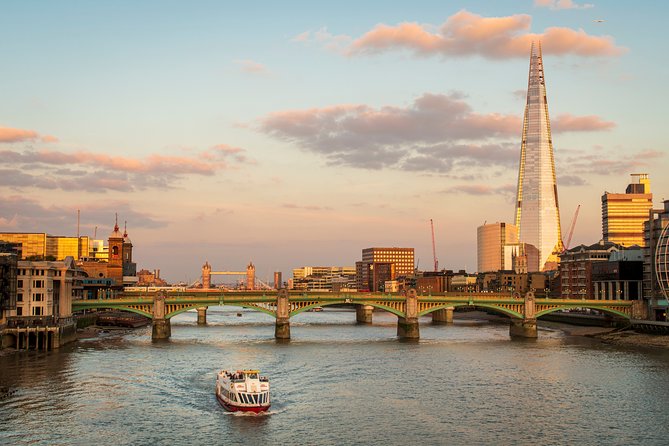
Waterloo Bridge is one of the route’s most useful viewpoints because it opens the city in several directions. You can work with the Thames, the skyline, bridges, and reflected light, then compare a broad scene with a more selective composition.
Southbank gives the walk a different rhythm. It is a good place to practice photographs that include people, riverside movement, and city lights rather than only monumental buildings. You may also find useful contrasts between dark areas and bright subjects, which are central to night exposure work.
This is where the private lesson can go beyond technical instruction. A guide such as Rose or Derrick may push you to make a stronger choice instead of accepting the first image that looks fine on the camera screen. One particularly useful aim is to move from good enough to a more deliberate image with better balance and purpose.
Millennium Bridge and St. Paul’s Cathedral
The Millennium Bridge brings strong perspective lines into play. Its structure can guide the eye toward the skyline and create a sense of depth. It is also a natural place to test symmetry, leading lines, and the effect of different focal lengths.
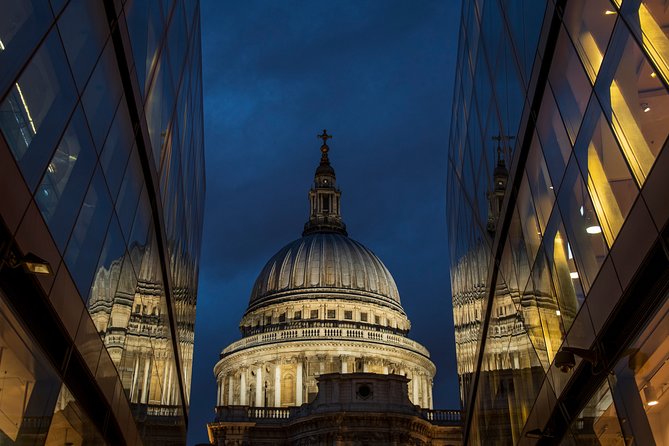
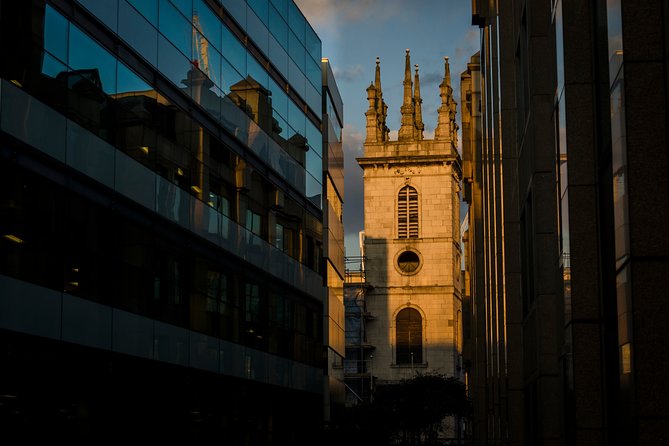
St. Paul’s Cathedral then supplies a very different subject. Its dome and formal architecture reward careful framing, especially when surrounding darkness makes the illuminated structure more prominent.
For night photography, this stretch can show you why a tripod matters. Longer exposure times allow more light into the camera, but they also make camera movement more obvious. The guide can help you work through shutter speed, aperture, and ISO rather than relying on guesswork.
Noemi, one of the named guides associated with the experience, helped a photographer understand how changing ISO, f-number, and exposure time affected the final result. That is the kind of practical lesson you can use long after leaving London.
The Shard and Tower Bridge finish
The Shard gives the route a modern vertical landmark and a chance to photograph London from a different visual angle. Its shape works well in wider city scenes, but you can also isolate its height and reflective surfaces.
The final stop is Tower Bridge, one of London’s most rewarding night subjects. The bridge combines engineering, river reflections, moving lights, and a recognizable silhouette. It gives you plenty to work with, but it can also tempt you into making the same standard image everyone else has made.
This is where a guide’s creative input may be most useful. A night session with Rose helped one experienced London photographer move beyond familiar tourist views and try locations and compositions that stretched their usual approach. If you already know the city, that kind of challenge may be more valuable than a basic sightseeing route.
The activity ends back at the meeting point. The supplied itinerary does not specify the exact walking time between stops, so wear comfortable shoes and be ready for a fairly active evening.
What you will actually learn
The lesson is designed around photography tuition and image review, not just sightseeing. The exact teaching plan depends on your experience and interests, but the stated skills include:
- Long exposure photography
- Light trails
- Light painting
- High ISO shooting
- Composition and framing
- The effect of ISO, aperture, and exposure time
- On-location image review
Long exposure is particularly useful in London. It can smooth water, stretch vehicle lights into lines, and give moving subjects a sense of flow. It also brings problems: blown highlights, soft details, and camera shake. A private guide can help you identify those problems while you are still in the location where they happened.
Light painting and light trails add a creative layer. They are not simply technical tricks. You still need to decide where the light should lead the eye and how much of the frame should remain dark.
High ISO shooting is useful when you cannot use a long exposure or tripod. The tradeoff is increased digital noise and reduced detail. The point of the session is not to memorize one perfect setting, but to understand why you might choose one approach over another.
The guides and teaching style
The experience includes a professional photographer guide, a local guide, and photography tuition with review. Names connected with past sessions include Rose, Derrick, and Noemi, but your assigned guide is not guaranteed.
The strongest feature of the teaching style is its personal nature. Derrick has been described as reviewing pictures during the walk and taking participants to places they would not have found alone. Rose has worked with both a teenage beginner and a more experienced photographer looking for fresh ideas. Noemi has helped explain the relationship between core camera settings and night results.
That range suggests the lesson is not locked to one skill level. You can ask basic questions, or you can use the time to refine style and location choices. A 17-year-old photographer found the session approachable, while a repeat London visitor used it to move beyond familiar views.
You should tell the guide what you want from the lesson at the start. If your priority is manual exposure, say so. If you care more about composition, night portraits, city details, or unusual viewpoints, make that clear. The private format gives you a better chance of shaping the session around those goals.
Price, equipment, and practical value
At $218.21 per person, this is not a cheap sightseeing walk. The value depends on how much you want direct instruction and whether you will use the skills afterward.
For a private group, the cost can make more sense than paying for several separate activities that only show you the sights. You are paying for a guide who can teach, adjust the lesson to your level, review your images, and help you work in locations that are hard to use well on your own.
The price is less appealing if you mainly want a quick set of souvenir photographs or already feel confident with night work. You also need to bring your own camera and tripod. The tour does not provide either item, so check your gear before you leave your hotel.
The activity is offered in English and supports group discounts. It has mobile ticketing and is near public transportation. Most people can participate, but the route includes several city stops and enough walking that you should plan for an active three hours.
Free cancellation is available if you cancel at least 24 hours before the start time. Changes or cancellations made inside that window are not accepted for a refund, and the cut-off uses London local time.
Rain, timing, and what to pack
London weather can change the mood of the photographs. Rain is not automatically a problem. Wet pavement and the Thames can produce useful reflections, and previous sessions made strong images during rainy spells.
Still, you should dress for the conditions. For a night lesson, take a warm scarf and weather-ready clothing. A tripod is important for long exposures, but it is not included. You will also want enough battery power and storage for repeated attempts, though the supplied information does not specify any equipment requirements beyond bringing a camera and tripod.
The route covers ten named stops in roughly three hours. That means the experience combines walking with short periods of shooting and instruction. Do not expect a slow architectural tour with unlimited time at every landmark.
Who should book this experience
I would recommend it most strongly to:
- Amateur photographers who understand basic camera controls but want help using them in real conditions
- Visitors who want better London photographs than quick snapshots
- Repeat visitors who already know the major sights and want new angles
- Couples, families, or small private groups with different skill levels
- Anyone keen to learn night photography in a real city setting
It can also suit a beginner, provided you are happy to learn while walking between locations. A private lesson is less intimidating than a large class, and you can ask the same question more than once without holding up a whole group.
It may not suit you if you do not own a camera, do not have a tripod for the night option, or want a relaxed sightseeing walk with little technical instruction. The route is active, the schedule is fairly full, and the cost is built around personal coaching.
Should you book the London Photography Masterclass?
Book it if you want to come home with more than a collection of standard London views. The route gives you Westminster, the Thames, St. Paul’s, the Shard, and Tower Bridge, but the real benefit is learning how to make those places work photographically.
The night option is the best reason to choose this experience. Long exposures, light trails, reflections, and changing exposure settings are difficult to master alone in a busy city. Direct help from a guide such as Rose, Derrick, or Noemi can save you a great deal of trial and error.
Skip it if your priority is simply seeing London landmarks or if you need camera equipment supplied. For an amateur photographer who wants focused help, creative pressure, and a private route through central London, the price can be fair value.
FAQ
How long does the photography lesson last?
The lesson lasts approximately three hours.
Is this a private activity?
Yes. Only your group participates in the activity.
What language is the experience offered in?
The experience is offered in English.
Where does the activity start?
It starts at St Thomas’ Hospital or County Hall, Stop D, London SE1 7EP, London.
Where does the activity finish?
The activity ends back at the meeting point.
Is a camera included?
No. You must bring your own camera.
Is a tripod included?
No. A tripod is not included. You should bring one for the night photography option.
What photography techniques can I learn?
The lesson can cover long exposure, light trails, light painting, high ISO shooting, and the effects of ISO, aperture, and exposure time.
Can I cancel for a full refund?
Yes, if you cancel at least 24 hours before the experience start time. Cancellations made less than 24 hours before the start are not refunded.
Is the experience near public transportation?
Yes. The meeting point is near public transportation.
More Private Photoshoots in the UK
- London: Private travel vacation photoshoot -Romantic Special
★ 4.7 · 50 reviews - Private Tour: Night Photography Tour in London
★ 5.0 · 48 reviews - Professional Private Couple Photoshoot
★ 5.0 · 35 reviews - Private Night Photography Tour in London
★ 5.0 · 29 reviews
More Private Photoshoots in London
- London: Private Photoshoot with Video Clip Option
★ 4.8 · 182 reviews - Private landmarks photoshoot for families and couples
★ 5.0 · 92 reviews - London: Private Landmark Tour with Professional Photographer
★ 4.7 · 91 reviews - Professional Private Photoshoot in London
★ 5.0 · 63 reviews
Just added around London
- London: Professional Private Photoshoot and Edited Photos★ 5.0 · 4 reviews
- London Photoshoot 1 Hour – Customisable★ 5.0 · 40 reviews
- photoshoot London memories★ 4.2 · 6 reviews
- Photoshoot at Notting hill,Covent Garden,St Paul Cathedral★ 4.4 · 12 reviews
- Night Photography Tour in London★ 5.0 · 4 reviews
- London: A Unique Photoshoot Experience at Famous Sites★ 4.6 · 22 reviews
- London: West End Photography Walking Tour with Guide★ 5.0 · 2 reviews
- London: Private Photo Session at Iconic Landmarks★ 5.0 · 6 reviews
Photography Workshops & Lessons, side by side.
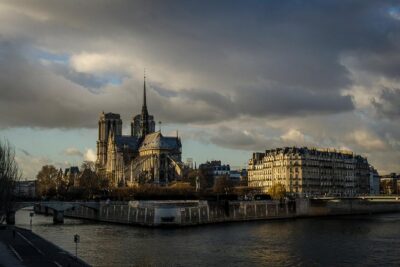
Paris Photography Masterclass – Private Photography Lesson
Read our review →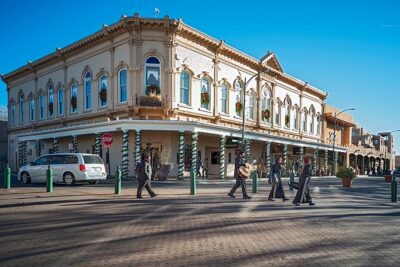
2-Hour Photography Class While Touring Downtown Santa Fe, Smart Phones Welcome!
Read our review →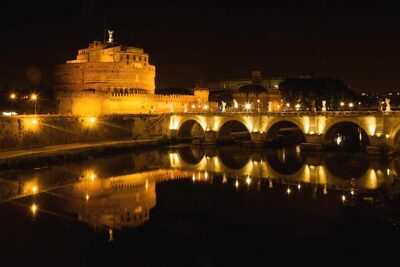
Unique Rome by Night, Photo Tour and Workshop Under the Stars
Read our review →
Elevate Your Photography – Barcelona Private Tour & Workshop
Read our review →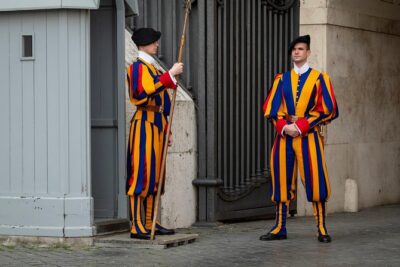
Rome Photography Masterclass – Private Photography Lesson
Read our review →
Private (Phone) Photography Class in Park & Old Town
Read our review →
Venice Photography Masterclass – Private Photography Lesson
Read our review →