
Review · TOKYO PHOTO TOURS & PHOTOSHOOTS
Tokyo: Sumo Practice Tour with Ring-Side Seat and Photoshoot
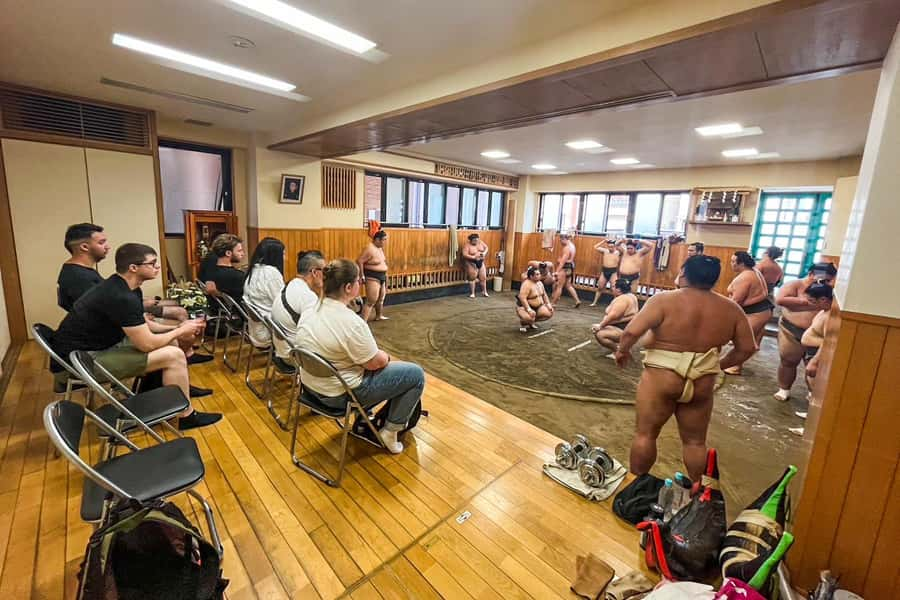
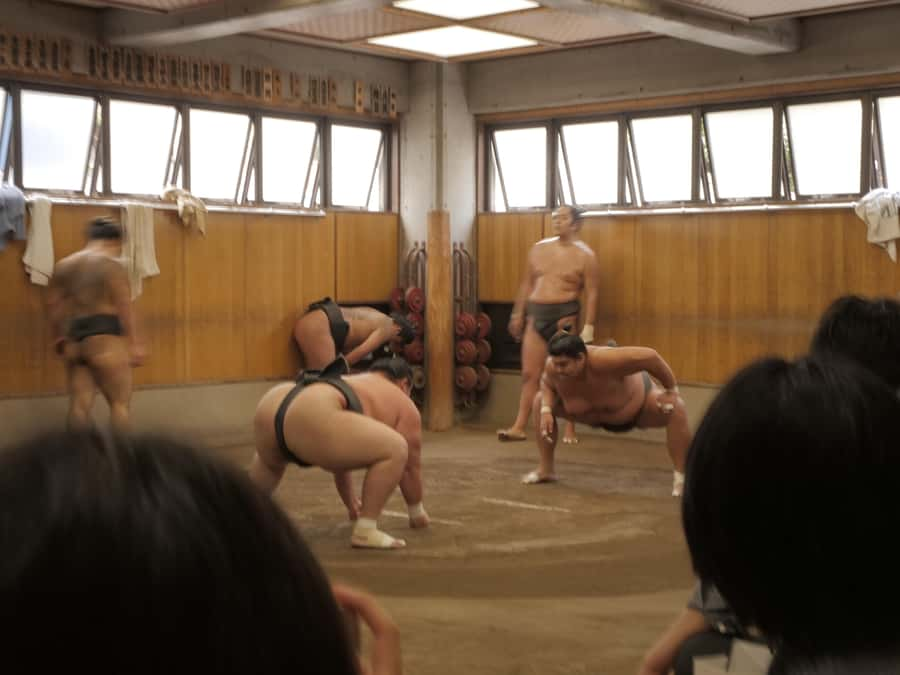
A sumo practice session gives you something a tournament cannot: close range access to the daily work behind the sport. You hear the wrestlers breathe, see repeated clashes grow harder, and watch the stable master correct technique. I like the English explanation before practice begins, and I like that the stable is only about a two-minute walk from the meeting point.
The main drawback is comfort. You may sit on tatami, and some groups have limited seating or a poor view from the back. Chairs are available at some stables, but they are not guaranteed, so this visit suits people who can manage a firm floor and a strict, quiet setting.
Key points worth knowing
- Watch a real morning practice: This is training at an active Tokyo sumo stable, not a staged demonstration.
- Hear the action up close: The repeated bouts let you notice breathing, footwork, impact, and the stable master’s instructions.
- Learn before entering: Your guide explains basic rules, rankings, customs, and the stable’s conduct rules in English.
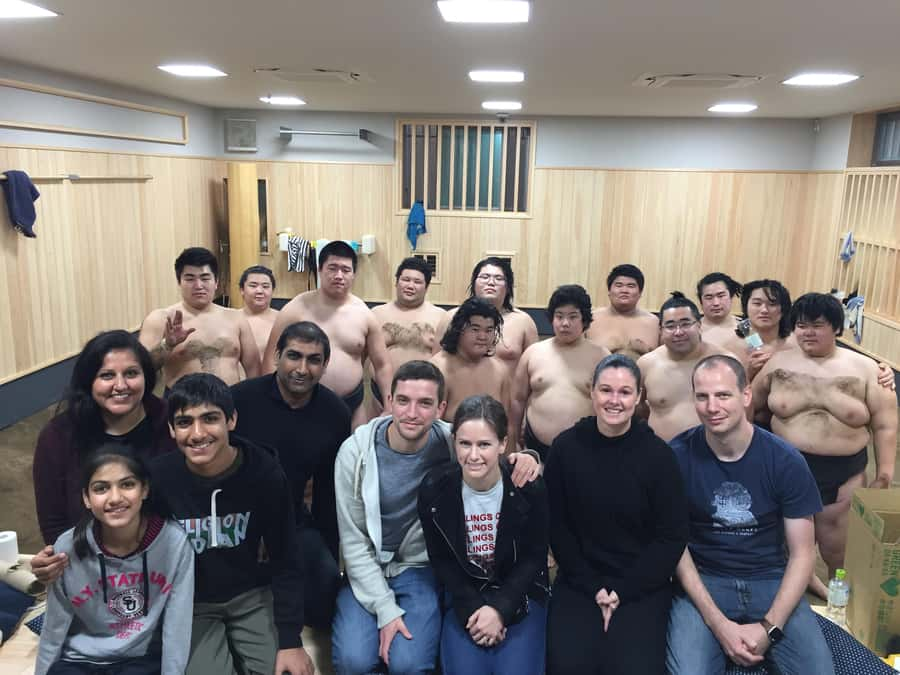
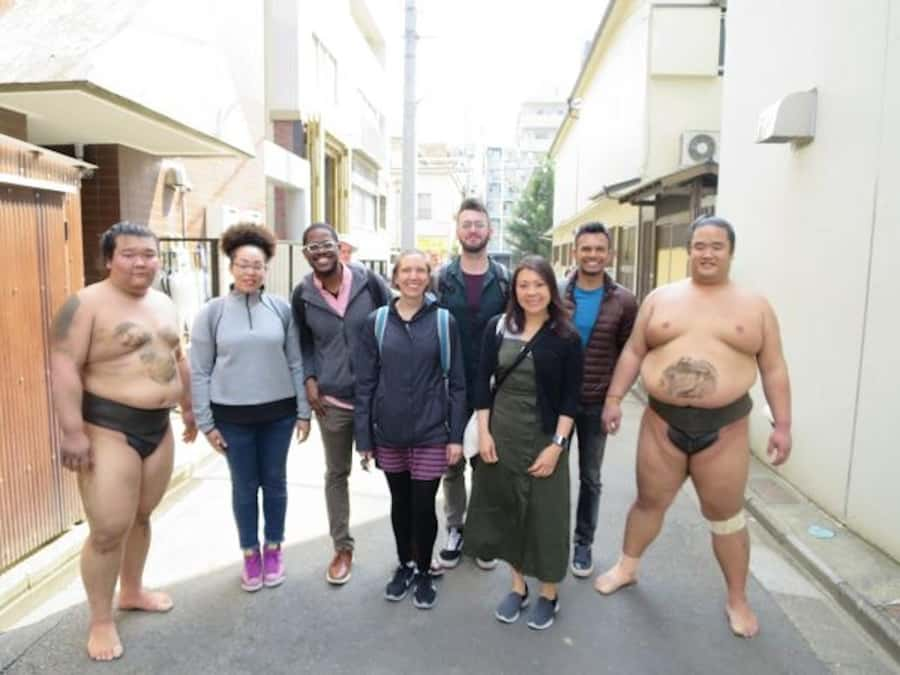
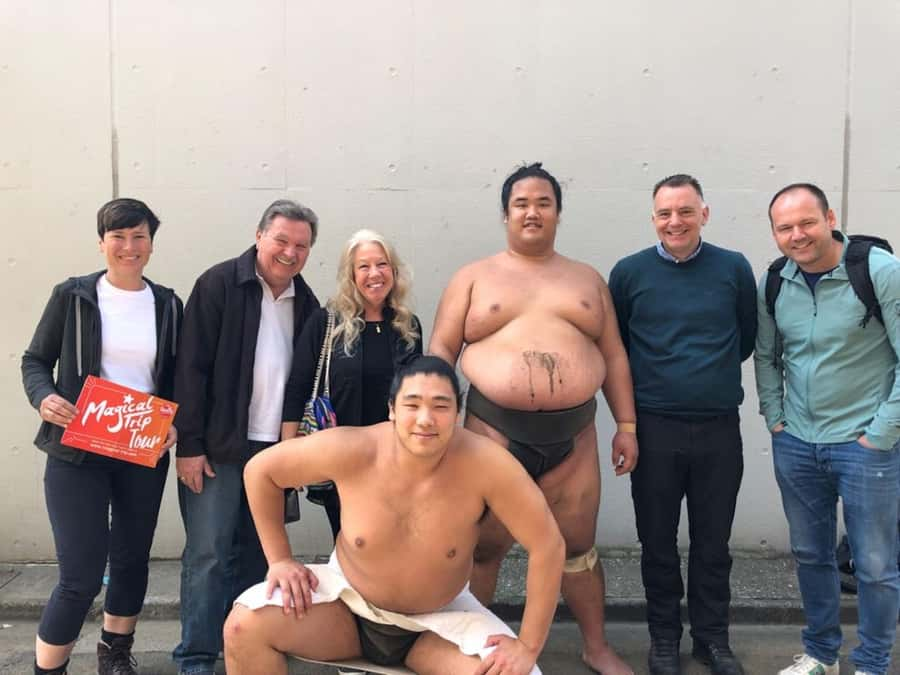
- Meet the wrestlers afterward: A group photo is included, but an individual photo depends on the wrestlers and the stable.
- Expect a small group: The tour is limited to 10 people, which helps you hear the guide and see the ring.
- Plan for a prompt start: Meet at the A1 exit of Kiyosumi-Shirakawa Station, where the guide holds a red or orange Magical Trip sign.
Why morning sumo practice feels different from a tournament
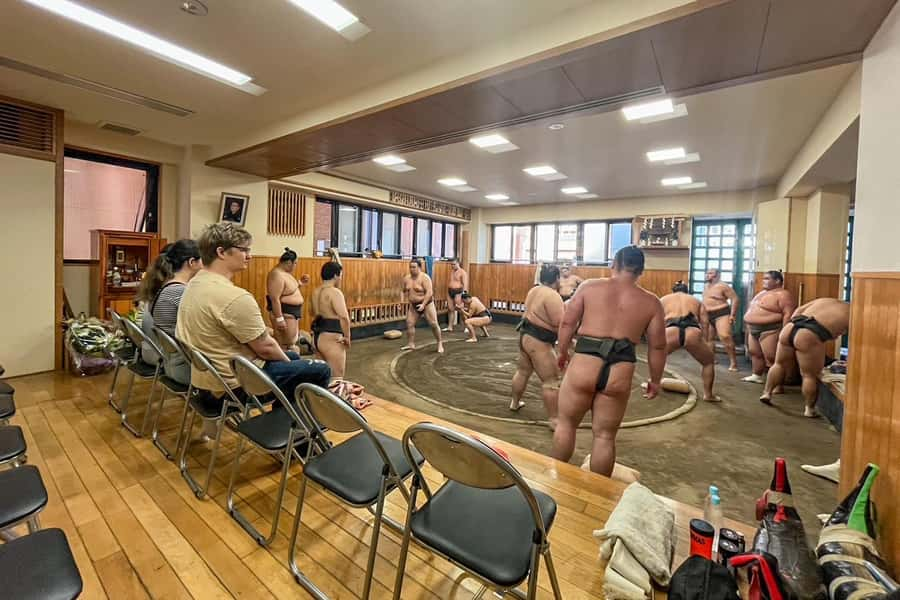
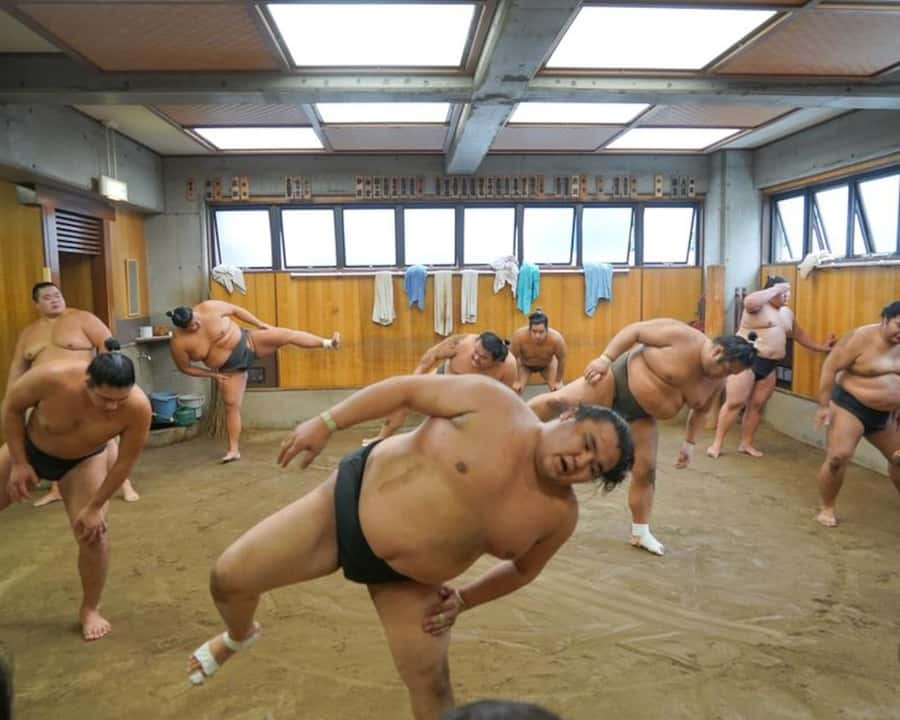
At a tournament, you watch polished bouts with a crowd, announcements, rankings, and a full day of ceremony. Here, you see the working side of sumo. The wrestlers repeat movements, push through drills, and face one another again and again while building strength and timing.
That repetition is the point. You get a better sense of how much preparation sits behind a short match. One bout may be over quickly, but the physical effort leading to that moment is serious. Several people who have attended tournaments found this practice visit more personal because they could watch the training process from nearby.
I like the way the session builds. At first, you may be taking in the customs and trying to understand who is doing what. As the morning progresses, the practice can become more forceful, with full bouts and hard contact. You begin to notice the difference between a basic drill and a serious clash.
The setting also changes your behavior. You are not entering a show venue where you can chat, snack, or wander about. The stable is a working space, and you are expected to stay in the permitted tatami viewing area, remain quiet, and follow instructions. That restraint is part of the experience.
More photo tours and shoots in Tokyo:
- Tokyo: Kimono Dressing, Walking, and Photography Session
★ 4.9 · 427 reviews - Best Go Kart Experience in Shibuya Crossing with Iconic Photos
★ 5.0 · 348 reviews - Tokyo Ryogoku Sumo Morning Practice + Photo Shoot with Wrestlers
★ 4.5 · 277 reviews
Meeting at Kiyosumi-Shirakawa Station
Your meeting point is the A1 exit of Kiyosumi-Shirakawa Station. Look for a guide holding a red or orange sign marked Magical Trip. Arrive early. The tour starts promptly, and late arrivals cannot join or receive a refund.
From the station, the stable is a short walk. The listed route includes stops around Kiyosumi, including 3-chōme-6-2 and 3-chōme-3-9, before returning to the station. The exact stable and walking route can depend on the practice arrangement, so follow the guide rather than trying to navigate independently.
The short walk matters. You do not spend much of your two hours on transport, and you can reach the stable without arranging a taxi. Still, I would avoid squeezing this tour between two time-sensitive Tokyo plans. The practice schedule can change, and the tour itself will not wait for late arrivals.
What the guide adds before you enter
A good guide turns a confusing practice into something you can follow. The English explanation covers the basic rules, traditions, history, and ranking system. You also receive a Magical Trip sumo guidebook with names, photographs, and simple reference information about the stable and the sport.
Guides have different personalities. Marie is described as especially passionate and clear, with an engaging explanation before practice and patience during questions. Sho has covered the rules and ranking system in useful detail, while Masao Hiramatsu has helped visitors with wider questions about Japan after the tour. The guide you receive will depend on the date, but the format gives you a useful introduction before you sit down.
This preparation is important because sumo has many details that are easy to miss. You might otherwise see a large athlete step into the ring, push his opponent, and wonder what separates practice from competition. The guide helps you notice technique, rank, stable customs, and the role of the master.
One useful point to ask about is the level of the wrestlers you are watching. The group may include younger wrestlers and more experienced athletes, and the clothing or style can differ. The supplied information does not promise a detailed profile of every wrestler, so ask questions when the guide opens the floor.
Inside the stable, rules come first
A sumo stable is not simply a room with a ring. It is where wrestlers live and train within a strict structure. The guide explains the stable rules before entry, and you need to follow them closely.
Only the designated tatami viewing areas are open to you. Other parts of the stable are off-limits. Do not wander, reach toward the ring, interrupt the practice, or treat the session like a casual photo opportunity. The stable can refuse participation if someone behaves disrespectfully, with no refund.
That may sound strict, but it protects the training session. You are watching athletes at work, not attending a performance arranged around visitors. I appreciate that the experience keeps the focus on the wrestlers and their discipline.
The atmosphere can be quiet and serious. You may hear instructions from the stable master, the slap of bodies against the floor, and the heavy breathing of the wrestlers. Those sounds convey the effort better than a distant seat at a tournament.
Same backdrop, a different kind of shoot:
- Tokyo Cyberpunk Street Photo Tour
★ 5.0 · 165 reviews - Tokyo by Night Photography Tour (Private Option Available)
★ 5.0 · 151 reviews - Tokyo Shinjuku Night Photo Tour with Pro Gota
★ 5.0 · 142 reviews - Tokyo Sumo Morning Practice Tour w/ Ring-Side Seat + Photo Shoot
★ 5.0 · 93 reviews
Ringside practice and the physical reality of sumo
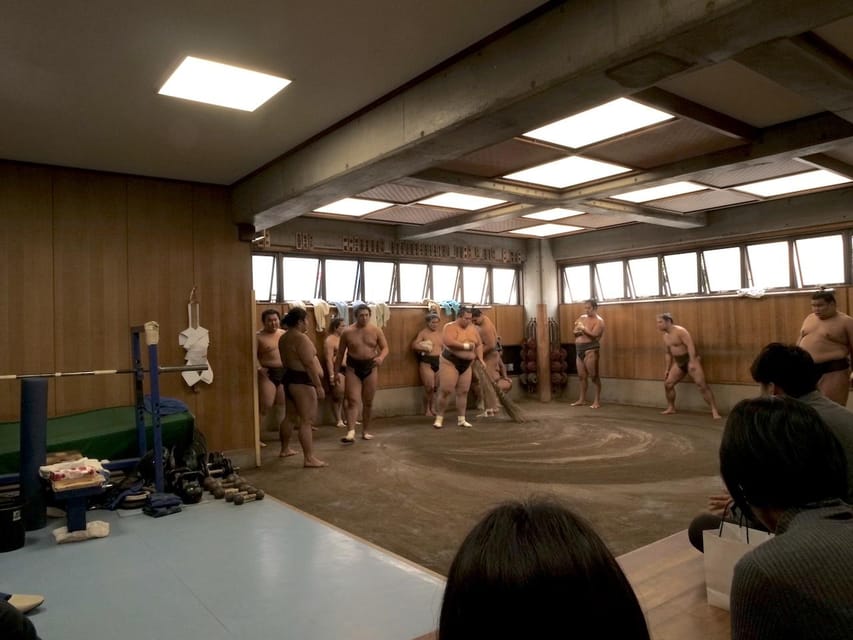
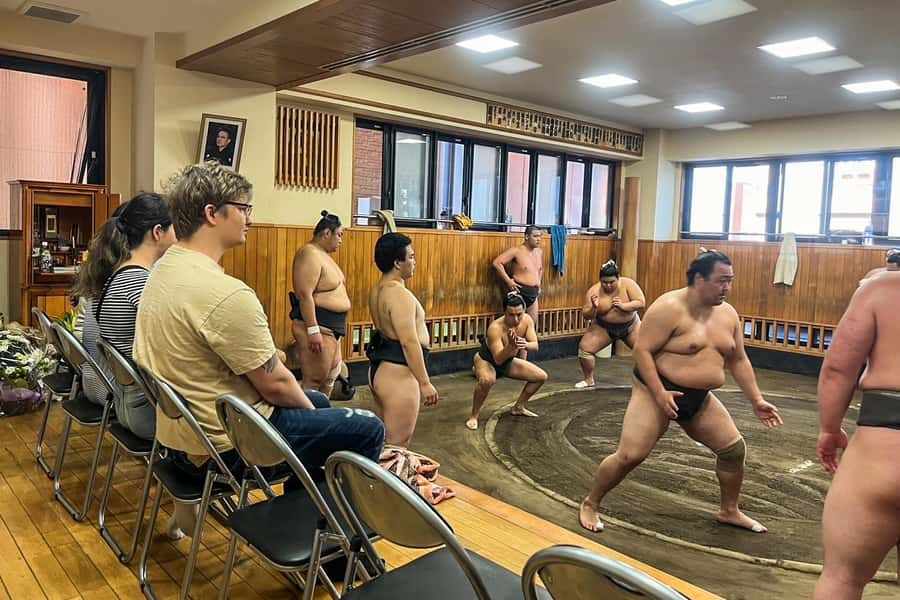
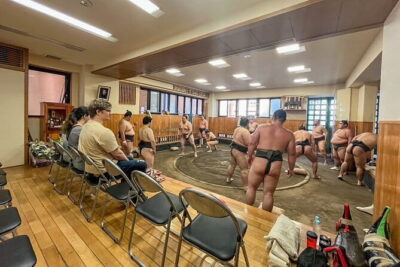
The most valuable part of the visit is the view. You are close enough to see foot placement, bracing, shoving, and the wrestlers’ expressions. The athletes may run through repeated maneuvers before the practice develops into harder bouts.
This is where the tour can change your idea of sumo. The sport is not just about size. Balance, timing, force, discipline, and the ability to absorb pressure all matter. The practice can look repetitive at first, but the repetition lets you see small changes in stance and movement.
Some sessions offer chairs, while others expect you to sit on the tatami. One group had three rows of chairs, and another reported four rows, with the front rows closest to the ring. Seating arrangements vary by stable. If you are in a rear row, your view may be less direct, and standing for much of the session may be the practical choice.
That is the biggest comfort warning. The advertised length is two hours, and the practice may move quickly for you, but sitting cross-legged on a firm floor can be tiring. Wear comfortable clothing and arrive ready to stay in one place. Do not assume a chair will be available simply because one was available on another date.
The two-hour schedule and what you will see
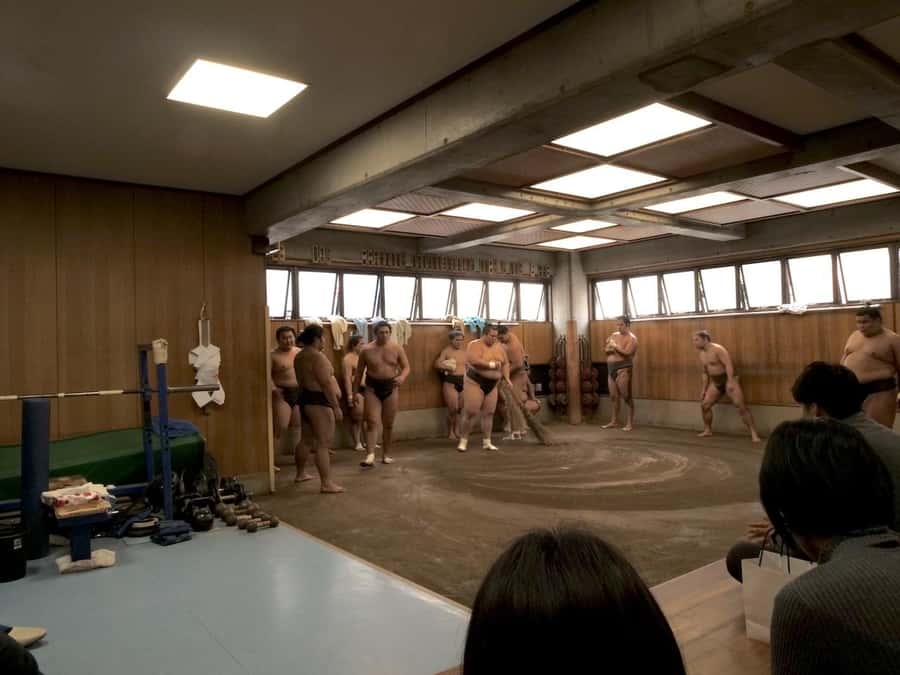
The visit lasts about two hours, including the short walk, orientation, practice, questions, and possible photographs. The balance can shift depending on the stable’s schedule and the length of the training.
A typical flow looks like this:
- Meet your guide at Kiyosumi-Shirakawa Station.
- Walk to the sumo stable.
- Hear the stable rules and an explanation of sumo customs.
- Take your place in the permitted viewing area.
- Watch morning drills and bouts.
- Ask questions when the practice ends or the guide allows it.
- Take a group photograph, with a possible photograph alongside a wrestler.
- Walk back toward the station.
The photo opportunity comes at the end and is not guaranteed in the same way as entry. If the wrestlers are willing and the stable permits it, you may have a photo taken with them. The wording matters: the photo is at the wrestler’s discretion, so book this for the practice itself, not for a guaranteed personal portrait.
A group photo is also possible. Keep your expectations modest and respectful. The wrestlers have just completed training, and the stable controls how the meeting happens.
How the $96 price measures up
At $96 per person, this is not a cheap way to fill two hours. I think the price makes sense if you value access, explanation, and a small group rather than simply seeing sumo from a public seat.
The cost includes entry to the stable, an English-speaking guide, the sumo guidebook, and the photo session at the end. Food and drinks are not included, but this is a morning training visit rather than a meal tour, so that omission is easy to plan around.
The value comes from access that is normally difficult to arrange on your own. You are not just looking through a doorway. You are brought into a working stable, given context, and placed close enough to understand the force of the practice.
I would compare it with the price of a tournament ticket only with care. A tournament gives you a bigger event and more formal competition. This tour gives you repeated practice, a smaller setting, and explanations that help you understand what you are seeing. If your goal is the excitement of official matches, choose a tournament. If you want to understand training and stable life, this tour offers better value.
Who will enjoy this most
I would recommend the visit to first-time Tokyo visitors who want a cultural activity with real access rather than a broad sightseeing stop. It is also a good choice for sumo fans who have already attended a tournament and want to see what happens before competition.
It suits couples, older children aged 12 and above, and small groups who can sit quietly and follow instructions. One couple used the visit as a birthday gift, and the compact format worked well for a special morning without taking over an entire day.
You do not need to know the rules before arriving. The guide and booklet provide a starting point. Curiosity matters more than prior sumo knowledge.
I would hesitate to recommend it if you need guaranteed chair seating, wheelchair access, or a flexible arrival time. Children under 12 are not allowed inside the stable. Wheelchair users may find the tatami-only viewing area and access points unsuitable, and baby strollers are not allowed.
Practical advice for a smoother visit
Arrive at the station before the meeting time, not at the exact minute. The group leaves promptly, and there is no refund or rescheduling for late arrivals.
Wear clothes that allow you to sit comfortably. If you have trouble sitting on the floor, tell the guide before entering, but do not count on a chair. The stable may provide chairs, yet the setup can change.
Keep your phone and camera ready, but use them only as permitted. Follow the stable’s directions about photos and movement. The session is more rewarding when you watch the wrestlers instead of trying to record every second.
Read the guidebook during the introduction. Names and photographs help you identify who is training, and the basic rules make the bouts easier to follow. Ask about rankings, experience, and the different stages of a wrestler’s career if the guide has time.
Finally, leave room in your schedule afterward. The tour is planned for two hours, but a last-minute change in the practice schedule can affect the timing. Sumo stables may cancel or adjust practice because of a wrestler’s condition or tournament commitments. If the stable cancels, a full refund is provided.
Should you book this sumo practice tour?
I would book it if you want to see sumo as a demanding daily discipline, not just as a colorful part of Japanese culture. The strongest features are the close view, the serious training atmosphere, the small group size, and the guide’s explanation of customs and rankings.
I would skip it if you need easy access, guaranteed chairs, or a casual drop-in activity. The setting is strict, the start time matters, and the floor can be uncomfortable.
For most visitors aged 12 and above who can manage those limits, the two hours offer a rare look behind the ring. The combination of powerful practice, quiet discipline, and a possible meeting with the wrestlers makes the $96 cost reasonable for a special Tokyo morning.
FAQ
Where does the tour meet?
Meet at the A1 exit of Kiyosumi-Shirakawa Station. Your guide will hold a red or orange sign marked Magical Trip.
How long does the sumo practice tour last?
The tour lasts about two hours, including the walk to the stable, the explanation, practice viewing, questions, and the possible photo session.
Is the tour conducted in English?
Yes. The tour includes a live English-speaking guide.
Can I take a photo with a sumo wrestler?
A photo session is included at the end, but a photo with an individual wrestler depends on the wrestler’s discretion and the stable’s arrangements.
Are children allowed on the tour?
Children must be at least 12 years old. Children under 12 are not allowed inside the sumo stable, and participation may be denied without a refund.
Will I have a chair inside the stable?
Not always. Most stables do not provide chairs, though some have seating. You should be prepared to sit on tatami, and some viewing areas may be difficult to access with a wheelchair or stroller.
Just added around Tokyo
- Tokyo: Private Photoshoot at Shibuya Crossing★ 4.7 · 7 reviews
- Tokyo: Customized Private Historical Guided Photoshoot Tour★ 5.0 · 25 reviews
- Tokyo Private photo tour with Nightstreet Neon photographer★ 5.0 · 17 reviews
- Tokyo: Private Makeover Photography Studio in Luxury Kimono★ 5.0 · 22 reviews
- Tokyo: Private Instagramable Customised Tokyo City Day Tour★ 4.2 · 4 reviews
- Tokyo: Private Photo Shoot with a Professional Photographer★ 5.0 · 11 reviews
- Tokyo Portrait Tour with a Professional Photographer★ 5.0 · 29 reviews
- Tokyo: Photography Masterclass – Private Photo Lesson★ 5.0 · 7 reviews
Tokyo Photo Tours & Photoshoots, side by side.
Kimono Dressing, Walking, and Photography Session
Read our review →
Best Go Kart Experience in Shibuya Crossing with Iconic Photos
Read our review →
Tokyo Ryogoku Sumo Morning Practice + Photo Shoot with Wrestlers
Read our review →

Tokyo by Night Photography Tour (Private Option Available)
Read our review →
Tokyo Sumo Morning Practice Tour w/ Ring-Side Seat + Photo Shoot
Read our review →
Tour with Pro Tokyo Photographer and take Edgy Unique Portraits
Read our review →Lists this one turns up in