
Review · TOKYO PHOTO TOURS & PHOTOSHOOTS
Tokyo Ryogoku Sumo Morning Practice + Photo Shoot with Wrestlers
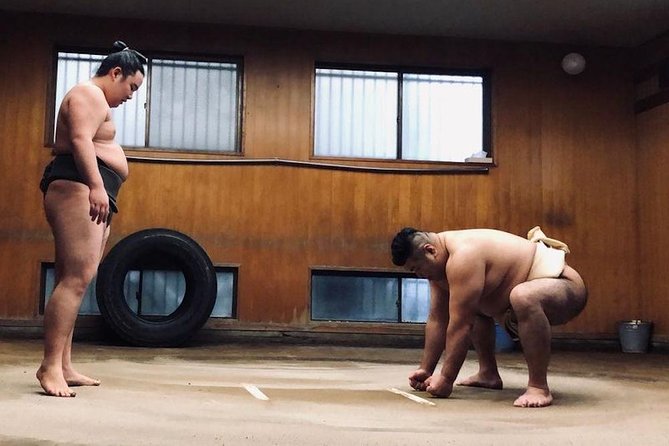
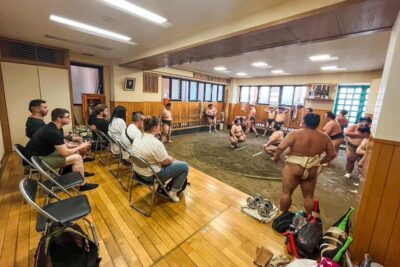
The best part of this experience is the access. You are not watching a staged demonstration. You sit close to wrestlers as they warm up, drill, and sometimes face one another in serious practice bouts. The training is real, and the quiet, formal setting gives you a better feel for sumo life than a quick look at a tournament from the stands.
I like two things here: the small group size, capped at seven, and the local guide who explains what your eyes are seeing. Guides including Mayu, Masao, Ayaka, and Yumiko have helped visitors understand rankings, stable life, rules, and ritual. The main drawback is that you may sit on the floor for well over an hour, and photos or a posed wrestler photo are never guaranteed.
Key points to know before you book
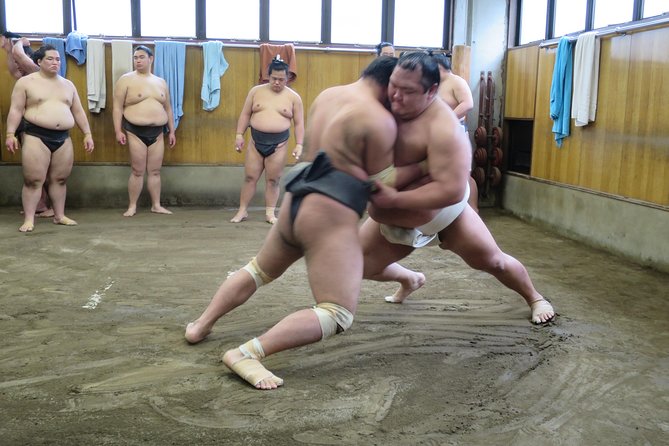
- Practice takes place inside an active sumo stable, not at a tourist show or museum.
- The assigned stable can change, and the walk from the station may take about five to 30 minutes.
- Silence matters during training, and you may not be allowed to use the toilet until practice ends.
- Floor seating is normal, with first-come, first-served places and no promise of a front row.
- Photography depends on the stable, including photos with wrestlers after practice.
- The experience is for ages 12 and older, with an advertised price of $98.16 per person.
Why this morning gets you closer to real sumo
Ryogoku is Tokyo’s sumo district, and the early hour is part of the point. Sumo wrestlers train in stables, known in Japanese as heya, rather than in a public gym built for spectators. This tour gives you a way into that world without trying to arrange access on your own.
You meet at 8:00 a.m. by the East Exit of JR Ryogoku Station. The guide carries a red or orange MagicalTrip board, which is useful in a busy station area. Pay close attention to the station name: Ryogoku has two stations, and you need the JR station, not Ryogoku Station on the Oedo subway line.
The group then walks to a stable available that morning. The walk may take only five minutes, or it may take as long as 30 minutes. That variation matters if you are planning a tight morning around the Tokyo Skytree, a museum visit, or a train reservation.
Before entering, your guide should explain the rules and the basic structure of practice. The strongest versions of this tour have included clear introductions to sumo rankings, stable life, wrestler training, and the customs you are about to see. Some guides have also written notes during practice so visitors could follow the action without speaking.
More Early-Start Trips around Tokyo:
- Tokyo Sumo Morning Practice Tour w/ Ring-Side Seat + Photo Shoot
★ 5.0 · 93 reviews - Exclusive Sumo Morning Practice in Tokyo with Photo Opportunity
★ 5.0 · 68 reviews - Barcelona: Paddleboarding at Sunrise. Includes: instructor, photos, equipment
★ 4.7 · 570 reviews
Inside the stable, silence is part of the experience
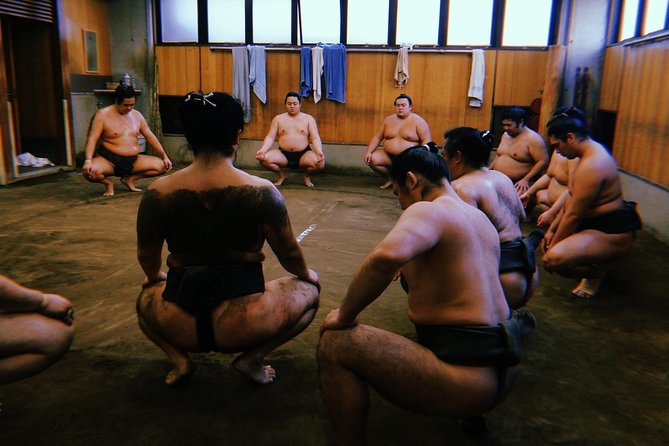
Once inside, you sit on tatami flooring and watch the wrestlers work. The session may include warmups, stretching, repeated exercises, technique drills, and actual bouts. You might see the force of a collision, then the careful repetition that comes before it.
This is not a performance arranged around your arrival. Training may already be under way when you enter, and it can end earlier or later than expected. One session lasted close to two hours rather than the usual hour, while another ended early after a wrestler was injured. That unpredictability is a weakness if you want a tidy schedule, but it is also a sign that the stable’s routine comes first.
You are expected to sit quietly. The stable may ask you to wear a mask, sit in a particular way, or keep your phone and camera away during practice. Rules can vary by stable, and you must follow the instructions given that day. The stable can refuse entry to anyone who breaks its rules, with no refund.
The seating is another practical matter. Most stables do not provide chairs, so you may spend an hour and 20 minutes or longer on the floor. If sitting cross-legged is difficult, this may be the deciding factor. Arrive prepared, and use the toilet before the tour begins because you may not be allowed to leave during practice.
What makes the wrestlers’ training worth seeing
A tournament gives you the drama of a formal match, but morning practice shows the work behind it. You can watch wrestlers repeat the same movement, test balance and strength, and prepare for upcoming bouts. The close distance also lets you notice the quiet parts of sumo: the waiting, the hierarchy, the strict etiquette, and the way senior and junior wrestlers share the space.
The physical effort is obvious, but the atmosphere is not loud. That can surprise people who expect constant action. You may spend long stretches watching wrestlers prepare or repeat drills. The reward is a clearer sense of how disciplined the sport is, not just how powerful it looks.
A guide can make a major difference here. Good explanations help you understand why wrestlers perform certain rituals, how stables are organized, and what the different levels of practice mean. Several guides have been praised for making the unfamiliar easy to follow. On the other hand, the quality of the commentary can vary, and some sessions have included only a short introduction.
That is why I would treat this as a close-up cultural visit first and a guided lecture second. If your main goal is a detailed lesson on sumo’s origins and history, you may want to pair this with a museum visit or a tournament day. The tour can give you access and context, but it does not promise a long classroom-style explanation.
The photo opportunity comes with conditions
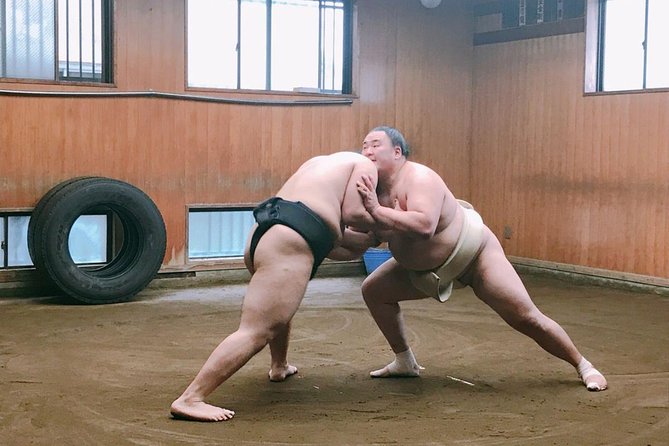
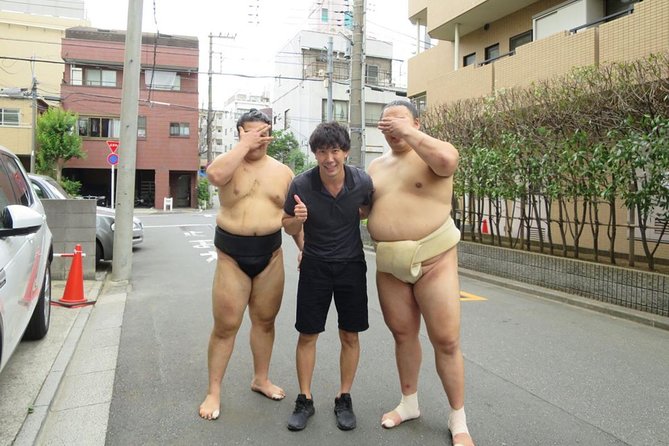
The title promises a photo shoot with wrestlers, but you should read that as a possibility rather than a guarantee. The sumo stable decides if photography is allowed during practice and if wrestlers will pose with visitors afterward.
Some groups have been able to take photos of training and stand for posed pictures with wrestlers at the end. In other cases, photography was prohibited during the session, or a photo with the wrestlers was not allowed. The stable’s daily needs take priority.
Keep your camera ready but do not assume you can use it. Wait for your guide’s instructions. Never photograph simply because another person is doing so. The rules can change from one stable to another, and ignoring them could end the visit immediately.
Tour photos are included, but the exact timing and content depend on what the stable permits. If a posed photograph is especially important to you, this experience carries some risk. If your priority is seeing genuine training up close, the uncertainty is easier to accept.
More photo tours and shoots in Tokyo:
- Tokyo: Kimono Dressing, Walking, and Photography Session
★ 4.9 · 427 reviews - Best Go Kart Experience in Shibuya Crossing with Iconic Photos
★ 5.0 · 348 reviews - Tokyo Cyberpunk Street Photo Tour
★ 5.0 · 165 reviews - Tokyo by Night Photography Tour (Private Option Available)
★ 5.0 · 151 reviews
The short walk around Ryogoku
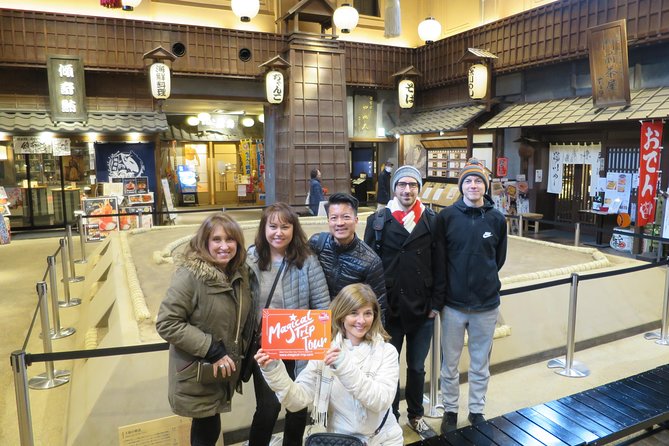
After practice, the guide walks you back toward the station and may spend about 10 minutes showing you Ryogoku, the neighborhood closely tied to sumo. The listed stop includes Ryogoku Kokugikan, Tokyo’s major sumo arena, though this activity does not include entry to a tournament.
One group also visited Ekoin Temple, a place connected with memorials for the dead. That extra stop may depend on the guide, the route, and the day, so I would not book this expecting a full temple tour. Still, it shows how the outing can add a small piece of local history after the intensity of the stable.
This neighborhood walk is brief. Its value is mainly orientation. You finish knowing where the arena is, how the sumo district fits together, and how the training stable relates to the public side of the sport.
The tour ends back at the meeting point near JR Ryogoku Station. That makes it easy to continue to another Tokyo sight, but allow extra time if practice runs long.
Is $98.16 a fair price?
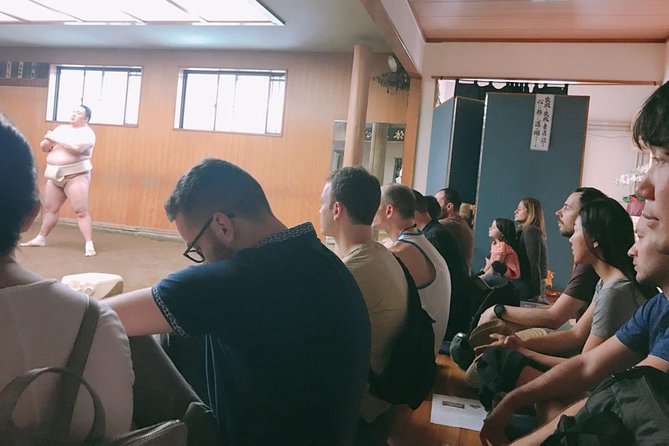
At $98.16 per person, this is not a cheap way to spend two hours in Tokyo. You are paying for a guide, access arranged through local contacts, a small group, and the chance to enter a place that can be difficult to reach independently.
The value depends on what you want. If you already follow sumo and understand the basics, the close view of a normal practice may be worth the price by itself. You can watch current wrestlers train only a few feet away, sometimes including familiar names from professional competition.
If you know little about sumo, the price is more reasonable when your guide gives a proper introduction and helps interpret the session. It feels less worthwhile when you arrive partway through practice, receive little explanation, or spend the entire visit simply sitting in silence. There is no lunch, meal, or extended activity included. Any hot pot meal connected with a particular visit should not be treated as part of the standard tour.
You might wonder if you can simply contact a stable yourself. That is sometimes possible in Tokyo, but this tour’s value is the arrangement, translation, meeting point, and etiquette briefing. Independent access may cost less, but it also depends on the stable accepting visitors and explaining its rules. The tour is most useful if you want a reliable way to try, not if you are determined to find the lowest possible price.
Timing, age rules, and weather concerns
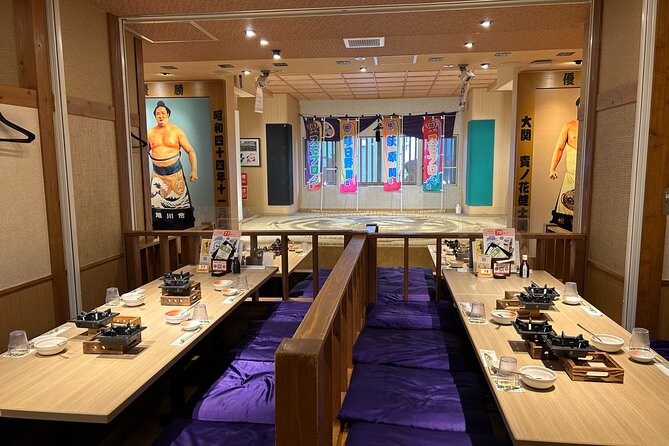
This is an early start. You should reach the meeting point before 8:00 a.m., not at 8:00. The operator allows only a narrow window for late arrivals because entering a stable after practice begins can disturb the wrestlers. If you are more than 15 minutes late, you may be refused entry without a refund or rescheduling.
That makes the correct station especially important. Go to JR Ryogoku Station East Exit and look for the guide’s red or orange board. Do not go to the Oedo Line station by mistake.
The tour accepts people aged 12 and older. Children under 12 cannot enter the practice and will be denied admission without a refund. The group size is limited to seven, though a larger overall booking may be split between different groups and stables.
The operator may ask you to change the date or time if the stable’s schedule changes. A stable can cancel or alter practice at short notice because of tournament preparations or a wrestler’s condition. If that happens, the booking is fully refunded. The stated cancellation policy also allows a full refund when you cancel at least 24 hours before the start time. Changes or cancellations inside that window are not refunded.
Summer deserves extra care. Tokyo can be hot and humid even early in the day, so carry water and consider a hat. The experience also requires good weather under the stated policy. If poor weather causes cancellation, you are offered another date or a full refund.
Who will enjoy this most
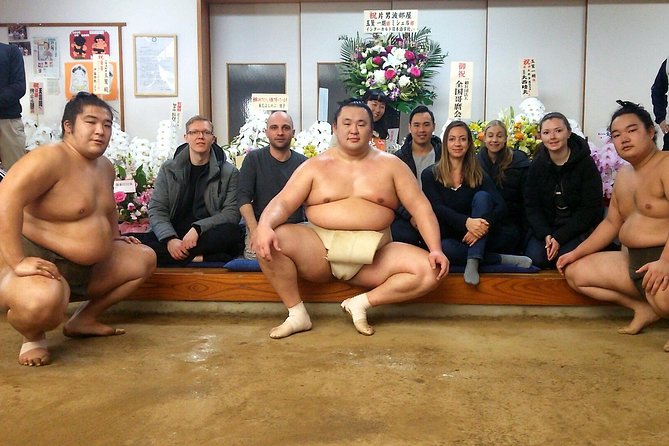
I would recommend this to anyone who wants a close look at Japanese sport and daily discipline, especially if a tournament ticket is unavailable. It suits people who enjoy watching process rather than waiting for a polished show.
It is also a good solo activity. You must sit quietly during practice, so you do not need a companion to make conversation or fill the time. A small group can also make it easier to hear the guide before and after the session.
Sumo fans will get the most from it, especially those who want to see how wrestlers train between public bouts. First-time visitors can enjoy it too, but I would read a little about the basic rankings and rules beforehand. That lets you spend less time wondering what is happening and more time watching the details.
I would skip it if you need chairs, frequent toilet access, a fixed end time, or guaranteed photos. I would also skip it if you dislike strict rules or quiet observation. The stable is a working place, not an attraction designed around visitor comfort.
Should you book the Ryogoku sumo morning practice?
Book it if you value rare access, can sit on the floor, and are willing to accept that the stable controls the schedule and cameras. The strongest version of the experience puts you close to serious training, with a guide such as Masao, Mayu, Ayaka, or Yumiko adding the cultural details that make the practice easier to understand.
Go in with realistic expectations. You may arrive after practice has begun, sit toward the back, hear only a brief explanation, or leave without a wrestler photo. But if the stable welcomes you, the reward is an unusually direct look at sumo as work, ritual, and daily routine. For many people, that is more revealing than watching a formal match alone.
FAQ
Where does the tour meet?
Meet your guide at the East Exit of JR Ryogoku Station near Re.Ra.Ku Ryogoku Ekimae. The guide will hold a red or orange MagicalTrip board.
Which Ryogoku station should I use?
Use JR Ryogoku Station. Do not go to Ryogoku Station on the Oedo Line.
What time does the tour begin?
The tour starts at 8:00 a.m. You should arrive early because the group cannot wait long for late arrivals.
How long does the experience last?
The advertised duration is about two hours. The practice can run longer than expected, so the tour may finish late.
How far is the sumo stable from the station?
The walk can take about five to 30 minutes, depending on which stable is available that day.
Can children join the tour?
Only people aged 12 and older can join. Children under 12 are not allowed inside the sumo morning practice.
Will I sit on a chair?
You may have to sit on the floor because most stables use tatami flooring and do not usually provide chairs.
Can I take photos of the wrestlers?
Photography depends on the sumo stable. The stable may allow photos during practice or after the session, but neither is guaranteed.
Is a photo with a wrestler guaranteed?
No. The stable decides if visitors can pose for photos with wrestlers.
What happens if the stable cancels practice?
The operator may cancel because of a schedule change, tournament plans, or a wrestler’s condition. If the booking is canceled for that reason, you are offered a full refund.
Just added around Tokyo
- Tokyo: Private Photoshoot at Shibuya Crossing★ 4.7 · 7 reviews
- Tokyo: Customized Private Historical Guided Photoshoot Tour★ 5.0 · 25 reviews
- Tokyo Private photo tour with Nightstreet Neon photographer★ 5.0 · 17 reviews
- Tokyo: Private Makeover Photography Studio in Luxury Kimono★ 5.0 · 22 reviews
- Tokyo: Private Instagramable Customised Tokyo City Day Tour★ 4.2 · 4 reviews
- Tokyo: Private Photo Shoot with a Professional Photographer★ 5.0 · 11 reviews
- Tokyo Portrait Tour with a Professional Photographer★ 5.0 · 29 reviews
- Tokyo: Photography Masterclass – Private Photo Lesson★ 5.0 · 7 reviews
Tokyo Photo Tours & Photoshoots, side by side.
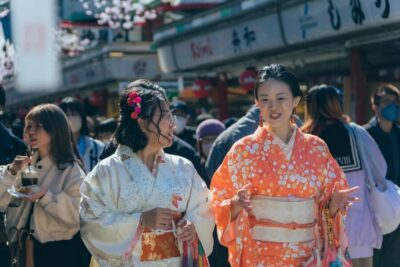
Kimono Dressing, Walking, and Photography Session
Read our review →
Best Go Kart Experience in Shibuya Crossing with Iconic Photos
Read our review →

Tokyo by Night Photography Tour (Private Option Available)
Read our review →
Sumo Practice Tour with Ring-Side Seat and Photoshoot
Read our review →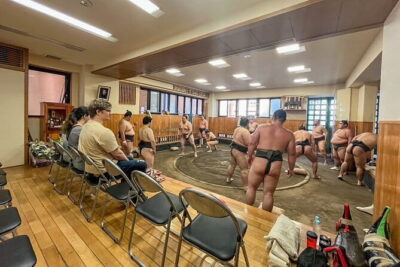
Tokyo Sumo Morning Practice Tour w/ Ring-Side Seat + Photo Shoot
Read our review →
Tour with Pro Tokyo Photographer and take Edgy Unique Portraits
Read our review →Lists this one turns up in