
Review · PHOTOGRAPHY TOURS
Photo Tour of Hamburg’s UNESCO World Heritage Site
Hamburg’s brick-built Kontorhausviertel and Speicherstadt give you far more to photograph than a few postcard views. This four-hour walk takes you from the sharp prow of Chile House through narrow brick passages and along the canals, while Marius Gebhardt explains how to find stronger angles, cleaner compositions, and better light with the camera you already carry.
I like the small group, capped at eight, and the fact that the instruction works for both smartphone users and digital-camera owners. I also like the balance between photography and Hamburg history. The main consideration is the fixed 5:00 pm start and the weather requirement, so you should be comfortable giving up an afternoon and keeping an eye on the forecast.
Key points at a glance
- Chile House from an unusual angle: Begin beneath one of Hamburg’s best-known buildings, looking up at its distinctive architecture.
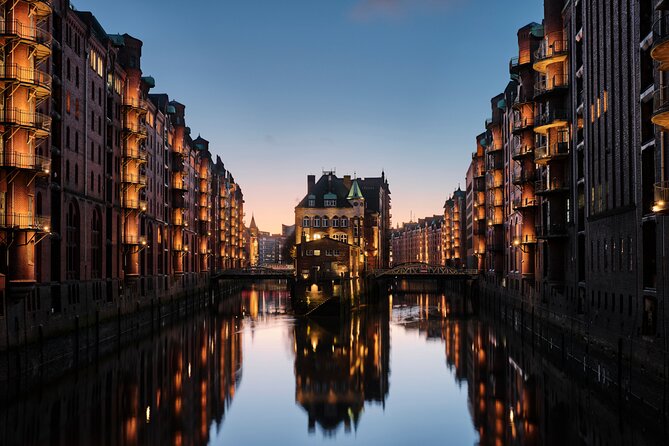
- Two UNESCO quarters in one walk: Move through the Kontorhausviertel and Speicherstadt on foot, with canals, brick facades, and port buildings along the way.
- Practical camera coaching: Learn perspective, image structure, and exposure rather than simply collecting sightseeing facts.
- Good for beginners: Marius gives clear help with basic photography, including exposure guidance.
- Small group format: A maximum of eight people allows the walk to adjust to different skill levels.
- A useful pause after two hours: Stop for a short break where you can ask technical questions or simply catch your breath.
Why this Hamburg photo walk is different
Many city walks give you a route and a stream of facts. This one adds a useful question at every stop: how can you show this place more clearly in a photograph?
That matters in Hamburg’s historic center, where the buildings can look similar at first glance. The Chile House has strong lines and a dramatic shape. Speicherstadt has long brick walls, water, bridges, and narrow views that can easily turn into cluttered pictures. A guide who helps you choose your viewpoint can make the difference between a quick snapshot and a photograph with a clear subject.
Marius Gebhardt leads the walk as both photographer and city guide. His approach combines photo instruction with stories about Hamburg, so you are not left trying to learn camera settings in a vacuum. You can understand why a building matters, then decide how its shape, scale, and setting should appear in your image.
The group limit is important here. With no more than eight participants, Marius can adapt his explanations to the people in front of him. That is particularly useful if one person is using a phone and another is working with a digital camera. It also means you should have a better chance to ask questions than on a large sightseeing tour.
More Photography Tours in Germany
- BERLIN PHOTO TOUR with a professional Photographer from Berlin
★ 5.0 · 44 reviews - Private photo tour in Cologne
★ 5.0 · 9 reviews - Berlin U Bahn Cinematic Photography Tour
★ 4.9 · 9 reviews
Starting beneath the Chile House
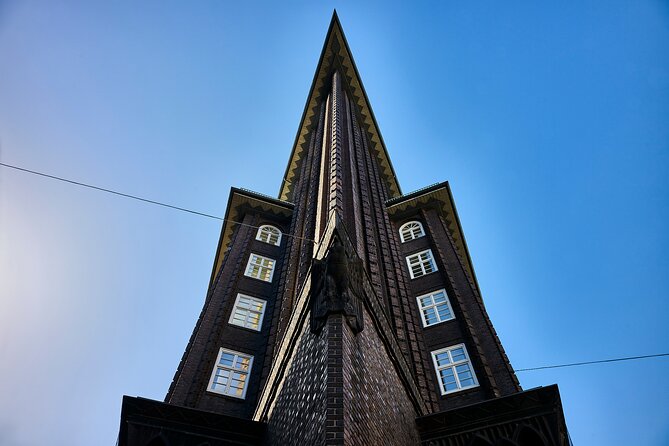
The meeting point is Fischertwiete 1A in Hamburg, and the walk begins at 5:00 pm. The first main subject is Chile House, one of the signature buildings of the Kontorhausviertel.
The route takes you beneath the building to look up at its unusual form. The description compares this view to looking under a ballerina’s skirt, a playful way to explain the building’s projecting upper structure and dramatic underside. It is a good opening exercise because the view is not the standard straight-on facade photograph.
Here, Marius can show you how perspective changes the character of a building. A low viewpoint can make lines feel taller and more forceful. Moving a few steps can alter the relationship between the pointed end of Chile House and the surrounding streets. You are not simply told to take a picture. You are guided toward the choices that shape the picture.
This is also where the historical introduction begins. The tour does not treat architecture as a collection of names and dates. It connects the buildings to Hamburg’s commercial center and gives you a reason to pay attention to details that might otherwise pass unnoticed.
If you are new to photography, this early stop should be helpful because the subject is clear and the exercise is easy to understand. If you already take photographs often, you can use the same building to work on more deliberate framing and unusual viewpoints.
Walking into Speicherstadt’s brick corridors
From the Kontorhausviertel, the route continues into Speicherstadt. The change in feel is one of the strongest parts of the walk. You move from large commercial buildings into a district of brick facades, narrow views, canals, and old warehouse architecture.
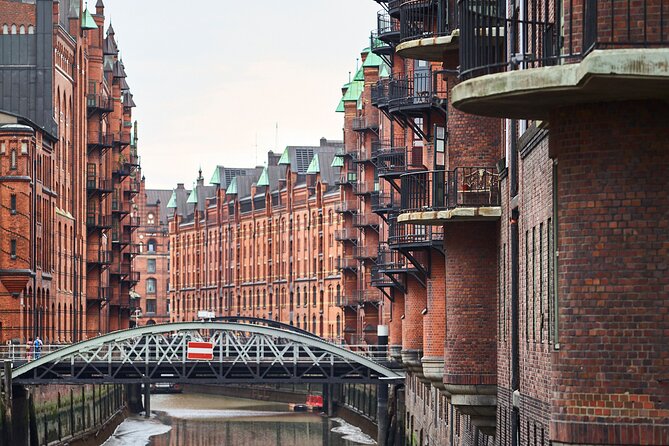
The route follows the Fleete and the Speicher, then passes Speicherstadt Town Hall before continuing toward the first artificial harbor basin of the Port of Hamburg. The walk is not just a march between landmarks. These spaces give you several types of photographic problems to solve.
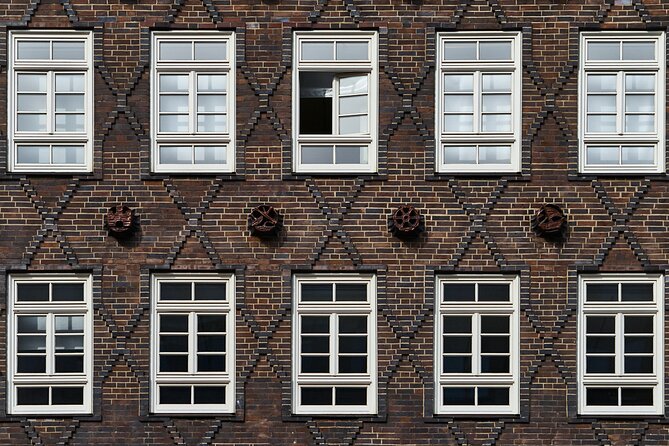
The brick walls can create long lines that draw your eye through the frame. Water can reflect the buildings, but reflections may also make an image busy if the composition is not controlled. Bridges, passages, windows, and repeating arches offer patterns, while the height of the buildings can make a phone photograph feel cramped.
Marius’s advice about perspective and image structure is especially relevant here. You may learn to step back, change your height, or wait for a cleaner arrangement before pressing the shutter. The goal is not to force every scene into the same style. It is to help you notice what the scene is already giving you.
The historical side remains active as you walk. Speicherstadt is not presented as a pretty brick backdrop only. The canals and warehouse buildings help explain Hamburg’s trading and port connections. That context can make your pictures more specific because you understand what you are looking at.
The route is approximately four hours, so expect a steady walking experience rather than a brief photo stop. Private transportation is not included. The activity begins and ends at the meeting point, which makes the route straightforward, but you should plan to stay on foot throughout the experience.
From canals to Hamburg’s first artificial harbor basin
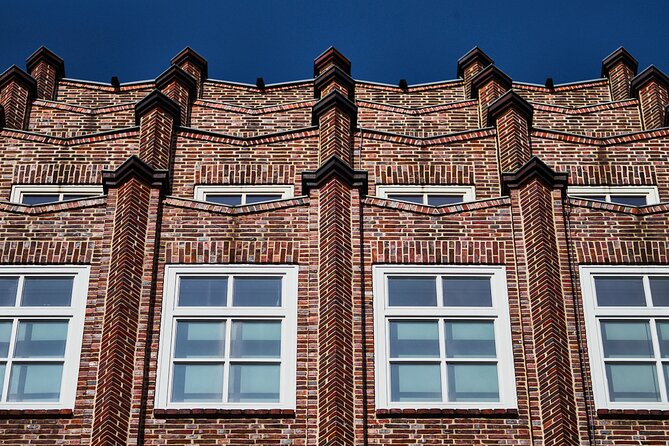
The later part of the route follows the water and the Speicherstadt buildings toward Hamburg’s first artificial harbor basin. This section broadens the visual choices after the tighter brick passages.
You can work with reflections, open water, large building shapes, and the connection between the warehouses and the port. The change in scale may help you understand why composition is more than placing a subject in the middle of the frame. A photograph can lead the eye along a canal, use a building edge as a strong line, or show the relationship between architecture and water.
The route also gives you a more complete sense of Hamburg’s historic center. You begin with the office buildings of the Kontorhausviertel, then move through the storage district and toward the harbor. That sequence links the city’s commercial architecture with its maritime setting.
The experience is strongest for people who want to photograph places while learning how to see them. If your main goal is a fast list of landmarks, four hours may feel slow. If you like to stop, adjust your framing, ask questions, and try again, the pace makes more sense.
Same backdrop, a different kind of shoot:
- Hamburg: Private Couples’ Photoshoot and Walking Tour
★ 4.9 · 212 reviews - Berlin: Fotografiska Photography Exhibition Ticket
★ 4.6 · 168 reviews - Berlin Museum of Photography Entry Ticket
★ 4.5 · 88 reviews - Berlin Essentials: Private Photoshoot at Berlin’s top sites
★ 4.8 · 75 reviews
The two-hour pause and what it adds
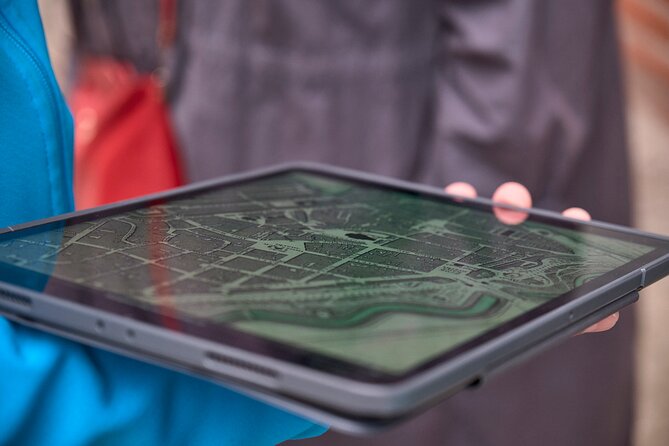
After about two hours, the group takes a short break. The stop is described as a chance to discuss photographic or technical questions in a comfortable setting, or simply get to know one another.
This pause is more useful than it may sound. Photography instruction can become difficult to absorb when you are walking, watching traffic, studying buildings, and handling a camera at the same time. A break gives you a moment to ask about something that did not make sense earlier.
You can use the time to raise practical questions about exposure, composition, or the controls on your device. Beginners should not feel that they need advanced camera knowledge before booking. The tour includes exposure assistance specifically to help people understand how photography works.
The pause also helps keep the four-hour length manageable. This is not a short orientation walk. A break gives the group some breathing room before the second half, especially if you are carrying a camera or spending time making several versions of the same image.
What you will learn about taking better photographs
The instruction centers on three connected ideas: perspective, image composition, and exposure.
Perspective concerns where you stand and how the subject appears from that position. In an architectural district, moving closer, farther away, lower, or to one side can change the shape of the entire photograph.
Composition concerns how the parts of the image work together. You may look at lines, open space, repeated forms, reflections, and the position of the main subject. The point is not to memorize a rigid rule. It is to make intentional choices instead of taking the first view available.
Exposure affects how bright or dark the photograph appears. The tour includes exposure help, which is especially useful for beginners who are unsure why a phone or camera produces a different result from what they saw with their eyes.
The instruction is designed for both smartphones and digital cameras. That makes the activity more accessible than a technical workshop aimed only at people with interchangeable lenses or advanced equipment. Bring the device you actually want to use in Hamburg. The value comes from learning how to get more from it.
Marius is also described as explaining photo tips in a simple, charming way. That suggests the tone is meant to be practical rather than heavily technical. You should expect guidance you can apply during the walk, not a long classroom lesson about equipment.
The guide’s mix of photography and local stories
A major strength of the experience is the combination of image-making and Hamburg background. Marius has been praised for giving a well-prepared, lively city introduction and for answering questions in detail.
He also adjusts to different generations and listens to the stories people bring to the walk. That matters in a small group because a good guide has to keep the conversation moving without treating everyone as if they has the same interests or experience.
The historical material is not a separate lecture bolted onto the photo walk. It appears as you move through Chile House, Speicherstadt, the Fleete, the town hall, and the harbor basin. You get a better sense of what made these buildings important, then use that information to decide what deserves attention in your photograph.
The guide’s previous experience with complete beginners is another useful sign. Someone who has never used manual controls can still take part, ask basic questions, and receive help. At the same time, the route offers enough architectural variety for people who already know the basics.
Weather, timing, and group size
The experience requires good weather. If poor weather causes a cancellation, you are offered another date or a full refund. The route may include covered passages or buildings, but you should not assume that the entire four hours takes place indoors.
The 5:00 pm start gives the walk an afternoon-to-evening feel, though the exact light will depend on the date and weather. This timing may suit you if you want to spend the earlier part of the day on other Hamburg activities. It may not suit you if you have an evening reservation or prefer morning photography.
The group maximum is eight people. That is small enough for individual help, but it is still a shared tour rather than a private lesson. If participants have very different experience levels, the guide will need to divide attention between them. The description says the route and instruction can be adapted to the group, which helps reduce that concern.
Service animals are allowed, and the meeting point is near public transportation. Most people can participate. Since private transportation is not included, use the city’s public transport or make your own way to the starting address.
Is $62.45 a fair price?
At $62.45 per person, this is more expensive than a basic self-guided walk and less than a private photography lesson. The value depends on how much you want from the experience.
You are paying for about four hours of guiding, photography support, historical explanation, and feedback on how to use your camera or phone. The small group matters because the instruction would be less useful if you had to compete with a large crowd for attention.
The price makes the most sense if you want to leave with skills you can use for the rest of your trip. A photo walk can be good value when it changes how you approach every later street, building, and canal. It is less compelling if you only want a quick introduction to Hamburg’s main sights.
There is no private transport included, so this price does not cover door-to-door movement around the city. The activity begins and ends at Fischertwiete 1A, keeping the logistics simple but leaving you responsible for getting there and planning your next stop.
Who should book this photo tour?
I would recommend it first to beginners who want patient help without signing up for a formal photography course. The exposure guidance and small group make it easier to ask basic questions without feeling out of place.
It also suits photographers who already understand their equipment but want fresh views of Hamburg’s architecture. The route offers strong subjects in Chile House, the Kontorhausviertel, Speicherstadt, the canals, and the harbor basin.
The tour is a good match for people who enjoy history but do not want a standard lecture. You will learn about the sights while working out how to photograph them.
Families or mixed-age groups may also find the flexible approach useful, especially if some people want more technical help than others. The main limitation is the length and walking format. If you prefer short stops, private transport, or a tightly timed sightseeing route, this may not be the right fit.
My booking advice
Book this tour if you want Hamburg’s UNESCO districts to become more than attractive backgrounds. Marius Gebhardt’s format joins clear camera instruction with local history, and the maximum of eight participants gives the experience a personal feel.
I would be especially comfortable recommending it to a solo participant or a complete beginner. You do not need advanced equipment, and you can use a smartphone. Just allow four hours, arrive ready to walk, and check the weather before committing.
The flexible cancellation policy also helps: cancel at least 24 hours before the 5:00 pm start for a full refund. If bad weather or an insufficient number of participants cancels the activity, you can choose another date or receive a full refund. For a focused introduction to Hamburg’s architecture and photography, $62.45 is a reasonable price.
FAQ
Where does the photo tour start?
The tour starts at Fischertwiete 1A, 20095 Hamburg, Germany.
What time does the tour begin?
The scheduled start time is 5:00 pm.
How long does the experience last?
The photo tour lasts approximately four hours.
Where does the tour end?
The activity ends back at the meeting point.
How many people can join?
The tour has a maximum of eight participants.
Can I use a smartphone instead of a digital camera?
Yes. The photography guidance is designed for both smartphones and digital cameras.
Is transportation included?
No. Private transportation is not included. The meeting point is near public transportation.
What happens if the weather is poor?
The experience requires good weather. If it is canceled because of poor weather, you will be offered a different date or a full refund.
More History Tours around Germany
- Rome: Vespa Photo Tour with Historic City Highlights
★ 5.0 · 395 reviews - Hanbok Photoshoot and History Tour at Gyeongbokgung Palace
★ 5.0 · 276 reviews - Beacon Hill Boston History + Photo Walking Tour (SMALL Group)
★ 5.0 · 163 reviews - Private Photo Session in Historic Charleston
★ 5.0 · 123 reviews
Just added around Germany
- 4 hour individual photo tour of Hamburg★ 5.0 · 2 reviews
- Mountain Top Photo Session★ 5.0 · 5 reviews
- Private Vacation Photoshoot with Photographer in Cologne★ 5.0 · 4 reviews
- Private Photo Session in the Streets of Berlin★ 5.0 · 6 reviews
- Private Photo Tour in Kreuzberg★ 5.0 · 3 reviews
- Potsdam Private Sightseeing Tour with vehicle and Photographer Guide★ 5.0 · 2 reviews
- Romantic Couple Photoshoot in the Heart of Berlin★ 4.0 · 4 reviews
- Personal Travel and Vacation Photographer Tour in Berlin★ 5.0 · 2 reviews
Photography Tours, side by side.

Rhodes: E-bike Highlights Sunset or Morning Photo Tour
Read our review →
Lists this one turns up in