Review · PHOTOGRAPHY TOURS
Mount Fuji 1-Day Trip: the Hottest Photography Tour
Mount Fuji is the star here, but the real appeal is seeing it from several very different angles in one day. You’ll frame the peak beside Chureito Pagoda, catch the famous street view at Hikawa Clock Shop, then slow down beside springs, a lake, and seasonal flowers.
I like the fact that the bus removes the strain of getting around rural Yamanashi, and I like the strong mix of classic photo spots and quieter natural views. Guide Louis has been singled out for being friendly and approachable. The trade-off is a long day with roughly five hours on the road, and traffic or cloud can change the rhythm of the trip.
Key points to know before booking
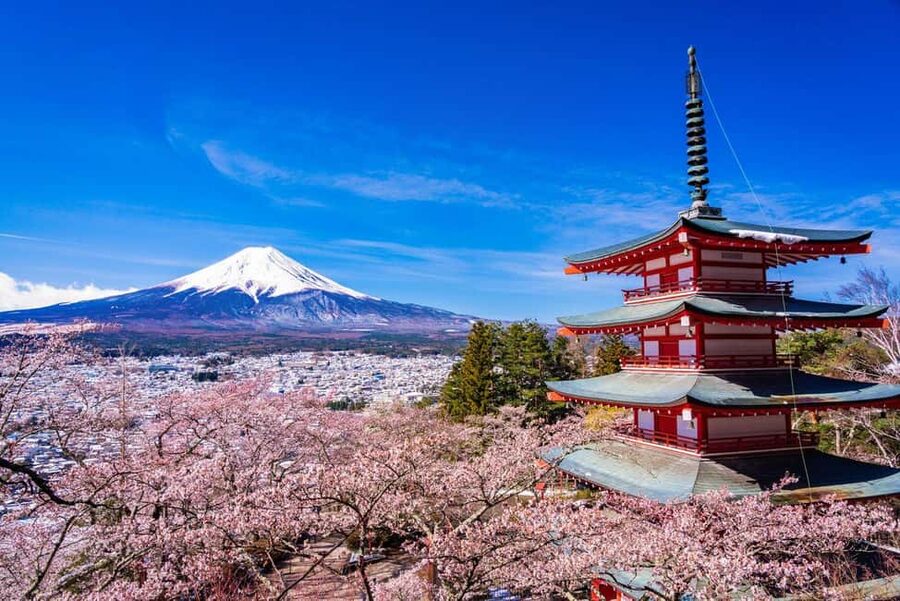
- The 397-step climb comes first: Arakurayama Sengen Park gives you the classic pagoda, Fuji, and town view, but comfortable shoes matter.
- Five photo stops cover different moods: You’ll see Fuji with a pagoda, a shopping street, clear springs, a convenience store, and seasonal flowers.
- The $83 price buys convenience: Round-trip transport, fuel, tolls, parking, and a guide are included, which is useful when Tokyo traffic and rural navigation could eat up your day.
- The flowers change by month: Lavender is the June and July draw, while autumn foliage at Maple Corridor is available only from October 20 through November 23.
- Clouds and traffic are real factors: The schedule can change because of weather, crowds, holidays, and road conditions, with no refund for delays or cancellations caused by those factors.
- You return to Tokyo the same way you leave: Choose either JR Tokyo Station Marunouchi South Exit or Tokyo Mode Gakuen as your meeting and drop-off point, depending on the option booked.
Why this Mount Fuji day trip works for photographers
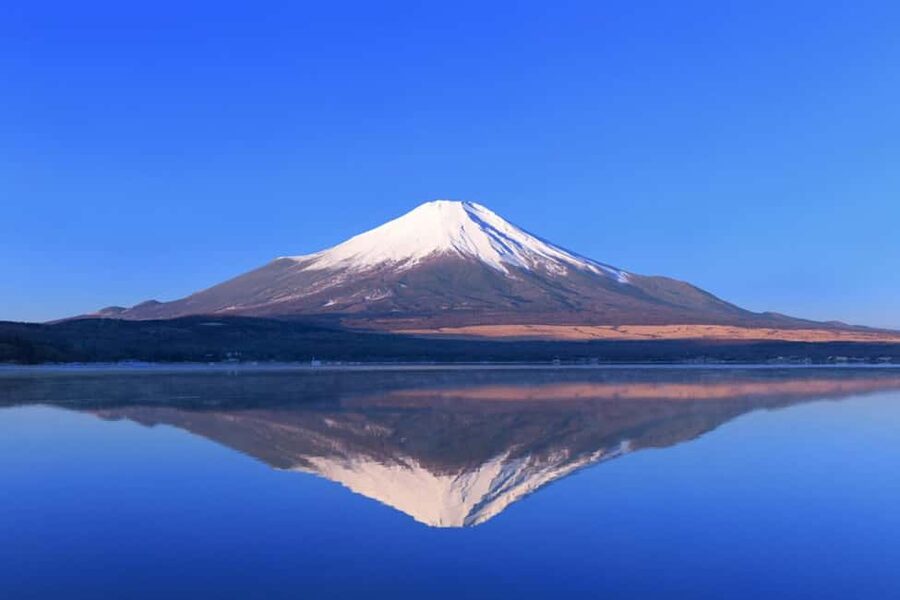
Mount Fuji is not one fixed view. It changes with distance, weather, season, and whatever you place in front of it. This route understands that. Instead of parking you at one lookout and calling it a day, it gives you several compositions across the Fuji Five Lakes area.
You’ll have the chance to photograph the mountain beside a red-and-white pagoda, behind an old-style shopping street, above spring-fed ponds, beyond Lake Kawaguchi, and over beds of flowers. That variety is the strongest reason to choose this tour.
I also like the practical setup. You meet in central Tokyo, board a coach, and let someone else handle the toll roads, fuel, parking, and route. That matters here. The trip covers a lot of ground, and trying to connect all these places by public transport in one day would add transfers and uncertainty.
At $83 per person, the value is mainly in time and simplicity rather than luxury. Food and drinks are not included, and neither are attraction admissions if any are required. Still, the transport costs alone can make a guided day useful, especially if you want a focused Fuji day without renting a car.
More Photography Tours in Japan
- Tokyo Cyberpunk Street Photo Tour
★ 5.0 · 165 reviews - Tokyo by Night Photography Tour (Private Option Available)
★ 5.0 · 151 reviews - Tokyo Shinjuku Night Photo Tour with Pro Gota
★ 5.0 · 142 reviews
The early ride from Tokyo to Mount Fuji
The day begins at one of two locations: JR Tokyo Station Marunouchi South Exit or Tokyo Mode Gakuen. The exact meeting point depends on the option you book, so you need to check the message sent the day before.
The coach ride to the Fuji area takes about two and a half hours. That is a serious chunk of the day, but it also gives you a clean break from Tokyo. You can rest, watch the city give way to the countryside, and avoid the work of navigation.
Do not treat the drive time as a minor detail. The total tour lasts 10 hours, and another two and a half hours are needed for the return. Traffic can stretch the journey during holidays or busy periods. If you want a relaxed, slow-paced day with long meals and unplanned stops, this is not that kind of outing.
If you want to see several famous Fuji viewpoints without working out the connections, the coach earns its place. Bring water and a small snack since food and drinks are not included.
Arakurayama Sengen Park and the 397 steps
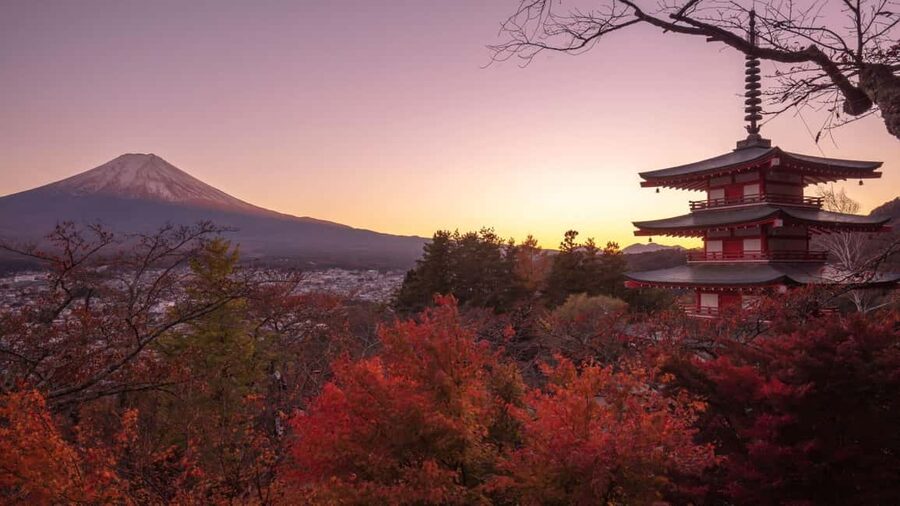
Arakurayama Sengen Park supplies the image most people associate with a classic Fuji photo: the mountain rising behind Chureito Pagoda, with the town spread below. The composition is powerful because it combines Japanese architecture, urban life, and the snow-capped peak in one frame.
Getting to the viewpoint requires climbing 397 steps. That is not a technical hike, but it is enough to make the first stop feel physical, especially after sitting on the bus. Wear comfortable shoes and clothes that let you move easily.
You’ll have about an hour here for sightseeing and photos. The time is enough to take in the main view, but it may feel short if you want to photograph the pagoda from several positions or wait for the light to change. You also need to allow time for the climb back down and for regrouping.
Weather is especially important at this stop. Fuji can disappear behind cloud even when the pagoda and town are perfectly clear. The tour gives you other viewpoints later, which helps, but no schedule can guarantee a visible summit.
I like this stop because it gives you the most instantly recognizable picture of the day. I would not choose it for a quiet temple visit, though. The famous view is the focus, and the steps and crowds can make the stop feel busy.
Hikawa Clock Shop and the Stairway to Heaven view
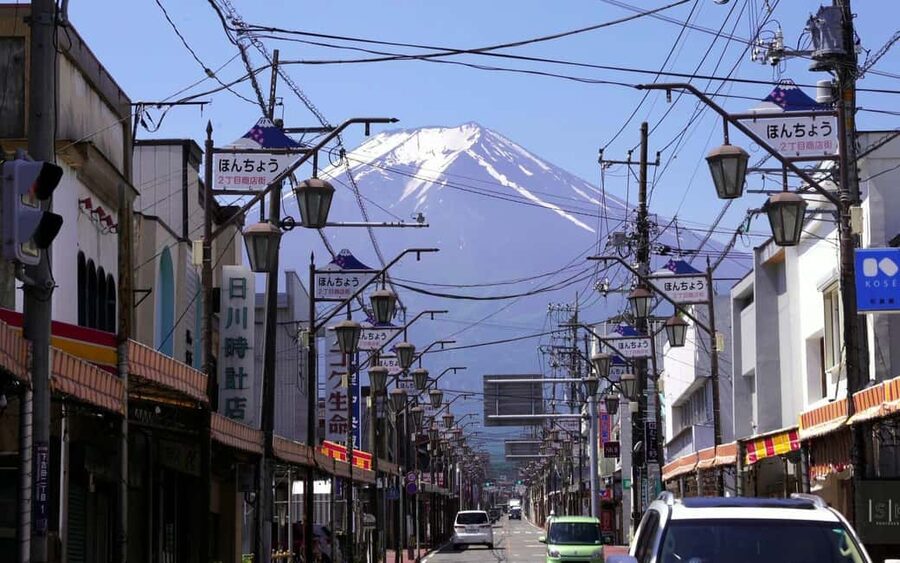
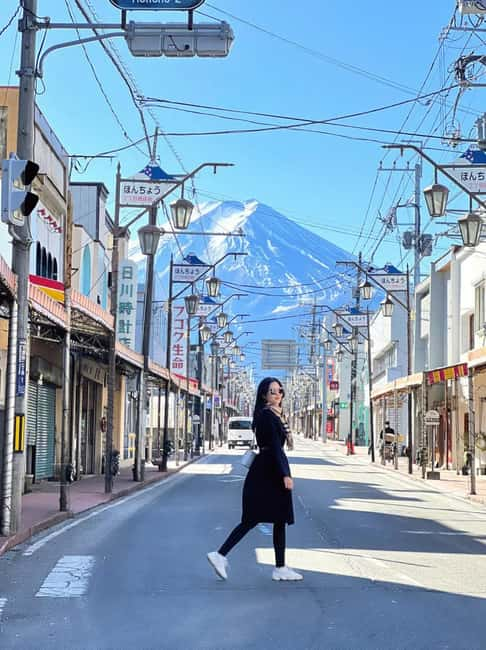
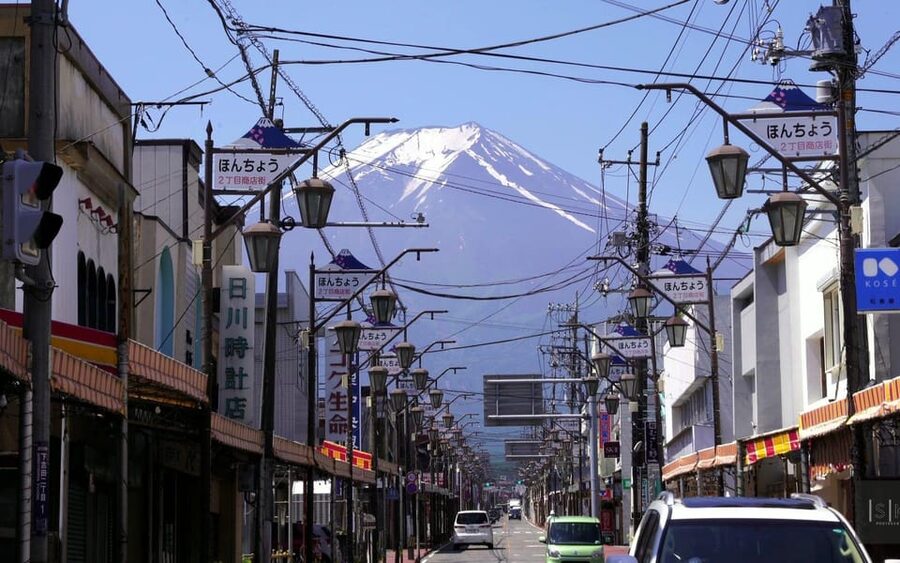
The route then continues to Hikawa Clock Shop, a highly photographed street where Mount Fuji appears at the far end of the road. The view is sometimes called the Stairway to Heaven of Mount Fuji, a name that hints at its strong visual effect.
Here, the interest comes from the alignment of ordinary town life with the mountain. Utility poles, shopfronts, road markings, and Fuji share the same frame. It is less polished than the pagoda view, and that is exactly why it can feel more like a real Japanese town than a formal lookout.
This is mainly a short photo stop and break rather than a long sightseeing visit. You should expect a chance to compose your shot, look around, and move on. Be aware of the setting. This is a public street, not a private photo studio, so follow the guide’s instructions and avoid blocking local access.
The stop suits anyone who likes travel photography with a sense of place. If you only want grand nature views, it may seem less important than the park or the lake. For me, the contrast is worthwhile. Fuji does not appear in isolation here. It rises behind the everyday scene.
More Photography Tours in Tokyo
- Tokyo: Evening Photography Tour
★ 4.8 · 61 reviews - Tokyo Private photo tour with Nightstreet Neon photographer
★ 5.0 · 17 reviews - Asakusa Kimono Photography Tour
★ 5.0 · 8 reviews
Oshino Hakkai and its eight clear springs
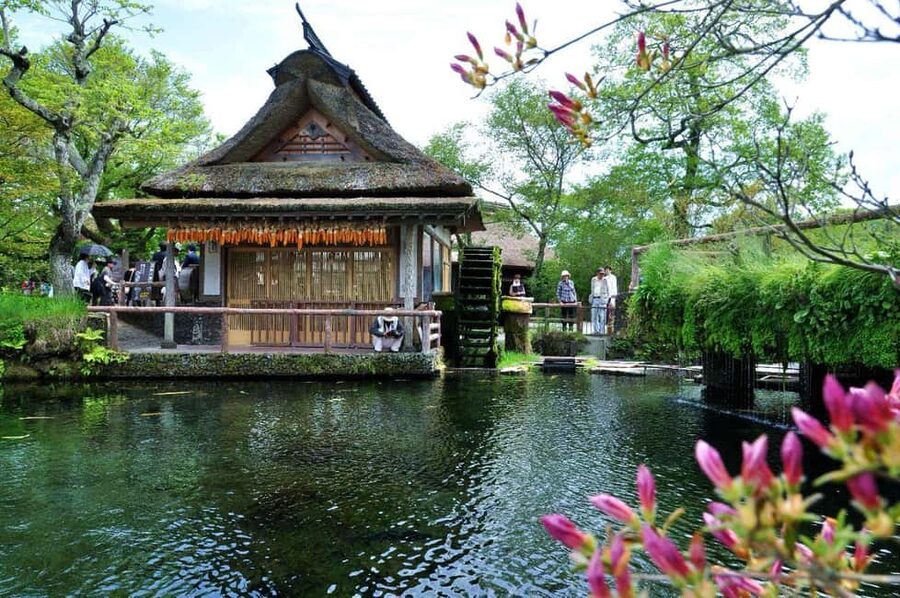
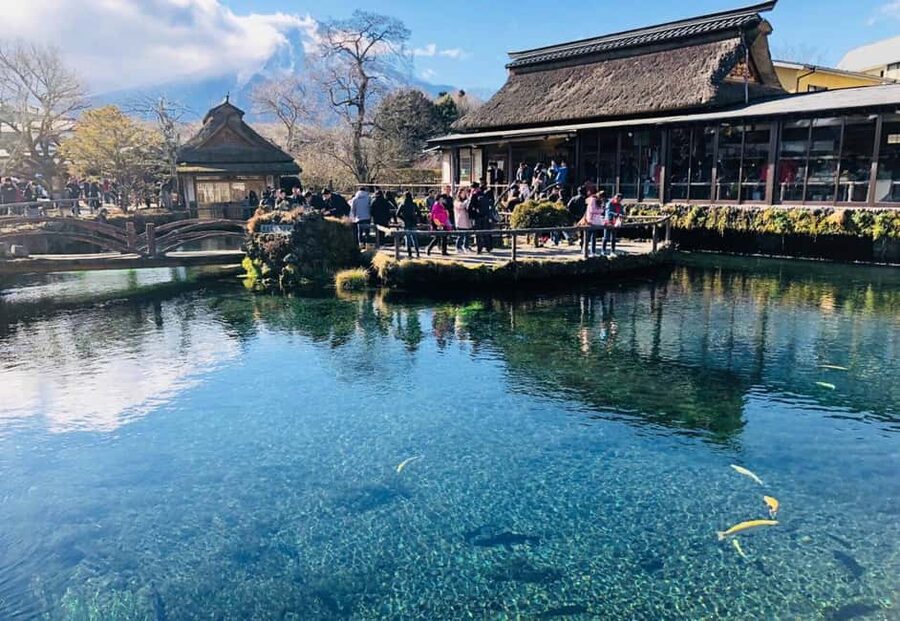
Oshino Hakkai is the longest sightseeing stop, with about an hour and a half to explore. The area is known for eight clear springs, fed by water from Mount Fuji. The springs give you a close look at the connection between the mountain and the communities around it.
The mood changes here. Instead of one large viewpoint, you’ll find water, small channels, traditional-looking buildings, and views toward Fuji. The springs give you foreground subjects, so your photos do not all need to be wide shots of the mountain.
This is also one of the better places to slow down and simply look. After the climb at Arakurayama and the quick street stop, the extra time at Oshino Hakkai lets you walk, take pictures, and enjoy the setting at a more natural pace.
The main limitation is that the stop can be affected by crowd levels. The schedule itself notes that holidays and busy periods can change the day. You may need patience around the springs and walkways, particularly if you want a clean photo.
I like Oshino Hakkai because it adds texture to the route. The pagoda stop gives you the famous postcard. Oshino Hakkai gives you water, village details, and a closer sense of how Fuji shapes the area around it.
Lawson Kawaguchiko Station and the familiar Fuji frame
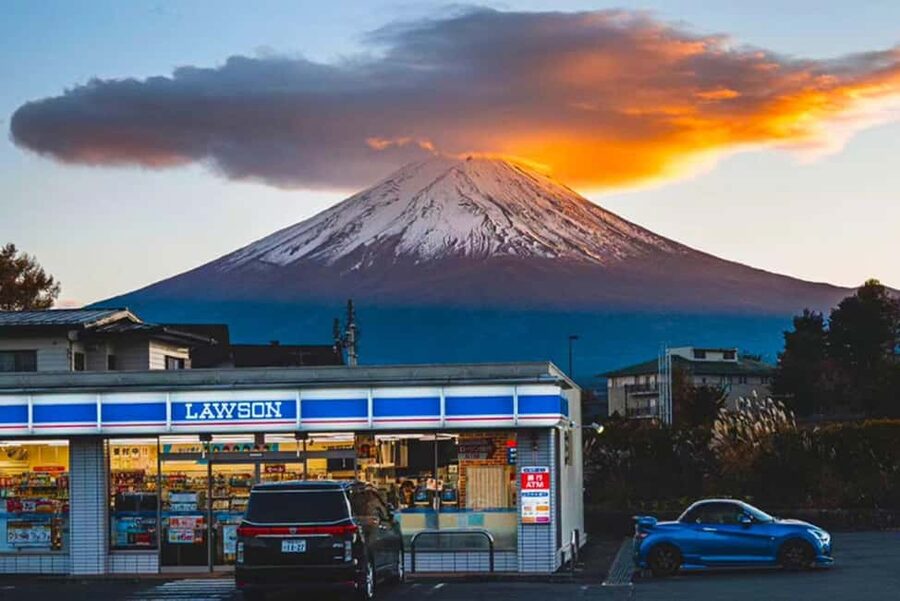
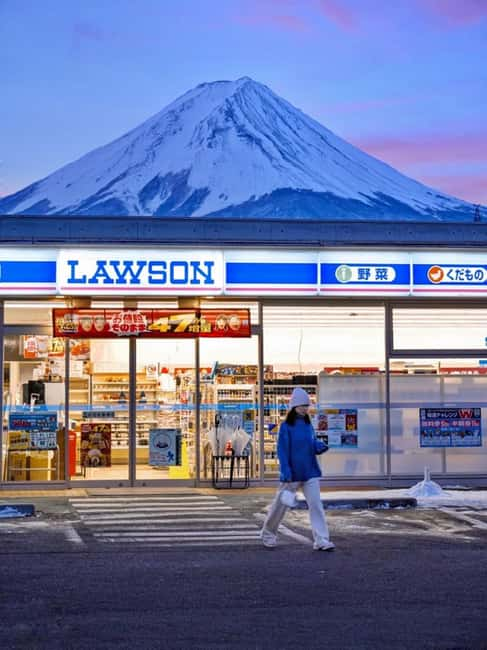
The Lawson convenience store near Lake Kawaguchi is an unusual stop, but it has become a well-known photography location. The shop’s familiar sign and storefront can be framed with Mount Fuji behind it, creating a picture that is instantly recognizable from social media.
This is a quick break and photo stop. You’ll also receive a complimentary choice of ice cream, tea, or coffee. That small refreshment is useful after several hours of sightseeing, though it should not be confused with a full meal.
The appeal here is the mix of ordinary and spectacular. A convenience store is part of daily Japanese life, while Fuji supplies the dramatic background. The result feels less formal than a shrine or park photo.
Do keep your expectations practical. The view depends on weather, road conditions, and where you can safely stand. The stop is about a specific composition, not an extended visit to Lake Kawaguchi. If you want a leisurely lakeside walk, the schedule does not promise one.
Oishi Park and the changing sea of flowers
The final main stop is Oishi Park, where the view of Mount Fuji is paired with seasonal planting. This is the part of the tour that changes most from month to month.
Lavender is the main feature in June and July. Begonias and cosmos can be seen from July through September, and kochia appears in October. The Maple Corridor at Lake Kawaguchi is used for autumn foliage from October 20 through November 23 only.
That calendar matters. You should not book this day expecting lavender outside June and July, or the Maple Corridor outside its stated dates. The scenery can still be worthwhile at other times, but the seasonal highlight will change.
You’ll have about an hour here. This is a good place to finish because the mood is calmer than at the first viewpoint. You can photograph Fuji above the flowers, walk through the park, and enjoy one last open view before the return drive.
The phrase sea of flowers is not just decoration in this context. The planting gives you a colorful foreground and makes the mountain feel different from the views at the pagoda, springs, and street. If seasonal flowers are a priority, check the travel date carefully before booking.
What the $83 price really covers
At $83 per person, this is a midrange day trip built around transport and access to several popular sites. You are paying for a full 10-hour route, a live guide, round-trip coach transfers, fuel, tolls, and parking.
That package can be good value if you are staying in Tokyo and do not want to rent a car. A rental would bring its own costs and responsibilities, including driving, navigation, parking, and working out the route. Public transport may be possible for individual stops, but combining all five photo locations in one day would be more complicated.
The price does not include meals or drinks. You should plan for your own food, with the complimentary ice cream, tea, or coffee at Lawson serving as a small extra rather than lunch. Attraction admissions are also not included, though the supplied schedule does not list a required admission price for the stops.
I would judge the value by your priorities. For independent visitors who enjoy choosing their own pace, the fixed schedule may feel restrictive. For anyone who wants a practical Fuji overview with strong photo opportunities and no transport planning, the price is easier to justify.
The guide, language, and pace
The tour operates with a live guide in English or Japanese. A confirmed account specifically praises Louis as friendly and welcoming, so if he is assigned to your group, you can expect an approachable guide based on that experience. Guide assignments can vary, so his name should not be treated as guaranteed.
The guide’s main practical role is keeping the day moving between Tokyo, the parks, the springs, and the lake area. That matters because the route has several short stops and a long return journey. You need to be ready at the agreed times rather than wandering off on your own.
The pace is active but not a hike-focused program. The biggest physical demand is the 397-step climb at Arakurayama Sengen Park. Comfortable shoes are essential, and comfortable clothes will make the bus rides and walking easier.
One free piece of luggage is allowed per person. An additional piece larger than 20 inches costs $17. For a day trip, pack light if you can. A camera bag, water, a snack, and a light layer are more useful than a large suitcase.
Weather, traffic, and the Fuji gamble
Mount Fuji is a mountain, not a scheduled stage performer. Cloud can cover the peak, and conditions can change during the day. The route gives you several chances to see it, but no tour can promise clear views.
Traffic is another concern. The plan includes about five hours of coach travel, and holidays can make that longer. The schedule may change because of traffic, weather, holidays, or crowd levels. Delays and cancellations caused by those factors do not qualify for refunds.
That sounds cautious, but it is important information when you are planning a tight Japan itinerary. Do not book this on the same day as an evening train or flight that cannot be missed. Leave plenty of breathing room after the scheduled return to Tokyo.
The flexible cancellation rule helps before the trip. You can cancel up to four days in advance for a full refund. Once the trip is underway, though, weather and road problems remain part of the risk.
Who should book this Fuji photo tour
I would recommend this outing to you if you want a broad sample of Mount Fuji views in one day and prefer not to handle rural transport. It suits photographers, first-time Fuji visitors, couples, and anyone with limited time in Tokyo.
It is especially useful if your priorities include Chureito Pagoda, Oshino Hakkai, Lake Kawaguchi, and seasonal flowers. You get the major visual stops without having to choose just one.
I would hesitate if you dislike long bus rides, fixed departure times, or busy photo locations. You should also think twice if your main goal is climbing Mount Fuji, spending a full day at one lake, or exploring quietly at your own speed. This is a sightseeing circuit, not a mountain trek or a slow village day.
Should you book it?
Book this tour if you want many classic Fuji views with minimal planning. The strongest points are the range of photo settings, the included Tokyo transport, and the chance to see seasonal flowers at Oishi Park. The price is fair for the convenience, especially if you are not driving.
Before you commit, check three things: the flower season, the likely weather, and your tolerance for a long coach day. If you can accept those limits, this is a smart way to see Mount Fuji from several memorable angles without wrestling with Japanese roads and connections.
FAQ
How long does the Mount Fuji tour last?
The tour lasts 10 hours, including the journeys between Tokyo and the Mount Fuji area.
Where does the tour start?
You can meet at JR Tokyo Station Marunouchi South Exit or Tokyo Mode Gakuen, depending on the option you book.
Where does the tour finish?
The coach returns to the same two possible locations: JR Tokyo Station Marunouchi South Exit or Tokyo Mode Gakuen.
Which languages are available?
The tour offers a live guide in English or Japanese.
Is transport included?
Yes. Round-trip coach transfers, toll fees, parking fees, and fuel fees are included.
Are food and drinks included?
Food and drinks are not included. At the Lawson stop, you receive a complimentary choice of ice cream, tea, or coffee.
How much luggage can I bring?
Each person can bring one piece of luggage for free. An additional piece larger than 20 inches costs $17.
Can I cancel for a full refund?
You can cancel up to four days before the trip for a full refund. Changes caused by traffic, weather, holidays, or crowd levels do not qualify for a refund.
More One-Day Trips in Tokyo
- Tokyo: Instagram-Worthy Mt Fuji & Lake Kawaguchiko Day Trip
★ 4.0 · 26 reviews - Tokyo: Mt. Fuji & Lake Kawaguchi Instagram Full Day Trip
★ 4.1 · 12 reviews - Silfra: Half-Day Snorkeling Day Trip with Underwater Photos
★ 4.8 · 1,155 reviews - From Yerevan: 6 Most Instagramable Armenian Sights Day Trip
★ 4.3 · 304 reviews
Just added around Tokyo
- Tokyo: Private Photoshoot at Shibuya Crossing★ 4.7 · 7 reviews
- Tokyo: Customized Private Historical Guided Photoshoot Tour★ 5.0 · 25 reviews
- Tokyo Private photo tour with Nightstreet Neon photographer★ 5.0 · 17 reviews
- Tokyo: Private Makeover Photography Studio in Luxury Kimono★ 5.0 · 22 reviews
- Tokyo: Private Instagramable Customised Tokyo City Day Tour★ 4.2 · 4 reviews
- Tokyo: Private Photo Shoot with a Professional Photographer★ 5.0 · 11 reviews
- Tokyo Portrait Tour with a Professional Photographer★ 5.0 · 29 reviews
- Tokyo: Photography Masterclass – Private Photo Lesson★ 5.0 · 7 reviews
Photography Tours, side by side.


Rhodes: E-bike Highlights Sunset or Morning Photo Tour
Read our review →