Review · PHOTOGRAPHY TOURS
Lisbon by Night: Golden and Blue Hour Photography Walk
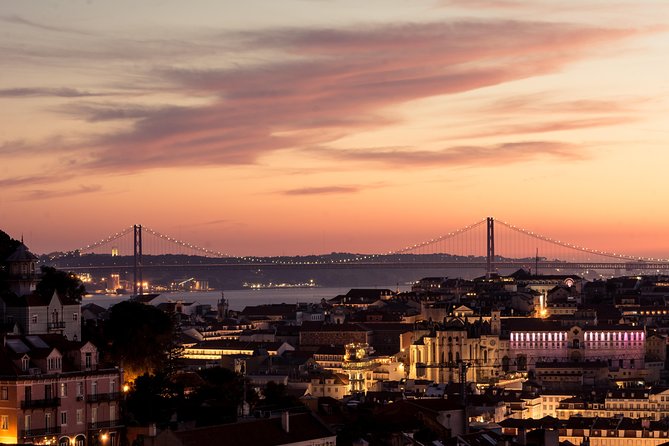
Lisbon looks made for evening photography. From Miradouro da Senhora do Monte, you watch the last sunlight wash across Alfama, then follow the changing light into old lanes, past yellow trams and glowing buildings. I like the private format, which lets the guide adjust the pace and camera advice to you. I also like that the walk covers both sunset and blue-hour photography instead of stopping when daylight fades.
The main drawback is the terrain. Steep streets and uneven cobblestones are part of Alfama, and two hours on foot may feel demanding if your balance or mobility is limited. The $170 price is also easier to justify for a couple or small private group than for a solo photographer on a tight budget.
Key points at a glance
- Miradouro da Senhora do Monte: Begin with wide views over Alfama during Lisbon’s golden hour.
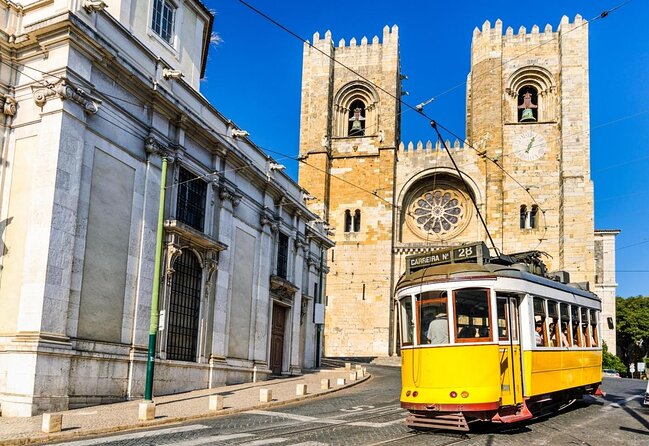
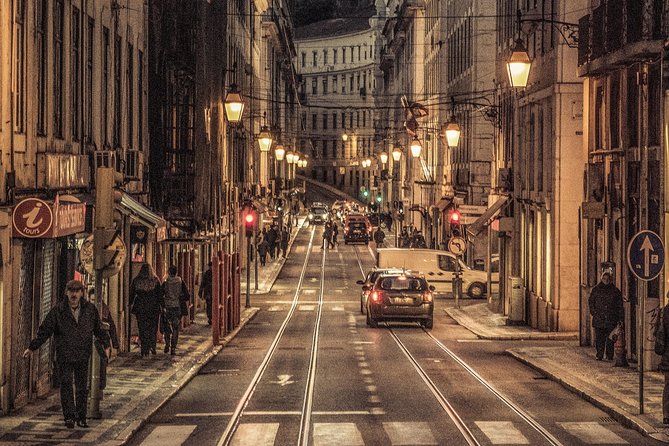
- Alfama after sunset: Photograph yellow trams, lit buildings, narrow lanes, and changing street light.
- Advice for any camera: The guide works with digital, film, and smartphone cameras, including iPhones.
- Private two-hour walk: Ask for help with the subjects and techniques that matter most to you.
- Native local perspective: Your photographer guide knows the route, the viewpoints, and when the light is worth waiting for.
- Largo da Madalena finish: End with more formal night compositions and optional feedback on your images.
Starting above Alfama at Senhora do Monte
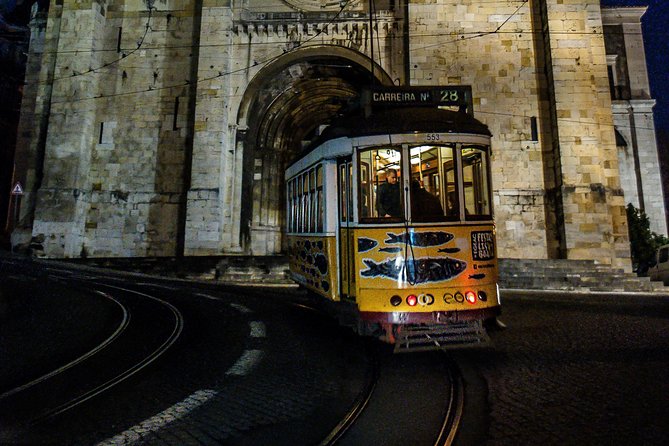
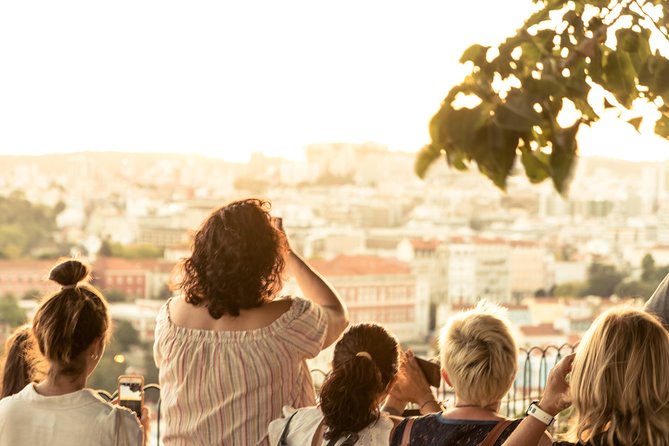
Your meeting point is the entrance to the chapel at Miradouro da Senhora do Monte. Look for a guide holding a camera. This is one of Lisbon’s strongest places to begin because the view gives you room to work before the walk moves into tighter streets.
At sunset, the city changes by the minute. Early light helps you practice warm tones and broad compositions. As the sun drops, shadows lengthen, windows begin to glow, and the scene becomes less about bright color and more about contrast. Your guide helps you adjust settings as that change happens, rather than giving you a fixed list of camera rules.
That practical timing is important. Golden-hour photography rewards careful framing and attention to highlights. Night photography brings different problems, including slower shutter speeds, motion blur, and less predictable exposure. The walk gives you a chance to move from one stage to the next while the guide explains what your camera is doing.
You do not need to arrive with advanced skills. The advice is adapted to your experience and equipment. If you use a digital camera, you can work on shutter speed, aperture, and other basic controls. If you shoot film, the conversation can focus more on light, composition, and the limits of the film you have loaded. Smartphone users are included too, and one Australian participant specifically learned new iPhone tricks during the walk.
More Photography Tours in Lisbon
- Lisbon: 2-Hour Street Art Photo Tour
★ 4.9 · 43 reviews - Alfama Photo Walk – Lisbon Photography Experience Led by a Local
★ 5.0 · 20 reviews - Private Highlights Photography Tour in Lisbon
★ 3.0 · 8 reviews
Learning to use Lisbon’s changing light
A good photo walk should teach you how to see, not simply lead you to a viewpoint. That is the useful idea behind this experience. At Senhora do Monte, you can test a composition, change your settings, and immediately see how the result shifts as daylight weakens.
Your guide can help with golden-hour technique, including how to handle a bright sky above darker buildings. You may work on placing Lisbon’s rooftops and church towers within the frame, or on using the warm light to give ordinary streets more shape. The exact images will depend on the evening, but the setting gives you a broad view and a clear lesson in exposure.
The guide also shares local knowledge about when and where to shoot. That matters in Lisbon, where a short turn can change the view from a city panorama to a narrow street scene. You are not left to guess which corner might offer a better angle or spend the whole evening walking past possible subjects.
The private setup makes it easier to ask basic questions. You can stop to clarify a setting, request help with a composition, or spend more time on the kind of photography you enjoy. A group tour with a fixed pace may give you less freedom. Here, your interests shape the instruction.
Walking down through Alfama after sunset
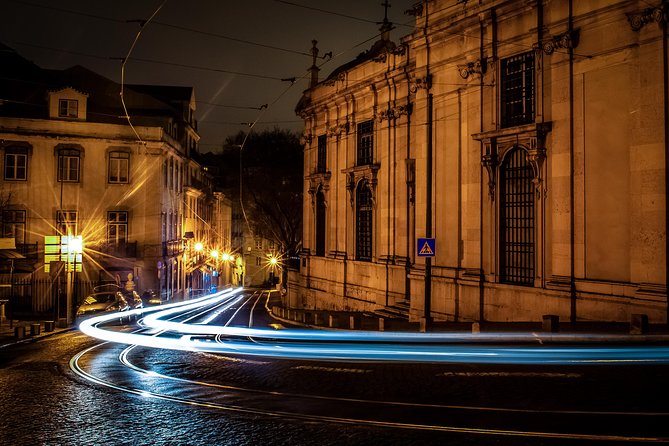
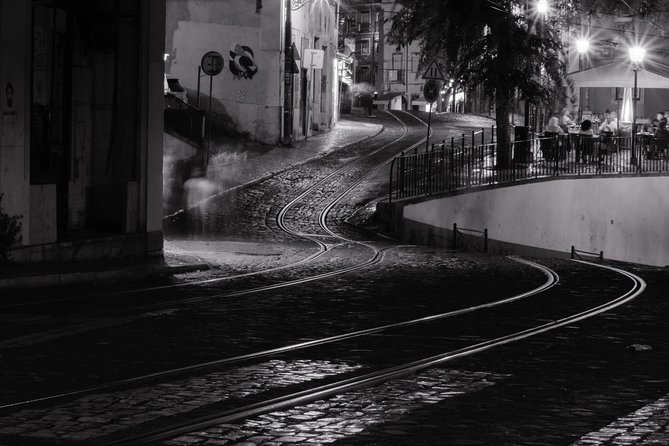
From the viewpoint, the route moves into Alfama, Lisbon’s oldest neighborhood. This is where the wide city view gives way to close-up street photography. The lanes are narrow, the paving can be uneven, and the changing light creates a steady supply of small subjects.
You will work with glowing alleys and illuminated buildings, looking for lines, shadows, windows, and layers of light. Alfama is especially well suited to this kind of walk because the neighborhood offers a clear contrast between open views and enclosed streets. You can practice making a composition from a doorway, a bend in the lane, or a patch of light on old walls.
The route also includes Lisbon’s vintage yellow trams. These are useful photography subjects because they bring color and movement into the evening. The guide can help you think about motion capture, timing, and where to place the tram within the frame. You may choose a sharper image that freezes movement, or experiment with blur if your equipment and light allow it.
Do not expect a formal tram photo session with a guaranteed perfect arrival. Street photography depends on timing. The benefit of having a local photographer is that you are less likely to miss the useful spots while trying to find your way through unfamiliar lanes. You can focus on your camera rather than on navigation.
Alfama’s surfaces also make you slow down. Cobblestones, old facades, lamps, and patches of reflected light all call for different framing choices. Your guide adds cultural and historical context as you walk, giving the pictures a stronger sense of place instead of treating the neighborhood as a collection of pretty backgrounds.
Practicing low-light, street, and architectural photography
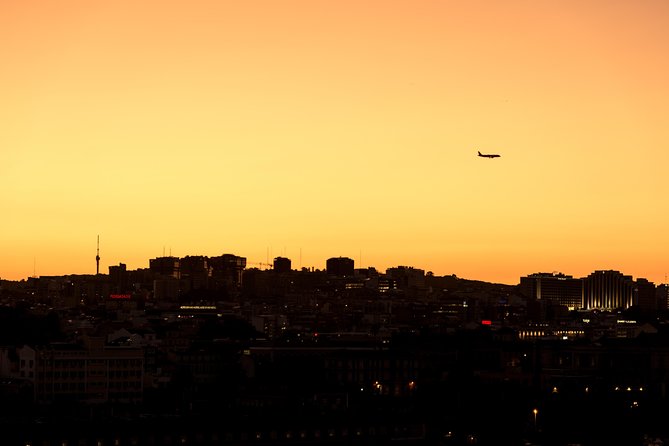
The central lesson is not simply how to photograph Lisbon at night. It is how to manage low light without losing the feeling of the place. You will receive tips for street, night, and architectural photography, with the advice adjusted to your camera and skill level.
For beginners, the value is in learning what to change first when a photo looks too dark or blurry. You can ask about exposure and motion while the problem is happening in front of you. That is usually more useful than reading a general guide before your trip.
For experienced photographers, the walk offers a fresh setting and a local eye. You may already know your equipment but still benefit from suggestions about angles, timing, and subjects. The guide can point out places where a small change in position gives you a cleaner composition.
A tripod is helpful for night shots but not required. Bring one if you want to work with longer exposures and do not mind carrying it over hills and cobbles. If you prefer to travel light, handheld shooting is still possible, especially since the walk is built around practical instruction rather than a requirement to produce a certain type of photograph.
You should bring your own camera, tripod, and accessories. None of the gear is supplied. That is worth noting before you book, particularly if you are hoping to try photography without bringing equipment. A smartphone is a valid option, and the iPhone advice makes this a good fit for people who want better holiday images without carrying a dedicated camera.
More Photography Tours in Portugal
- Alfama Photo Walk: Lisbon Photography Tour with a Local
★ 4.8 · 6 reviews - Lisbon Photo Tour In Alfama & Graça With Gilby VM
★ 5.0 · 2 reviews - Porto 1/2 Day Walking Photo Tour & Portraits
★ 5.0 · 163 reviews - PHOTO TOUR (Full Day Private Tour- Sunrise to sunset)
★ 5.0 · 68 reviews
Finishing at Largo da Madalena
The walk ends at Largo da Madalena, where you can practice framing more polished night scenes. By this point, the city should be fully lit, giving you a final chance to apply what you learned about exposure, composition, and movement.
This closing stop has a different purpose from the opening viewpoint. Senhora do Monte is about scale and sunset color. Largo da Madalena is about night composition, with the task of making a strong image from artificial light, architecture, and street activity.
Optional feedback on your images is available during the tour. Take advantage of this if you want direct help with your results. A quick explanation of why a picture works or fails can help you make better choices on the rest of your trip. The feedback is not described as a separate editing class, so you should think of it as useful guidance during the walk rather than a full post-processing session.
The finish also leaves you in central Lisbon rather than returning you to the starting point. There is no hotel pickup or drop-off. Plan your onward route before the tour, and remember that you will have walked downhill and uphill over uneven streets.
What $170 means for the value
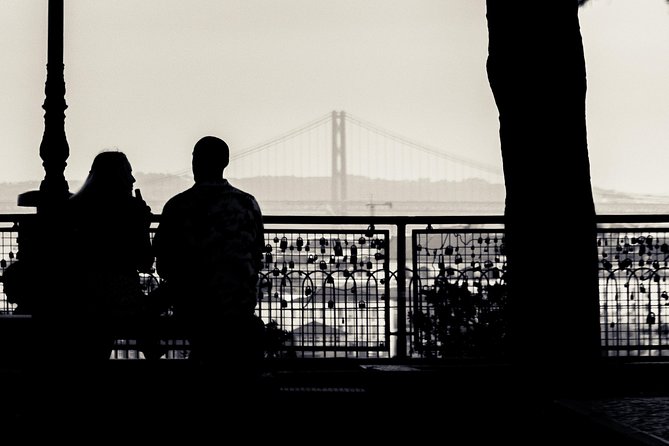
At $170 per person, this is not a low-cost sightseeing walk. You are paying for a private two-hour session with a professional local photographer, not just for access to a viewpoint and a neighborhood route.
The price makes the most sense if you care about improving your photographs. You receive personal advice, help with changing light, local guidance through Alfama, and a chance to ask questions suited to your own equipment. A private group can also make the cost feel more reasonable if two or more people book together and share the experience.
The value is weaker if your main goal is a general evening tour. You will receive information about Alfama and Lisbon, but the route is built around photography. Someone who does not want to stop, frame, adjust settings, and take several versions of a scene may find a regular walking tour more suitable.
I also would not book this solely for guaranteed postcard images. Weather, tram timing, pedestrian movement, and the fading light all affect the results. The stronger reason to book is the chance to learn how to make better use of the conditions you find.
The perfect rating comes from only four recorded reviews, so I would treat it as encouraging rather than statistically conclusive. Still, the praise points to the same strengths: friendly instruction, useful camera tips, strong local knowledge, and impressive night photographs. One participant from Germany called it a great way to get to know Lisbon at night, while another specifically praised the guide’s help in finding the best spots and avoiding missed landmarks.
Walking conditions, weather, and preparation
Wear comfortable walking shoes. This is not optional advice in Alfama, where cobblestones and uphill paths can make even a short route tiring. Bring water, your camera, and any accessories you already know how to use.
The walk runs in light rain. Severe weather may lead to a rescheduled experience or a full refund. Since the activity depends on outdoor light and street scenes, check the forecast and protect your camera appropriately.
The pace adapts to your interests and abilities, but that does not remove the physical demands of the route. If you need frequent rests, say so at the start. A private group gives you more room to communicate your needs than a large scheduled group would.
The guide speaks English and Portuguese. You should also be ready to meet at the chapel entrance rather than expect transport from your hotel. The meeting point is specific, so allow enough time to reach the viewpoint without rushing into the opening photography session.
Who will enjoy this photo walk most
I would recommend this experience to:
- Beginners who want hands-on help with camera or iPhone settings.
- Intermediate photographers looking for street and night subjects in a new city.
- Couples or small private groups with different skill levels.
- Film photographers who want to think more carefully about light and composition.
- Creative visitors who prefer a focused activity to a standard sightseeing route.
- Anyone who wants to see Alfama after dark with a local guide.
It is less suitable if you dislike hills, have difficulty on uneven paving, or want a relaxed ride with little walking. It is also not the right choice if you need camera gear supplied or want a dedicated portrait session. Portrait photography is available as a paid extra, but it is not part of the standard walk.
The activity can work for a complete beginner because the guide adjusts the instruction. It can also suit a more serious photographer, provided you see the session as a practical street-photography walk rather than a technical masterclass with studio equipment.
Should you book Lisbon by Night?
Book it if you want Lisbon to teach you how to photograph it. The strongest parts are the timing across golden hour and blue hour, the private guidance, the move through Alfama’s lit lanes, and the local help with finding worthwhile compositions.
I would especially choose it if your usual travel photos feel flat, blurry, or poorly exposed at night. The two-hour format gives you enough time to practice without turning photography into a full-day commitment. Bring the camera you actually use, including an iPhone, and arrive ready to stop often.
Skip it if $170 feels high for a short walk, if you are not interested in photography, or if steep cobblestone streets will make the evening uncomfortable. For everyone else, this offers a focused way to see Lisbon after dark and leave with skills that remain useful long after the city lights fade.
FAQ
Where does the Lisbon night photography walk begin?
The meeting point is at the entrance of the chapel at Miradouro da Senhora do Monte. Look for the guide holding a camera.
Where does the tour finish?
The walk ends at Largo da Madalena.
How long does the experience last?
The photography walk lasts two hours.
What languages does the guide speak?
Instruction is available in English and Portuguese.
Can I join with a smartphone instead of a camera?
Yes. The guidance is adapted to your equipment, and smartphone users are welcome. Specific iPhone tips have been part of the instruction.
Do I need to bring a tripod?
No. A tripod can help with night shots, but it is not required. You need to bring your own camera, phone, tripod, and photography accessories.
More Evening Trips around Lisbon
- Lisbon lights: A Cinematic Photoshoot at night
★ 5.0 · 4 reviews - Rhodes: E-bike Highlights Sunset or Morning Photo Tour
★ 4.9 · 351 reviews - Cappadocia Sunrise & Sunset Horse Tour with Photography
★ 4.9 · 348 reviews - Mediaeval Rhodes E-bike Highlights Photo Tour Morning/Sunset
★ 5.0 · 164 reviews
Just added around Lisbon
- Praça do Comércio: Professional Photoshoot with a Local★ 5.0 · 4 reviews
- Lisbon Photo Tour In Alfama & Graça With Gilby VM★ 5.0 · 2 reviews
- Lisbon: Private Photoshoot at Iconic Spots & Edited Photos★ 5.0 · 4 reviews
- Loving Lisbon: Capture Your Memories with a Photoshoot!★ 5.0 · 13 reviews
- Lisbon TukTuk Tour – Smooth & Fun – Best Instagram Spots★ 5.0 · 6 reviews
- Lisbon: Private Photo Shoot with a Professional Photographer★ 5.0 · 4 reviews
- Lisbon: Professional Photographer (@ivetta_photos)★ 5.0 · 2 reviews
- Lisbon: Instagram Hotspots Photoshoot★ 5.0 · 21 reviews
Photography Tours, side by side.
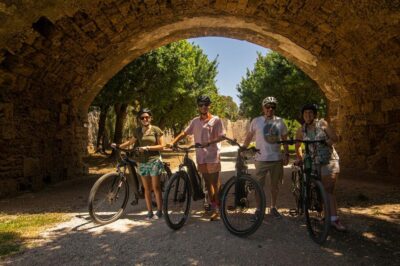
Rhodes: E-bike Highlights Sunset or Morning Photo Tour
Read our review →