Review · PHOTOGRAPHY TOURS
Alfama Photo Walk – Lisbon Photography Experience Led by a Local
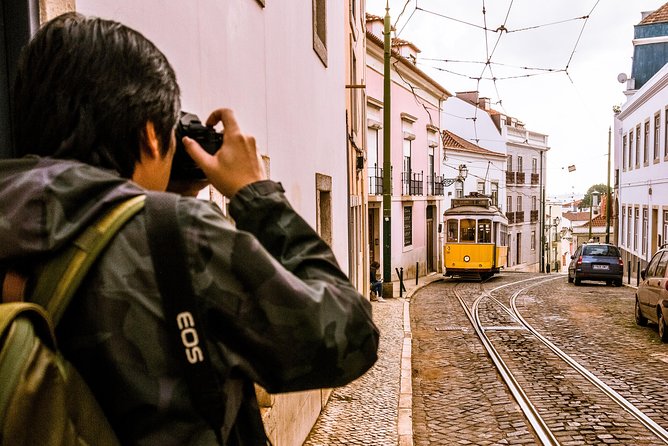
Alfama is one of Lisbon’s best places to learn photography because the streets keep changing in front of you. Carlos Reveles leads you through steep lanes, tram routes, church squares, and rooftops, showing you where to stand, how to wait for the right moment, and how to turn ordinary street scenes into stronger pictures.
I like the tiny group size of five, which gives you room to ask questions without losing the rhythm of the walk. I also like the practical teaching: you work with your own camera, learn to read light, and practice street, architectural, moving-subject, and wide-view photography instead of simply stopping for snapshots.
The main drawback is the price, $112.82 per person, for a three-hour walk that includes no equipment, food, or hotel transportation. You’ll also need to be comfortable with Lisbon’s hills, uneven streets, and the firm cancellation rule for changes made less than 24 hours before the start.
Key points to know before you book
- Small groups of up to five: Carlos can adjust instruction to your camera and experience level.
- Five distinct photography settings: Alfama lanes, São Vicente trams, a rooftop lookout, Igreja de São Miguel, and Lisbon Cathedral.
- Useful street photography practice: You’ll work on timing, angles, moving subjects, light, and composition.
- A good first-day orientation: The walk introduces you to the old city while pointing out quieter streets and useful photo positions.
- Bring your own equipment: The tour supplies instruction, not cameras, lenses, food, or drinks.
- Plan for hills: Comfortable walking shoes matter in Alfama, Graça, and São Vicente.
Why Alfama works so well for a photo walk
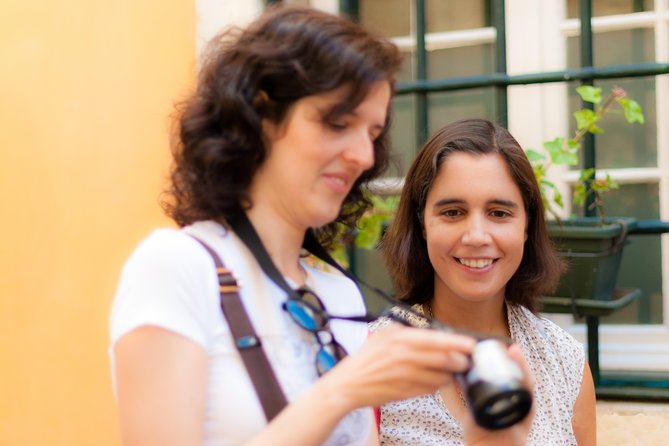
Alfama gives you plenty to work with in a compact area. Its narrow streets create layers of light and shadow, while doorways, balconies, tiled walls, chapels, passing residents, and changing street angles offer subjects at close range.
That variety makes the walk useful for more than pretty pictures. You learn to look at a street before lifting the camera. Where is the light falling? Is the background helping or distracting? Can you wait for a person, tram, or patch of brightness to complete the frame?
Carlos’s approach focuses on practical shooting positions and local context. You are not simply told that a lane is picturesque. You learn why one viewpoint works better than another and how the time of day affects the scene.
This is especially helpful if you are still building confidence with street photography. You can ask about shutter speed, framing, angles, or how to handle a moving subject, then try the idea immediately instead of saving it for later.
More Photography Tours in Lisbon
- Lisbon: 2-Hour Street Art Photo Tour
★ 4.9 · 43 reviews - Private Highlights Photography Tour in Lisbon
★ 3.0 · 8 reviews - Alfama Photo Walk: Lisbon Photography Tour with a Local
★ 4.8 · 6 reviews
Starting at Chafariz das Moiras
The walk begins at Chafariz das Moiras, at Largo do Correio-Mor in Lisbon. It ends at Largo da Sé, beside Lisbon Cathedral, so you are not returned to the starting point.
That one-way route is useful if you are spending the day in the old city. The meeting point is near public transportation, and the finish puts you close to one of Lisbon’s major sights. Check the exact location before setting out, since old Lisbon’s lanes can make a short distance feel less direct than it appears on a map.
The tour is offered in English. Confirmation is provided when you book, and the group can include no more than five people. That limit matters here. Photography instruction works best when the guide can look at your camera, answer a specific question, and give you a few minutes to make the picture.
One hour among Alfama’s narrow lanes
The longest part of the walk is the first hour in Alfama. This gives you time to settle into the pace and work through the basic habits that make street photography stronger.
Expect a mix of narrow streets, varied lighting, and scenes from everyday life. Some photographs will call for a quick response. Others will improve if you stop, wait, and let the scene arrange itself.
Carlos helps you read the light through different parts of the neighborhood. In a tight lane, a bright patch may draw the eye while the rest of the frame stays dark. At another angle, the same street may reveal a softer view or a stronger outline of a building.
I value this kind of teaching because it can change how you photograph the rest of Lisbon. You are learning a method, not just collecting a list of viewpoints. The local stories and cultural background add another layer, helping you understand what you are photographing instead of treating Alfama as a decorative backdrop.
The pace is intentionally thoughtful. That is good for composition, but it means this is not a fast sightseeing walk. If you want to cover a large part of Lisbon quickly, choose a standard city tour instead. If you want time to make photographs, the slower rhythm is the point.
Trams and church architecture in Graça and São Vicente
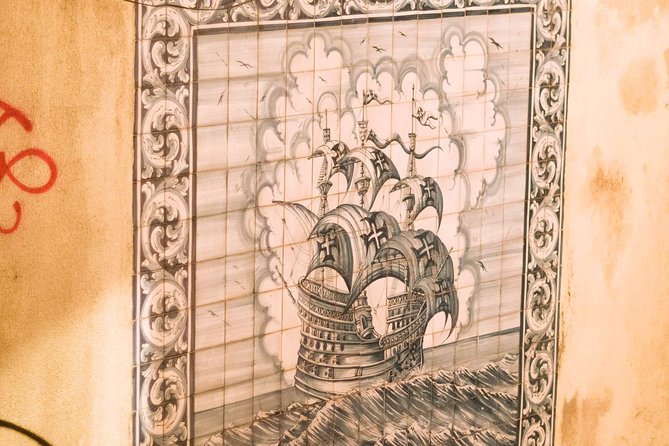
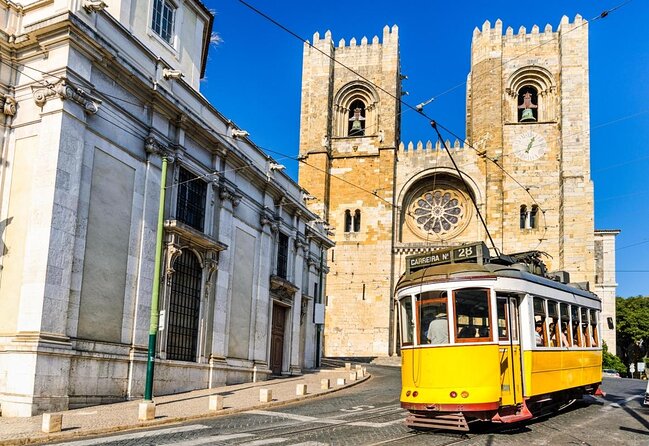
The next section lasts about 30 minutes and shifts your attention to movement and structure. Along Calçada de São Vicente, you practice photographing Lisbon’s trams in motion.
Moving trams are a useful exercise because you must balance timing with composition. You may need to anticipate the subject, keep enough space around it, and decide how much of the street belongs in the frame. Carlos shows you how to combine the moving tram with static elements, such as buildings or the slope of the road.
This lesson suits different skill levels. A newer photographer can focus on timing and keeping the image clear. Someone with more experience can experiment with the relationship between the tram, architecture, and surrounding street life.
The stop also includes Igreja de São Vicente de Fora, where the focus turns to architectural photography. Instead of chasing motion, you look at lines, details, scale, and framing.
The contrast between tram photography and church photography is one of the best parts of the route. You move from a subject that may be gone in seconds to a building that allows careful study. That makes the walk feel like a real photography lesson, not a series of postcard stops.
More Photography Tours in Portugal
- Lisbon by Night: Golden and Blue Hour Photography Walk
★ 5.0 · 4 reviews - Lisbon Photo Tour In Alfama & Graça With Gilby VM
★ 5.0 · 2 reviews - Porto 1/2 Day Walking Photo Tour & Portraits
★ 5.0 · 163 reviews - PHOTO TOUR (Full Day Private Tour- Sunrise to sunset)
★ 5.0 · 68 reviews
Rooftop views at Miradouro de Santo Estêvão
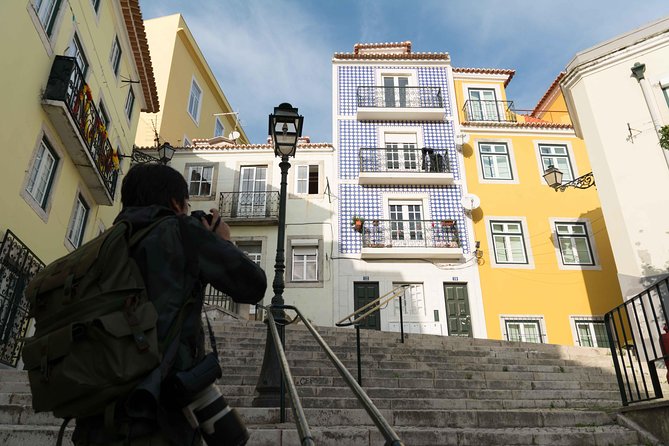
At Miradouro de Santo Estêvão, you get a wider view over Alfama’s rooftops and the Tagus River. The lookout offers a break from the close, compressed feel of the lanes.
Wide views can look simple but are often harder to compose well. Roofs, church towers, river, sky, and distant buildings can compete for attention. Carlos helps you decide how to arrange those elements so the image has a clear subject.
This is the best point on the route for practicing broad compositions. You can work with layers, lines, and open space rather than the tight frames used in Alfama’s lanes.
The stop lasts about 30 minutes. That is enough time to try several positions and adjust your framing, but do not expect a long scenic break with refreshments. Food and drinks are not included, and the walk keeps moving from one location to the next.
A slower look at Igreja de São Miguel
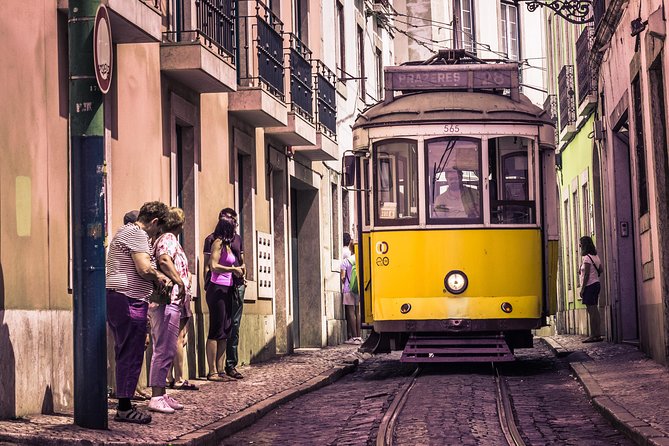
Igreja de São Miguel provides a different kind of neighborhood scene. The surrounding square includes a small chapel, local activity, and several possible frames.
This stop is valuable because it encourages you to look beyond famous monuments. A square can offer details at several distances: a building facade, a doorway, a person crossing the frame, or a view through an opening.
You might work on creating a photograph with foreground, middle distance, and background. You might also focus on small architectural details rather than trying to capture the whole church at once.
The setting gives the walk a more local feel. It is less about one grand view and more about noticing how Lisbon’s older neighborhoods fit together. That makes it a good match for anyone who wants pictures with a sense of place, not just proof that they visited a landmark.
Finishing at Lisbon Cathedral
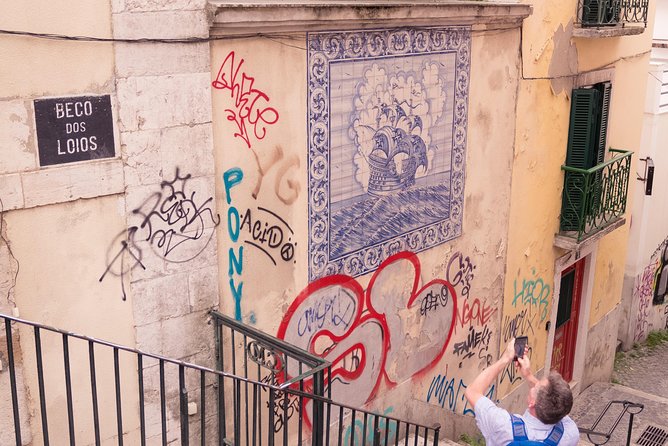
The final stop is Lisbon Cathedral, the oldest church in the city. The tour ends at Largo da Sé, so the cathedral is both the last subject and the practical endpoint.
Here you can work with dramatic light, urban layers, and close architectural details. The cathedral offers a strong subject for experimenting with scale. You might frame the full building, isolate a detail, or place it within the surrounding city.
Ending here also gives the three-hour walk a clear shape. You begin with intimate street scenes, move through trams and architecture, open out to rooftop views, then finish with a major historic building.
The cathedral area can be visually busy, so the instruction on framing is useful. A close-up may produce a cleaner image than a wide shot filled with distractions. The goal is not simply to photograph the church, but to make a deliberate choice about what belongs in the picture.
What Carlos teaches, and what you should bring
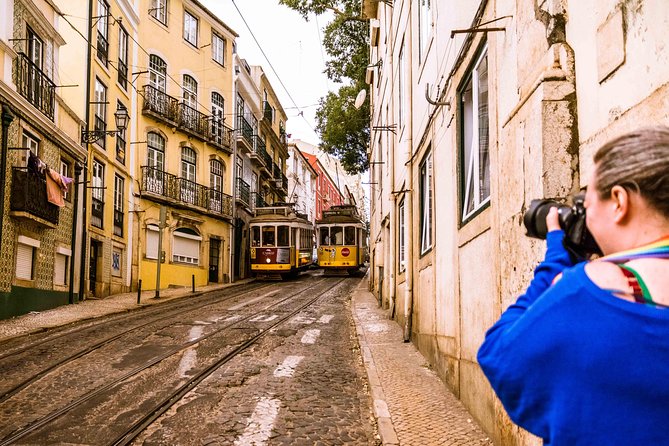
Carlos Reveles is both the guide and the professional photographer leading the experience. Instruction is adapted to your equipment and skill level, so you do not need to arrive as an expert.
Bring the camera you actually want to use in Lisbon. The experience does not supply photography equipment. A phone may be suitable if that is your chosen tool, but the supplied information specifically places responsibility for equipment on you.
You should also bring comfortable walking shoes. Alfama and the nearby districts are hilly, and one person’s experience specifically points out that Lisbon’s slopes are part of the fun and the effort.
Because the walk is built around composition, give yourself time to make images rather than rushing from stop to stop. If you need snacks or drinks, arrange them before or after the walk, since they are not included.
Is $112.82 a fair price?
At $112.82 per person, this is not a cheap sightseeing stroll. You are paying for three hours of focused instruction, a local guide, a small group, and a route designed around photography rather than general sightseeing.
The value improves if you are serious about making better pictures. A guide who can point out a stronger angle, explain why the light works, and help you time a tram can save you a great deal of trial and error. The value is also stronger if you are new to Lisbon and want to get your bearings in the old city at the same time.
The price is harder to justify if you only want to see Alfama or collect a few scenic stops. You can walk these neighborhoods without a guide, and the tour does not include admission to paid sights, equipment, meals, or transportation.
Group discounts may be available, which could make the experience more attractive for people booking together. With a maximum of five people, the group remains small enough for personal help while still being a shared walk rather than a private tour.
Who will get the most from this walk?
I would choose this experience for a photographer who wants direct advice while working in real streets. It suits beginners who need help with camera settings and composition, as well as more experienced photographers looking for local angles and better timing.
It also works well as one of your first activities in Lisbon. You get a practical introduction to Alfama, Graça, São Vicente, and the cathedral area, while learning where the city’s visual character comes from.
You may want to skip it if walking uphill is difficult, if you prefer a seated sightseeing experience, or if you are looking for a private photo shoot with supplied equipment. The group is small, but it is not described as private.
The high rating of 4.8 from 20 published ratings and the 95 percent recommendation figure point to a strong overall experience. The praise centers on Carlos’s friendly guidance, useful advice about angles and timing, quieter backstreets, and a relaxed pace.
There is also one important caution. A booking problem led to a missed tour after confusion about communication and cancellation. The guide states that he was waiting at the meeting point and that the booking was not canceled, while the customer expected a refund. Whatever the cause, confirm special requests and meeting details well before the day, and do not assume a last-minute message will change the start time.
Booking, weather, and cancellation details
Free cancellation applies when you cancel at least 24 hours before the local start time. If you cancel later, the payment is not refunded, and changes made within that period are not accepted.
The experience requires good weather. If poor weather causes cancellation, you will be offered another date or a full refund.
Most people can participate, and the activity is near public transportation. Hotel pickup and drop-off are not included, so you will need to reach Chafariz das Moiras on your own and arrange your onward plans from Largo da Sé.
Should you book the Alfama Photo Walk?
Book it if you want to learn while walking, rather than simply follow a guide from one sight to another. The strongest reasons are the small group, Carlos’s focus on practical technique, the mix of moving trams and still architecture, and the chance to photograph quieter parts of old Lisbon.
I would especially recommend it for a first or second day in the city, when the route can help you get oriented and give you ideas for later photography. Just bring your own equipment, wear shoes suited to hills, confirm the meeting details, and treat the 24-hour cancellation deadline seriously.
If $112.82 feels high for three hours, choose it only if instruction matters to you. For a photographer who wants better angles, stronger timing, and a more thoughtful way to see Alfama, it offers solid value.
FAQ
How long does the Alfama Photo Walk last?
The experience lasts approximately three hours.
Where does the walk begin?
It begins at Chafariz das Moiras, Largo do Correio-Mor, 1100-179 Lisboa, Portugal.
Where does the walk end?
The walk ends at Largo da Sé, 1100-401 Lisboa, Portugal, near Lisbon Cathedral.
How many people can join the tour?
The maximum group size is five people.
Is the tour offered in English?
Yes. The experience is offered in English.
Do I need to bring my own camera?
Yes. Photography equipment is not included, so you must bring your own equipment.
Does the price include food or drinks?
No. Snacks, food, and beverages are not included.
What happens if the weather is poor?
The experience requires good weather. If it is canceled because of poor weather, you will be offered another date or a full refund.
Just added around Lisbon
- Praça do Comércio: Professional Photoshoot with a Local★ 5.0 · 4 reviews
- Lisbon Photo Tour In Alfama & Graça With Gilby VM★ 5.0 · 2 reviews
- Lisbon: Private Photoshoot at Iconic Spots & Edited Photos★ 5.0 · 4 reviews
- Loving Lisbon: Capture Your Memories with a Photoshoot!★ 5.0 · 13 reviews
- Lisbon TukTuk Tour – Smooth & Fun – Best Instagram Spots★ 5.0 · 6 reviews
- Lisbon: Private Photo Shoot with a Professional Photographer★ 5.0 · 4 reviews
- Lisbon: Professional Photographer (@ivetta_photos)★ 5.0 · 2 reviews
- Lisbon: Photoshoot + Video in Alfama | Santa Luzia★ 5.0 · 2 reviews
Photography Tours, side by side.
Rhodes: E-bike Highlights Sunset or Morning Photo Tour
Read our review →