Review · KIMONO & COSTUME PHOTOSHOOTS
Guided Tour of Walking and Photography in Asakusa in kimono
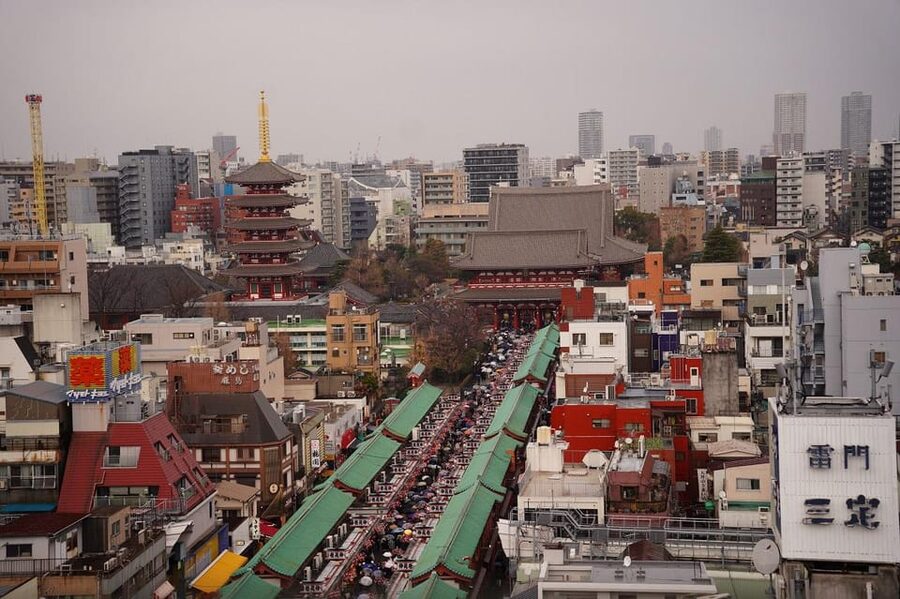
The best part of this Asakusa experience is simple: you do not just rent a kimono and wander around hoping for good pictures. A guide helps you choose the outfit, explains the cultural side of wearing it, leads you to useful photo locations, and takes pictures with your own camera. Asakusa provides the setting, with its huge red Kaminarimon lantern, Senso-ji Temple, old shopping street, pagoda, river, and Tokyo Skytree.
I like the small group size of up to seven people, which should make the four-hour walk easier to manage than a large coach-style outing. I also like the practical help from a guide trained in both kimono dressing and tour guiding. Emiko is the named guide in the available feedback, and she has been praised for helping with fitting, hair choices, photos, food suggestions, shopping, and family needs.
The main thing to consider is time. About an hour goes into selecting and adjusting the kimono, and you still need to return it at the end unless you choose the next-day return option. The schedule also includes several short walking sections, so comfortable footwear for before and after the kimono is a sensible idea.
Key points to know before booking
- Your guide helps choose the kimono and hairstyle, with extra options available for an additional fee.
- The guide takes photos with your camera, so you do not have to rely only on quick self-timer shots.
- The four-hour route covers Asakusa’s major sights, including Kaminarimon, Nakamise Shopping Street, Senso-ji Temple, and Sumida River Terrace.
- Emiko has received especially strong praise for her kindness, cultural explanations, family help, and photo skills.
- The tour costs $116 per person, including the standard kimono fee and qualified English-speaking guidance.
- You can choose next-day kimono return, allowing more sightseeing after the guided portion, if that option is available when you book.
Starting near Asakusa Station
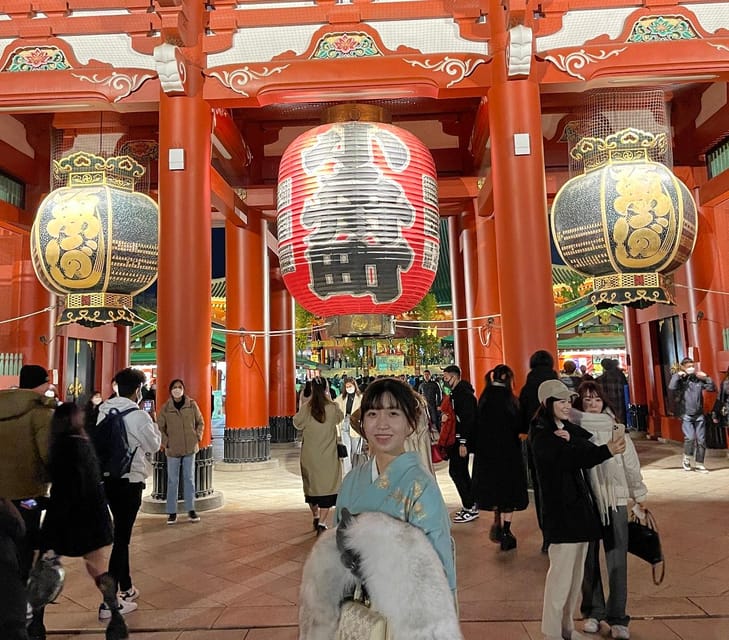
The meeting point is at Gate 1 of Asakusa Station on the Ginza Line. Look for the guide holding a light with the company name LightSpeedStar in orange.
This detail matters in Asakusa, where several railway lines and station exits can make a first meeting confusing. Give yourself extra time. The activity does not refund no-shows or late arrivals, and the instructions say the guide will contact you about the kimono roughly seven days before the tour. You can also contact the company by WhatsApp.
From the station, you walk about five minutes to the kimono shop. The short transfer keeps the start simple, but remember that the tour takes place on foot. Asakusa is easy to explore this way, although a kimono can make longer walks feel less casual than a normal sightseeing stroll.
More Kimono and Costume Photoshoots in Japan
- Tokyo: Kimono Dressing, Walking, and Photography Session
★ 4.9 · 427 reviews - Tokyo Authentic Kimono Rental in Asakusa with Photography Option
★ 5.0 · 46 reviews - Tokyo:Genuine Tea Ceremony, Kimono Dressing, and Photography
★ 5.0 · 33 reviews
Choosing a kimono and hairstyle
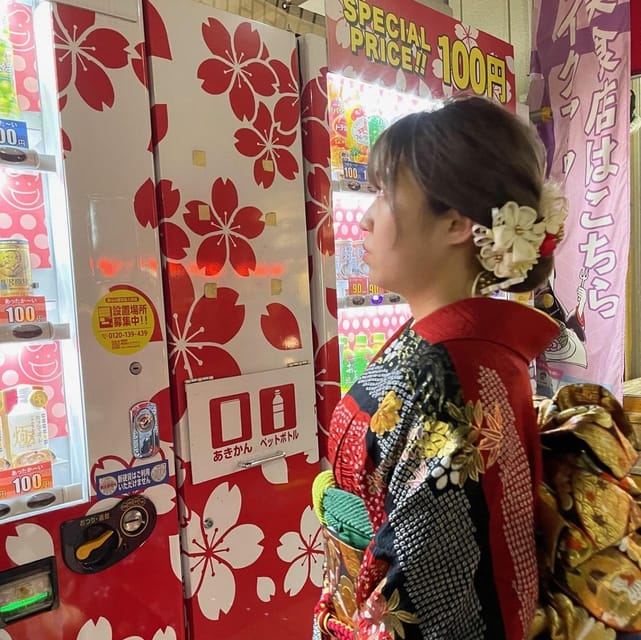
The fitting stage takes about one hour. You choose a kimono, select a hairstyle, and have the outfit adjusted to fit. The standard kimono fee is included, but optional upgrades cost extra. The supplied information does not list each option or its price, so ask about those additions before agreeing to them.
This is where the guide’s qualifications matter. A person who understands both kimono dressing and local sightseeing can help you make choices that work for the setting, not just choices that look good on a rack. The guide also offers advice from a Japanese cultural point of view, which gives the dressing process more meaning than a quick costume rental.
The experience is designed for women and men, and the description specifically presents the kimono as a way for women to look cute and beautiful and men to look more masculine. That wording is a little promotional, but the practical point is sound: traditional clothing changes how you see the streets and how the streets frame your photographs.
Hair styling is part of the process, with additional ways to vary your look for an extra charge. One useful detail from the customer feedback is that the shop offered plenty of choice and handled hair as well as the kimono. If you care about a particular hairstyle or accessory, ask what is included in the fixed fee.
Families can also consider this activity. A two-year-old child took part in one booking, and Emiko was praised for being helpful with the family. Still, the kimono fitting and walking schedule mean parents should decide if four hours of sightseeing suits their child.
Kaminarimon and the first Asakusa photographs
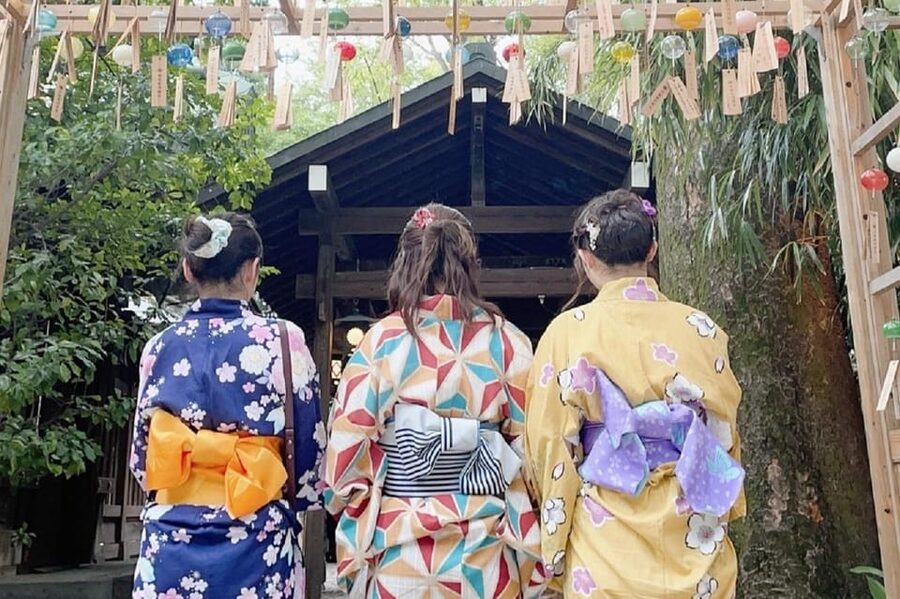
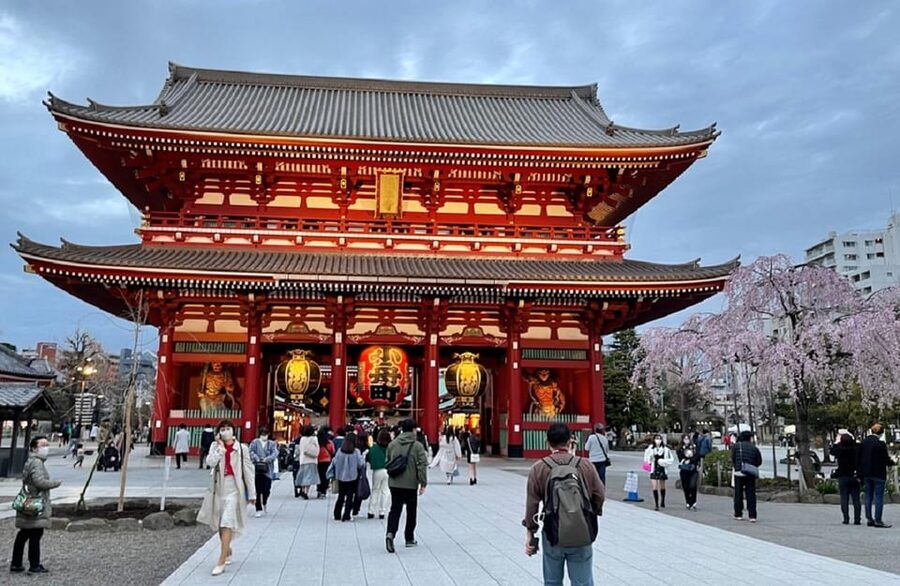
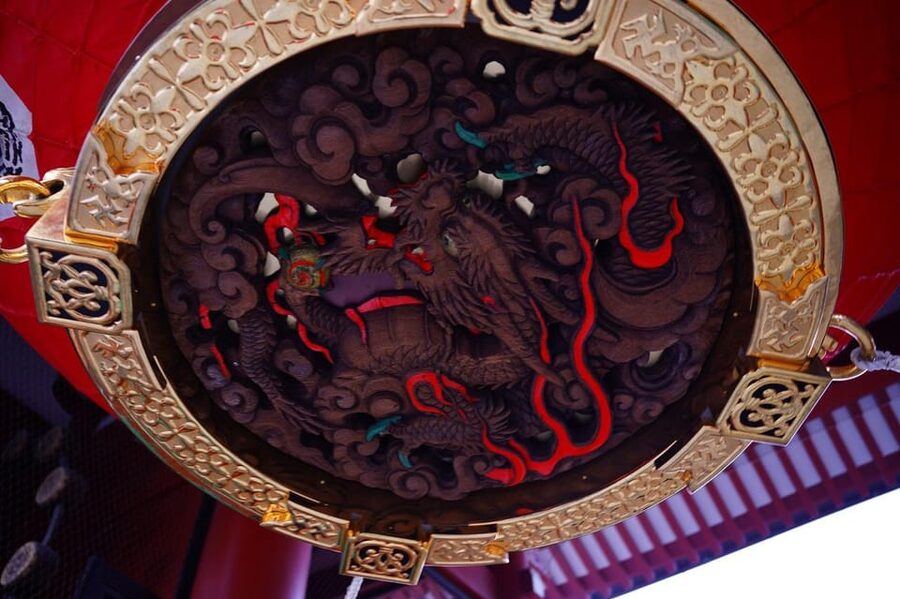
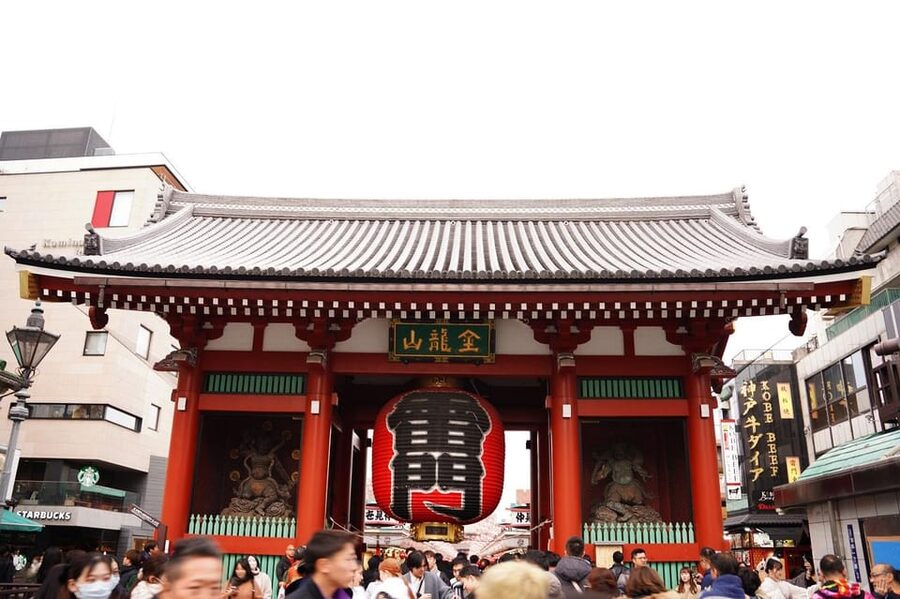
After dressing, you walk about five minutes to Kaminarimon Gate, the main entrance to Senso-ji. The gate’s official name is Kaminari Gate, but most people know it as Kaminarimon. Its giant red lantern gives you one of Asakusa’s clearest photographs, especially when you are dressed in a kimono.
The visit here lasts around ten minutes at first, followed by more free time later in the route. That split is useful. You can get the classic gate photograph early, then return to the area after seeing the temple and shopping street instead of trying to cram every picture into one stop.
Your guide’s role is practical here. A good photo is not only about pointing a camera at the biggest object. The guide can suggest where to stand so the kimono, gate, and street scene work together. The guide also takes photographs with your camera, which is a real advantage for couples, families, and solo visitors.
Do not expect a private photo set with professional lighting. This is a walking tour in a public part of Tokyo. The value comes from having someone who knows the area and can help you use the scenery well.
Nakamise Shopping Street and Senso-ji Temple
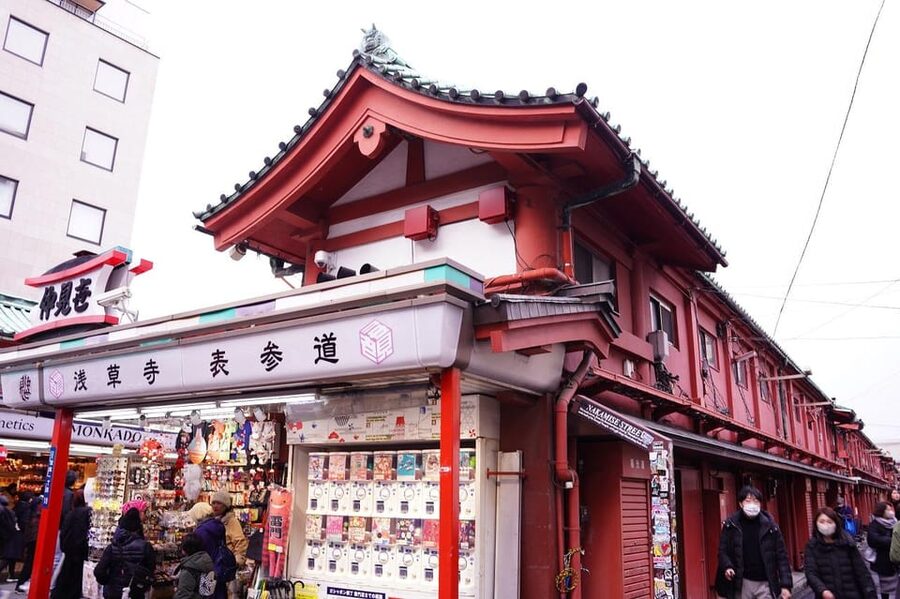
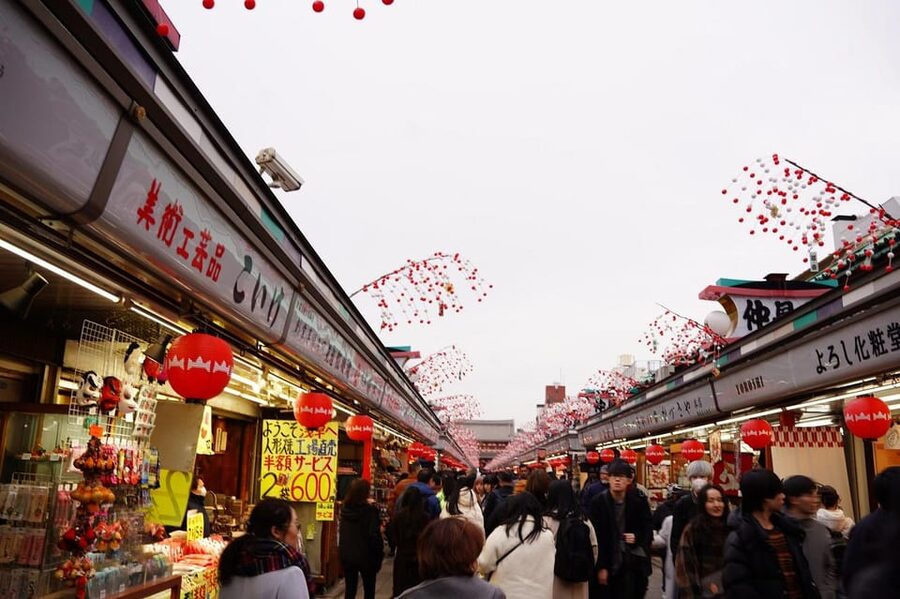
From Kaminarimon, you continue along Nakamise Shopping Street. This is one of Japan’s oldest shopping streets, lined with established stores and souvenir shops. The walking and shopping portion lasts about fifteen minutes, so you get an introduction rather than a long browsing session.
You may find sweets, small gifts, traditional items, and other souvenirs here. The guide can help with shopping, which is useful if you want context or need help choosing among similar items. Keep in mind that the tour has a fixed schedule, so serious souvenir shopping may need to wait until later.
Next comes Senso-ji Temple, the spiritual center of the route. The temple has more than 1,000 years of history, and you have time to walk through the grounds and offer prayers. The schedule allows about twenty-five minutes here, enough for the main sights and a few photographs, but not a slow study of every detail.
The five-story pagoda is one of the key visual markers of Asakusa. The guide can point out the best ways to frame the temple, pagoda, and kimono together. During cherry blossom season, you may also capture blossoms, Senso-ji, and Tokyo Skytree in one image, depending on the exact conditions and viewpoint.
That seasonal detail is important. Cherry blossoms are mentioned as a photo backdrop, but they will not be present throughout the year. If blossoms are central to your plans, check the season rather than assuming the tour guarantees them.
More Kimono and Costume Photoshoots in Tokyo
- :Tokyo,Shibuya/ Pro Photography in Kimono / English-Friendly
★ 5.0 · 26 reviews - Tokyo: Private Makeover Photography Studio in Luxury Kimono
★ 5.0 · 22 reviews - Asakusa Kimono/Yukata Rental & Photography_Tsutsuji
★ 5.0 · 12 reviews - Asakusa Kimono Photography Tour
★ 5.0 · 8 reviews
Returning to Kaminarimon for more camera time
The route includes another visit to Kaminarimon, with about thirty minutes for sightseeing and free time. This second block gives you room to take additional photographs after the first rush of the tour.
It can also make the schedule feel slightly repetitive. If you prefer constant forward movement, returning to the same gate may seem less efficient. If you are booking mainly for photographs, though, the extra time is useful. You can try different poses, adjust your composition, or take pictures with companions who were not ready during the first stop.
Your guide can also help you get photos that look less like a quick snapshot. The available feedback gives particular credit to Emiko for taking many photographs and videos. That is one of the strongest reasons to choose this experience over renting a kimono alone.
Bring a camera or phone with enough battery and storage. The guide takes pictures with your camera, so the quality and convenience depend partly on the device you bring. The tour does not include professional photography equipment or a separate photographer.
Sumida River Terrace and Tokyo Skytree views
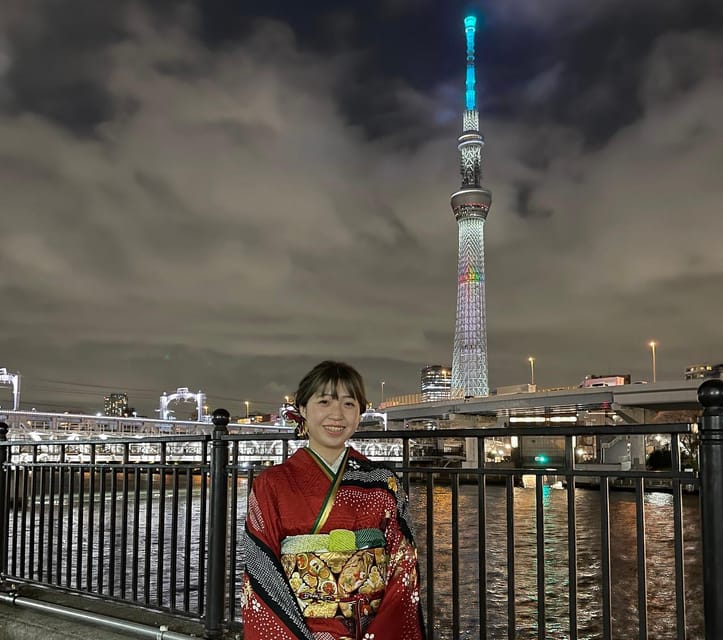
After another short five-minute walk, you head to Sumida River Terrace on the left bank, downstream from Shirahige Bridge. The visit lasts about thirty minutes. Here, the background changes from temple gates and shopfronts to the river, open views, Tokyo Skytree, and, at the right time of year, cherry blossoms.
This is a good contrast to the temple district. The river setting gives your photographs more breathing room, while the Skytree adds a very clear Tokyo marker. The guide can suggest poses and positions that show the kimono against the city rather than losing it among crowded streets.
The route description calls this a place to photograph yourself in a kimono with Tokyo Skytree and cherry blossoms behind you. Again, the blossoms are seasonal. The Skytree remains the dependable part of the setting.
The walk between the temple area and the river is short in the schedule, but you should still think about mobility. The activity is listed as wheelchair accessible, which is useful information for planning. If you need a particular level of assistance or have concerns about the kimono and route, contact the company before booking.
Returning the kimono and extending your day
After the river stop, you walk about five minutes back to the kimono shop. The scheduled activity then ends, with the route returning toward Asakusa Station.
The normal plan is to return the kimono at the shop. An option for next-day return allows you to keep sightseeing in the outfit after the guided portion. The guide can suggest where to go next, but the information provided does not name those locations or state the extra cost, so confirm the details at booking.
Next-day return can add value if you want a longer day of photographs or would rather explore at your own pace after the structured tour. It may also add another obligation to your evening or following day, so think about your schedule before choosing it.
Food, drinks, entrance fees, transportation, personal purchases, and kimono option fees are not included. The route itself focuses on outdoor sightseeing and does not promise admission to extra facilities. Budget for anything you buy along Nakamise Shopping Street and for getting to or from Asakusa.
Is $116 a fair price?
At $116 per person, this is not the cheapest way to rent a kimono in Tokyo. You are paying for more than clothing, though. The price includes the standard kimono fee, a four-hour guided route, an English-speaking guide, cultural advice, photo help, and a small group limited to seven people.
The value is strongest for solo visitors, couples, and families who want good photos without arranging their own photographer. It is also useful if you want help understanding what you are wearing and how to move through Asakusa’s main sights without planning every stop yourself.
The value is weaker if you already know Asakusa well, have a friend who can take photographs, or mainly want to rent a kimono for a full day. In that case, the one-hour fitting and four-hour route may feel more structured than necessary. Optional hair and kimono upgrades also raise the final bill.
The rating is 4.3 from five bookings, but the individual experiences are not all equal. Four comments give five stars, praising Emiko’s kindness, cultural guidance, fitting help, shopping advice, and photos. One one-star experience reports that the reservation was forgotten and caused a forty-five-minute wait. That is a serious logistical warning, even though it appears to be an isolated problem in the small sample. Confirm your meeting details and arrive early.
Who will enjoy this Asakusa experience?
I would recommend it most strongly if you want a photo-focused cultural outing and do not want to manage the kimono process alone. The guide handles the practical steps, then helps you use Asakusa’s best-known views.
It also suits:
- Solo visitors who need someone to take their pictures.
- Couples who want photographs together rather than alternating camera duty.
- Families who value patient assistance and local suggestions.
- First-time visitors to Asakusa who want the major sights in one route.
- People interested in Japanese clothing and cultural explanations.
- Visitors who prefer a small group instead of a large organized tour.
You may want a different plan if you dislike scheduled stops, want to spend hours shopping, or need a full-day kimono rental without returning to the shop. The four-hour duration gives you a clear experience, but it does not turn the outfit into an all-day independent rental unless you pay for and select the next-day return option.
Practical details that make the day easier
Wear simple clothing under the kimono and avoid bringing more belongings than you need. The supplied information does not specify storage arrangements, so ask the shop how to handle bags and personal items.
Arrive early at Asakusa Station Gate 1 and look for the orange company light. Late arrival can mean missing the group, with no refund for a no-show or late coming.
Keep your phone or camera ready once you are dressed. The guide takes photos with your device, and the best value comes from making good use of that help. A charged battery matters more here than carrying extra sightseeing gear.
English, Chinese, and Japanese guiding are available. The activity is listed as wheelchair accessible, and the small group is limited to seven participants. Cancellation is free up to 24 hours before the activity for a full refund, and you can reserve now and pay later.
Should you book it?
Book this tour if you want a straightforward way to wear a kimono, see Asakusa’s classic sights, and return home with photographs that include you in the picture. The strongest reason to choose it is the combination of kimono support, local guiding, and hands-on photo help. Emiko’s warm, practical approach has been especially well received, including by a family with a young child.
Think twice if your priority is the lowest possible price or a full day of independent kimono sightseeing. Ask about optional fees, the next-day return choice, and the meeting details before you commit. For a first Asakusa visit, though, $116 is a reasonable price for a small-group outing that combines clothing, culture, and photography in one focused morning or afternoon.
FAQ
Where does the tour meet?
The meeting point is at Gate 1 of Asakusa Station on the Ginza Line. The guide will hold a light with the LightSpeedStar logo in orange.
How long does the activity last?
The guided experience lasts four hours.
How many people can join the group?
The group is limited to seven participants.
What languages are available?
Guiding is available in English, Chinese, and Japanese.
Is the kimono included in the price?
The fixed standard kimono fee is included. Optional kimono features and upgrades cost extra.
Is hair styling included?
The activity includes choosing a hairstyle. Additional ways to vary the hairstyle may require an extra fee.
Will the guide take my photographs?
Yes. The guide will take photographs with your camera or phone and suggest places that work well with the kimono.
Can I keep the kimono after the tour?
A next-day return option is available. If you select it, you can continue sightseeing in the kimono, and the guide can advise you where to go.
What is the cancellation policy?
You can cancel up to 24 hours in advance for a full refund. No refund is given for a no-show or late arrival.
Just added around Tokyo
- Tokyo: Private Photoshoot at Shibuya Crossing★ 4.7 · 7 reviews
- Tokyo: Customized Private Historical Guided Photoshoot Tour★ 5.0 · 25 reviews
- Tokyo Private photo tour with Nightstreet Neon photographer★ 5.0 · 17 reviews
- Tokyo: Private Photo Shoot with a Professional Photographer★ 5.0 · 11 reviews
- Tokyo: Private Makeover Photography Studio in Luxury Kimono★ 5.0 · 22 reviews
- Tokyo: Private Instagramable Customised Tokyo City Day Tour★ 4.2 · 4 reviews
- Tokyo Portrait Tour with a Professional Photographer★ 5.0 · 29 reviews
- Tokyo: Photography Masterclass – Private Photo Lesson★ 5.0 · 7 reviews
Kimono & Costume Photoshoots, side by side.
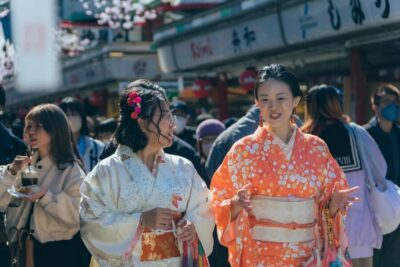
Kimono Dressing, Walking, and Photography Session
Read our review →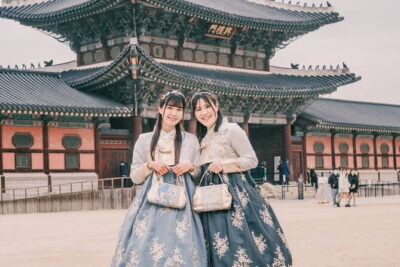
Hanbok Photoshoot and History Tour at Gyeongbokgung Palace
Read our review →

Witch Costume Photo Shoot – Olde Salem Village theatrical set
Read our review →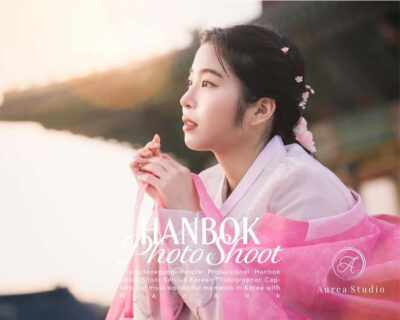
Professional Hanbok Photography at Gyeongbok Palace
Read our review →
Witch Costume Photo Shoot – Witch Cottage theatrical set
Read our review →