
Review · EVENING EXPERIENCES
Salar de Uyuni 1 day + photo session + Sunset (English)
The real prize here is Salar de Uyuni, a giant white salt plain made from evaporated prehistoric lakes. The flat surface seems to run forever, and in the right conditions, a thin layer of water turns it into a mirror for sunset and those playful perspective photos.
I like the mix of old railway relics and wide-open salt country. I also like the practical finish: a guided photo session, wine at sunset, food and drink, and return to Uyuni around 8 p.m. One point to consider is that entrance fees are extra, and the visit to Incahuasi Island depends on the rainy season.
Key points at a glance
- Rusting railway history: See more than 20 old locomotives and wagons at the train cemetery outside Uyuni.
- Salt-making in Colchani: Watch for salt piles, a small salt factory, and crafts made from llama and alpaca fiber.
- Photo-friendly salt flats: Use the broad white plain for forced-perspective pictures and playful group shots.
- Incahuasi Island walk: Spend more than an hour among giant cacti, with wide views across the Salar.
- Sunset with wine: End the day at the edge of the salt flats, looking for water that reflects the evening sky.
- Useful transport: A Toyota or Nissan 4×4 handles the day, with pickup from your hotel or the airport.
Why this one-day Salar de Uyuni trip works
This is a long day, but it gives you a useful first taste of the Uyuni area without committing to a multi-day crossing. You see industrial history, local salt production, the main salt flat, a cactus-covered island, and sunset in one outing.
The tour costs $76 per person. That is fair value if the price includes the 4×4, professional driver-guide, food, drinks, sunset wine, oxygen bottle, and pickup. The extra entrance charges matter, though, so you should budget for those before booking.
You will spend much of the day in a vehicle, moving between widely separated stops. The reward is scale. Salar de Uyuni is not a single viewpoint or one short walk. It is a huge open plain, and the changing stops help break up the drive.
The English and Spanish guide option is useful if you want explanations as you go. One guide named Carlos received especially strong praise for his friendly manner, patience, attention to each person, and choice of music from different countries. Guides can vary, so Carlos should not be treated as guaranteed unless the operator confirms him for your date.
More Evening Trips around the world:
- Rhodes: E-bike Highlights Sunset or Morning Photo Tour
★ 4.9 · 351 reviews - Cappadocia Sunrise & Sunset Horse Tour with Photography
★ 4.9 · 348 reviews - Mediaeval Rhodes E-bike Highlights Photo Tour Morning/Sunset
★ 5.0 · 164 reviews
The train cemetery and Uyuni’s mining past
The first stop is the train cemetery, where more than 20 old locomotives and wagons sit on the high plateau. Rusted iron, empty carriages, and exposed machinery create a stark contrast with the pale salt that comes later.
These are not random pieces of scrap. In 1899, Bolivia’s first railway line was laid here, linking Uyuni with Antofagasta. The railway carried tin, silver, gold, and other minerals, and the silver mines of Huanchaca helped make the line an important part of the country’s industrial growth.
I like this stop because it gives the day some human scale. Before you reach the enormous salt plain, you see how railways and mineral wealth shaped Uyuni. The visit is also easy to photograph, with rusted metal and open sky providing strong visual contrast.
Do not expect a polished museum. The locomotives are scattered across the ground, and the appeal comes from their age, isolation, and decay. If you prefer detailed historical interpretation, ask your guide questions. The stated program gives the main background, but the depth of explanation may depend on your guide.
Colchani’s salt shops and working edge
The tour continues to Colchani, about 23 kilometers from Uyuni. This small town is a practical stopping point before the main salt flat, with a salt factory, salt piles, and shops selling local handicrafts.
You can look for crafts made from llama and alpaca fiber, along with souvenirs connected to the Salar. This is a better place to consider purchases than the middle of the salt flat, since the town is directly tied to the local salt trade and craft economy.
Colchani also helps you understand that the Salar is not only a scenic attraction. Salt is extracted, piled, processed, and sold. The piles you see are part of an active local industry, not just decoration for visitors.
Keep your expectations in check. The stop is brief and commercial in nature, and the town is mainly a gateway to the salt flats. Still, it is worth your time if you want a small connection to local work and a chance to buy llama or alpaca goods.
Entering the world’s largest salt flat
The main portion of the day begins when you enter Salar de Uyuni, described as the largest salt flat in the world. The surface formed after prehistoric lakes evaporated, leaving a vast crust of salt across the high plateau.
The first sights include piles of salt and areas where salt is extracted. These details show how the plain functions as a working resource. The white surface may look empty from a distance, but it supports local industry and provides the setting for the day’s most memorable views.
The 4×4 is important here. A Toyota or Nissan vehicle is used for the trip, giving the group a way to cover the broad distances between the salt piles, water features, museum area, central photo location, Incahuasi Island, and sunset stop.
The open space can make distances hard to judge. A feature that looks close may take time to reach, and your guide’s route matters. This is why a driver-guide is more useful than trying to arrange a basic transfer. You need someone who knows the stops and can place you in suitable areas for photos.
More One-Day Trips in the world:
- Silfra: Half-Day Snorkeling Day Trip with Underwater Photos
★ 4.8 · 1,155 reviews - From Yerevan: 6 Most Instagramable Armenian Sights Day Trip
★ 4.3 · 304 reviews - Day Trip to Chefchaouen from Fez (instagram /Photos)
★ 5.0 · 180 reviews - Birding & Photography Day Trip to Doñana from Seville
★ 5.0 · 61 reviews
Ojos del Salar and Playa Blanca
One of the salt flat stops is Ojos del Salar, where you can see water movement and gas emissions. These openings provide a change from the hard white crust. Instead of a flat, silent surface, you find signs of water and underground activity.
The tour then reaches the Hotel or Salt Museum at Playa Blanca. The program includes the chance to see flags from different countries and the Dakar monument, with lunch arranged here.
This is a good point to pause and take in the strange mix of tourism, national symbols, and salt-built features. The Dakar monument connects the area with the famous desert race, while the salt construction reflects the material beneath your feet.
The exact museum or hotel access can depend on conditions and local arrangements, so do not assume every interior area will operate like a standard museum. The stated plan is to see the site and its displays, with lunch included in the day.
The center of the Salar and perspective photos
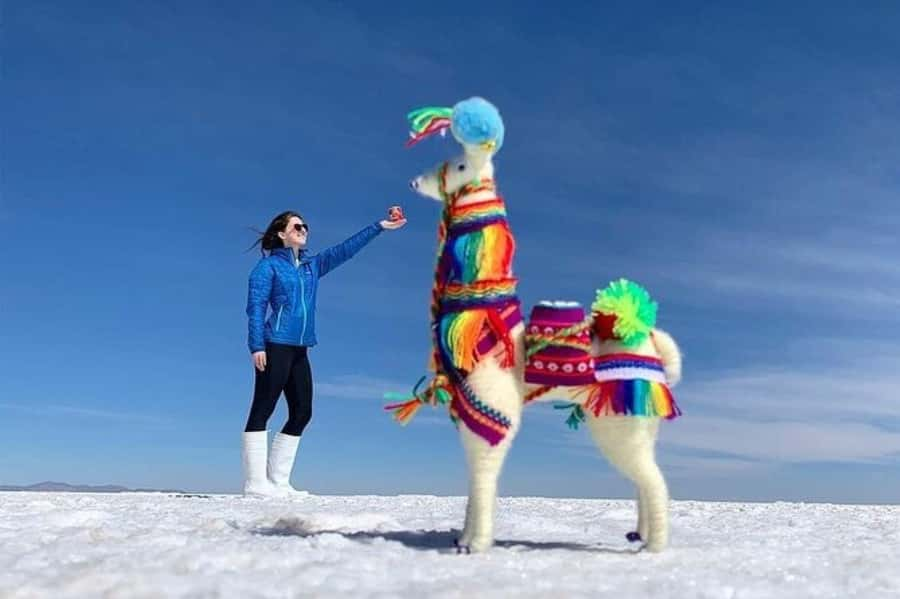
At the center of the salt flat, the tour sets aside time for perspective photography. This is where you can create the familiar funny photos that make a small person appear to stand inside a bottle, or make a nearby object seem enormous.
The trick works because the plain is so flat and open. With few visual clues for distance, your camera can turn a simple pose into a miniature scene. Your guide can help with positioning, but you should also be ready to try a few takes. These pictures depend on alignment, so the first attempt may not be the best one.
I like that photography is built into the day rather than left as an afterthought. You do not need advanced equipment. A phone or ordinary camera is enough for the basic effect, though a guide who enjoys the process can make the session more fun and efficient.
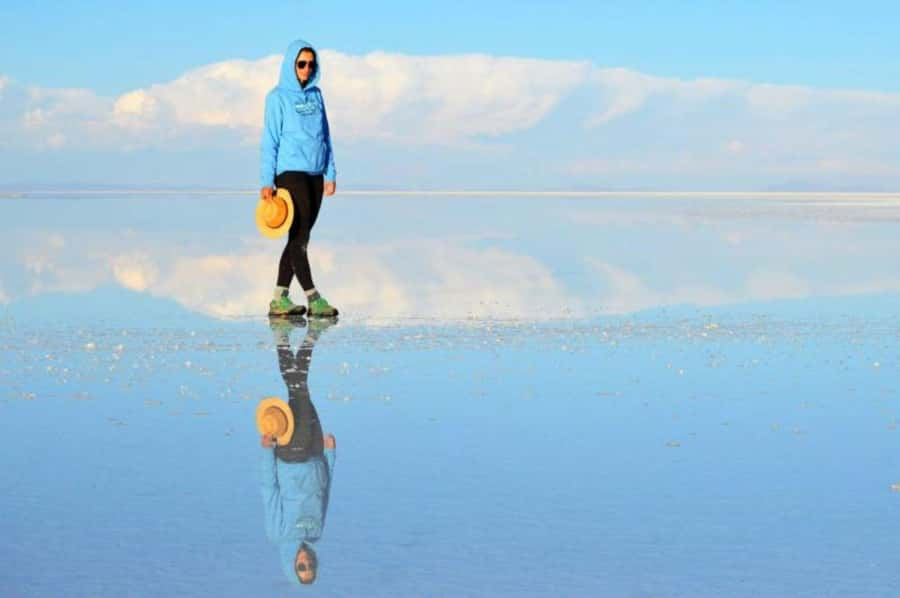
The surface may be dry and bright or partly covered with water, depending on the season. Water can produce reflections, but it may also change which areas are practical to visit. Bring patience and protect your eyes from the glare.
Incahuasi Island and its giant cacti
Incahuasi Island gives you a break from the vehicle. The plan includes a walk of more than one hour along the island’s path, with views across the Salar and a look at the Coral Window.
The island is known for ancient giant cacti. Their height and age make a dramatic contrast with the low, white salt plain around them. You get a different view here: instead of looking across the flat surface, you look out over it from higher ground.
This is the most active walking section of the day, though it is not described as a strenuous hike. You should still wear shoes suitable for a rocky path and allow enough time to walk at an easy pace. The attraction is not just the cactus itself. It is the combination of cactus, open sky, and salt stretching in every direction.
There is one important limitation: the Incahuasi visit depends on the rainy season. If conditions prevent access, this part of the program may not take place. That is worth considering if the island is your main reason for booking. The salt flat and sunset remain central parts of the day, but the island should not be treated as certain in every season.
Sunset, water, and a glass of wine
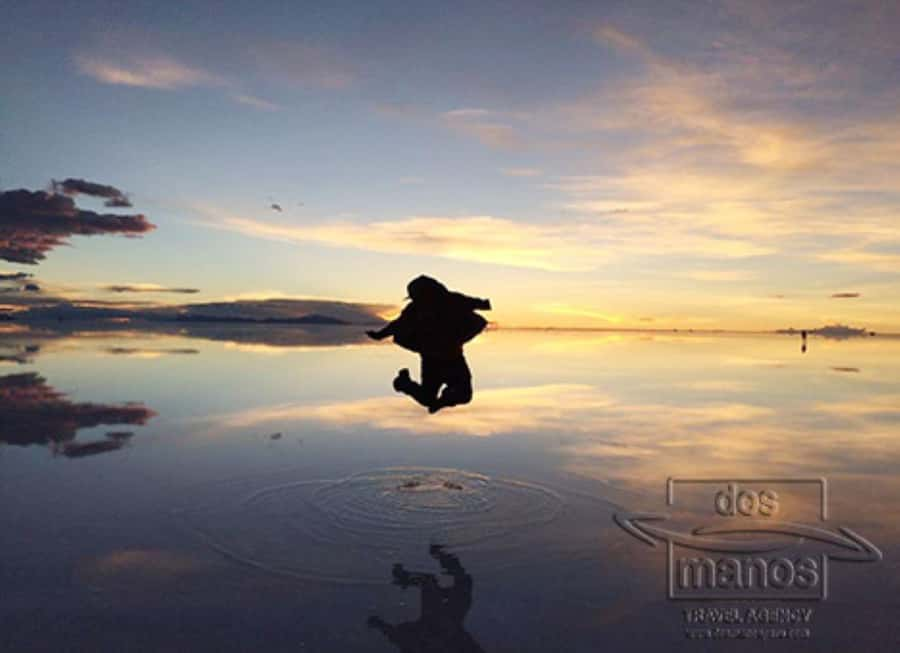
After Incahuasi Island, the 4×4 returns toward the edge of the Salar. The guide looks for a place with water so you can watch the sunset over the reflective surface.
This is a fitting end to the route. During the day, the salt flat is bright, dry, and geometric. At sunset, water can soften the scene and reflect the sky. The result depends on the season and the exact conditions, so you should treat the reflection as a possibility rather than a guaranteed mirror.
Wine is included for this final stop. It is a small touch, but a useful one after a full day of driving, walking, and photo attempts. Food and drink are also included during the tour, so you are not left to arrange every meal on your own.
The group returns to Uyuni at about 8 p.m. Drop-off is available at the airport, your hotel, or the bus stop. That flexibility helps if you are connecting onward, though you should still allow enough time for the day to run late because sunset timing and road conditions can affect the return.
What the $76 price really covers
At $76 per person, this is not simply a scenic drive. The price includes a professional driver-guide, a Toyota or Nissan 4×4, food and drink, sunset wine, an oxygen bottle, and pickup from your hotel or the airport.
That package makes the tour good value for someone who wants a full-day route without arranging separate transport and meals. The oxygen bottle is also a practical inclusion for a high-altitude outing, although the tour does not promise that altitude problems will be avoided.
Entrance tickets to attractions or museums are not included. You should ask for the current amounts before departure, especially if you plan to visit the museum area or Incahuasi Island. The headline price is attractive, but your real cost will be a little higher once those fees are added.
Pickup from the airport is available on the same day as the tour. Hotel pickup is also included. That is helpful in Uyuni, where a tour that starts and ends in the town can remove some same-day planning work.
Who should choose this day trip
I would choose this experience if you have one full day in Uyuni and want the major sights in a clear order. It suits people who want photos, broad scenery, a little local industry, and a short walk among giant cacti.
It is also a good fit if you value an attentive guide. Carlos, who led one booking, was praised for being patient, friendly, and careful to keep everyone comfortable. His habit of playing music from different countries added a personal touch. Ask the provider who will guide your departure if the personality of the guide matters to you.
You may want a different plan if you dislike long vehicle days or want a slower, more remote experience. This route covers many stops in one day, so time at each place is limited. A multi-day journey would provide more room for distant sights, but that is not what this trip is designed to do.
Photography-minded visitors should find plenty to work with. The train cemetery offers rust and machinery, Colchani provides salt and craft scenes, the central Salar offers perspective pictures, Incahuasi gives you cactus and high views, and sunset may add reflections.
Practical details before you book
The experience lasts one day, with return to Uyuni around 8 p.m. Starting times depend on availability, so check the schedule before paying.
English and Spanish guides are offered. The tour uses a Toyota or Nissan 4×4, and both airport and hotel pickup are available. Food, drinks, and sunset wine are included, while attraction and museum entrance fees are extra.
The activity allows free cancellation up to 24 hours before departure for a full refund. You can also reserve now and pay later, which may help if your Uyuni plans are still shifting.
Bring a camera and expect bright conditions on the salt. Comfortable walking shoes will help at Incahuasi Island. Since the island visit depends on the rainy season, confirm the expected route if that stop is especially important to you.
Should you book this Salar de Uyuni tour?
Book it if you want the main Uyuni experience in one organized day, with transport, meals, photos, and sunset handled for you. The combination of the train cemetery, Colchani, the enormous salt flat, Incahuasi Island, and evening wine gives the day more range than a simple salt-flat transfer.
The main cautions are clear: entrance fees cost extra, the day is long, and Incahuasi Island depends on seasonal access. If you accept those limits, $76 is a sensible price for a full-day 4×4 outing with an English or Spanish guide. For a first look at Uyuni, this is a practical and memorable choice.
FAQ
How long does the Salar de Uyuni tour last?
The activity lasts one day and returns to Uyuni at about 8 p.m.
What language can the guide speak?
Live guides are available in English and Spanish.
Is food included?
Yes. Food and drink are included, along with wine for the sunset.
Are entrance fees included in the price?
No. Payments for entrance tickets to attractions or museums are not included.
Can I be picked up at the airport?
Yes. Same-day airport pickup is included, as well as pickup from your hotel.
Is the visit to Incahuasi Island guaranteed?
No. The visit depends on the rainy season. When conditions allow, the program includes a walk of more than one hour among giant cacti and views across the Salar.
Just added around the world
- ️ Hanoi Instagram Tour: Most Famous Spots (Private & All-Inclusive)★ 5.0 · 12 reviews
- Hanoi Explorer Photo Tour★ 5.0 · 40 reviews
- Into the Thieves Market Hanoi Photo Tour★ 5.0 · 10 reviews
- Cultural Hanoi Photo Walk – A Street Photography Tour★ 5.0 · 6 reviews
- Hanoi Street Photography with a Pro – Phone & Camera★ 5.0 · 27 reviews
- ️ Ha Long Bay Instagram Tour: Most Famous Spots (Private & All-Inclusive)★ 4.5 · 4 reviews
- Private Hanoi Photoshoot – Iconic Spots & Hidden Gems★ 5.0 · 16 reviews
- 4 hour individual photo tour of Hamburg★ 5.0 · 2 reviews
Evening Experiences, side by side.

Rhodes: E-bike Highlights Sunset or Morning Photo Tour
Read our review →
Cappadocia Sunrise & Sunset Horse Tour with Photography
Read our review →
Tokyo by Night Photography Tour (Private Option Available)
Read our review →
Sunset Hike and Photography Tour near Red Rock with Optional 7 Magic Mountains
Read our review →
Walvis Bay: Sandwich Harbour Sunset Photography Tour
Read our review →

Unique Rome by Night, Photo Tour and Workshop Under the Stars
Read our review →Lists this one turns up in