Review · PHOTO TOURS & PHOTOSHOOTS
Photography Expeditions to Omo Valley
The Omo Valley packs an astonishing range of cultures into a small corner of southern Ethiopia. In six days, you can photograph Mursi villages, Hamer communities, Karo body painting, Dassanech hair designs, Dorze houses, and crocodiles on Lake Chamo. The cultural variety is the main draw, and the route gives you far more than a quick village visit.
I like the private format for up to seven people, since a small group is easier to manage with cameras and long road days. I also like that village entrance and photography fees, meals, and an air-conditioned vehicle are included. The tradeoff is the pace: several days involve long drives, early starts, rough regional travel, and limited time in each place.
Key points at a glance
- Six days from Addis Ababa: You fly south to Jinka and return from Arba Minch, rather than spending the entire trip on the road.
- Four major cultural areas: Mursi, Hamer, Karo, and Dassanech communities each offer different clothing, hairstyles, body decoration, and customs.
- Photography costs are included: Village entrance and photography fees are part of the package, which makes budgeting easier.
- Private group of up to seven: You travel with only your own party, a useful setup for photographers carrying equipment.
- Wildlife adds variety: Lake Chamo brings crocodiles, hippos, and birds into a trip otherwise focused on culture.
- Mulugeta and Captain are associated with the tour team: Their names are useful points of contact to confirm when you book.
Why the Omo Valley makes such a strong photography trip
The Omo River Valley is not one single culture waiting to be photographed. At least 30 ethnolinguistic groups live across the wider area, and the short route introduces you to several of them. Their differences can appear in body painting, hair, clothing, farming traditions, homes, and ceremonies.
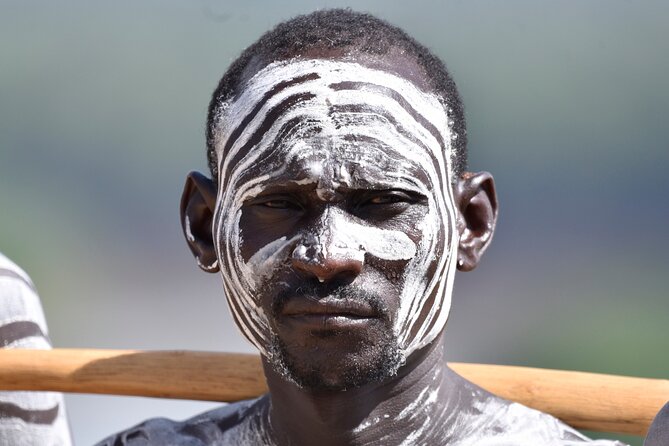
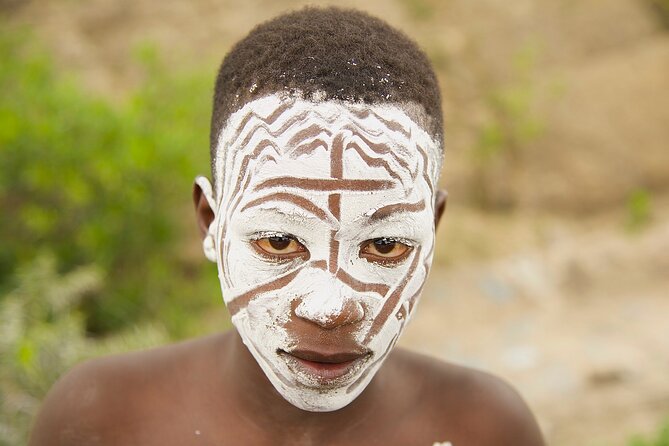
That variety is what gives this trip its force. One day you are near Mago National Park and visiting Mursi communities. Later, you are watching Karo artists use clay and plant pigments for patterns on the face and body. The next morning brings a canoe crossing to Dassanech villages. The subjects change quickly, but the trip is not simply a collection of costume stops. You are seeing communities with their own ways of living in a region long separated from outside influence.
Photography here requires care. A fee is included, but that does not remove the need to ask before taking a close portrait, follow the guide’s advice, and treat people as people rather than scenery. I would also ask in advance how the team handles requests for posed photographs and what the photography fee covers at each village.
The private arrangement helps. With a maximum of seven people, your group should have more room for camera bags and more flexibility than a large coach party. It also gives you a better chance to discuss light, timing, and respectful conduct with the guide.
More photo tours and shoots in the world:
- Bali: Full-Day Instagram Highlights Tour
★ 4.8 · 7,817 reviews - #1 Northern Lights Tour In Iceland from Reykjavik with PRO photos
★ 4.5 · 2,887 reviews - ️ Bali Instagram Tour: The Most Famous Spots (Private & All-Inclusive)
★ 5.0 · 2,857 reviews
Day 1: Addis Ababa, Jinka, and the Ari village
Your trip begins with pickup in Bole, Addis Ababa. Before the afternoon flight, you may have the option to visit the National Museum or Merkato, Addis Ababa’s open market. This gives the first day some flexibility, especially if your flight schedule leaves a few hours in the capital.
The flight to Jinka changes the character of the journey. Instead of using a full day to reach southern Ethiopia by road, you arrive in the Omo region and meet the driver at the airport. From there, the route continues to an Ari village.
The Ari are one of the local groups in the Jinka area, and this first visit eases you into the cultural side of the trip. The day is listed at about four hours, but the exact amount of village time will depend on arrival and transfer schedules.
Jinka is also an important practical base. It is the gateway for the Mago National Park and the Mursi highlands, so this is where your next morning begins. If you bring serious equipment, use the first evening to check batteries, memory cards, and bags. The following days are active, and you will not want to discover a charging or storage problem after leaving town.
Day 2: Mursi villages, Alduba Market, and the Hamer area
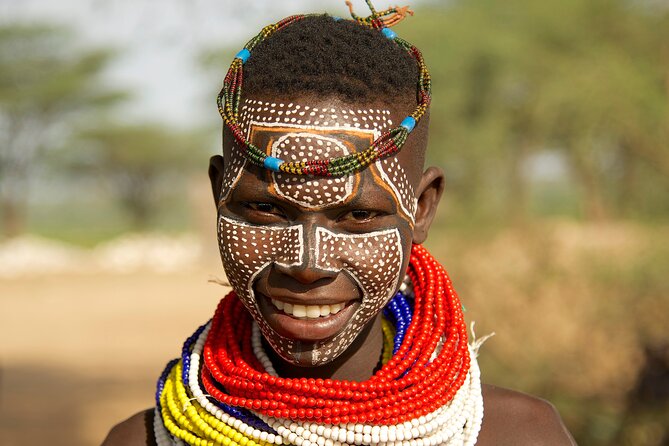
Day two starts early with a drive to Mago National Park and the Mursi highlands. The Mursi are widely known for the clay lip plates worn by some women, but reducing the community to that single feature would miss much of the point. The visit is also about daily life, decoration, clothing, and the way the community presents its identity.
The lip plates can be startling to see in person. Photographers should approach this subject with restraint. Ask before making close portraits, and listen to the guide if a person does not want to be photographed. The included photography fee helps with access, but respectful behavior still matters.
After returning to Jinka for lunch, you continue toward Turmi through the Omo Valley. The route passes through Dimeka, and you may stop at Alduba Market if timing allows. A market stop can show a less staged side of regional life, although the schedule wording makes clear that this visit is conditional rather than guaranteed.
The drive to Turmi makes this one of the longest days, at about seven hours. That figure includes travel and visits, not seven hours of photography. If you want a relaxed portrait session at every stop, this route may feel hurried. If your priority is to see several distinct communities in one trip, the long day earns its place.
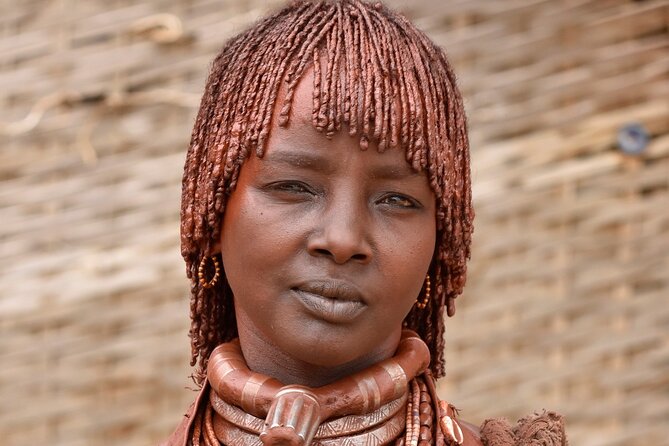
Turmi is the base for the Hamer portion of the route. The Hamer are known for distinctive adornment and traditions, and the area may also offer a chance to photograph a bull-jumping rehearsal or ceremony later in the trip. The timing is not guaranteed, so regard it as an opportunity rather than the central promise of the tour.
Day 3: Karo body painting and Korcho village
The drive to the Karo area is shorter, listed at roughly four hours, which gives you more breathing room than day two. You visit the Karo community at Korcho, where body painting is one of the most striking photographic subjects in the valley.
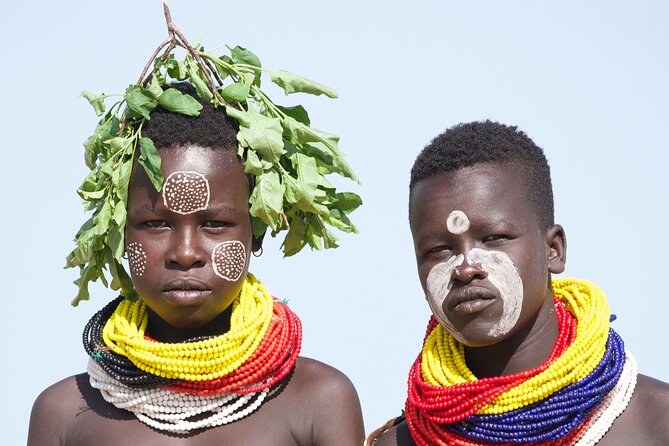
Karo artists use clay and locally available vegetable pigments to create patterns on faces, chests, arms, and legs. The designs are described as playful and decorative rather than as a fixed symbolic code. That detail matters because it keeps you from forcing a meaning onto every painted line.
Karo men may also shape and shave their hair into unusual forms, sometimes adding ochre hair caps and ostrich feathers. These details work well for close studies, but the same rule applies as with every portrait here: wait for permission and let your guide explain the local expectations.
After returning to Turmi, there may be a chance to photograph a bull-jumping rehearsal or ceremony. If this occurs, it could be one of the most memorable parts of the trip, but you should not book solely on the assumption that a ceremony will take place during your dates.
The included photography fee is especially useful on days like this. Costs connected with cultural photography can otherwise become unclear, so having the fee built into the package gives you a cleaner budget. Still, confirm whether every local photographic payment is covered and how the fee is distributed.
Same backdrop, a different kind of shoot:
- Silfra: Fissure Snorkeling Tour with Underwater Photos
★ 4.9 · 2,731 reviews - Paris: Private Photoshoot at the Eiffel Tower
★ 4.7 · 2,636 reviews - The ‘OG’ Manatee Snorkel Tour with In-Water Guide/Photographer
★ 5.0 · 2,539 reviews - Paris: Eiffel Tower Photoshoot
★ 4.7 · 2,351 reviews
Day 4: Canoe crossing to the Dassanech
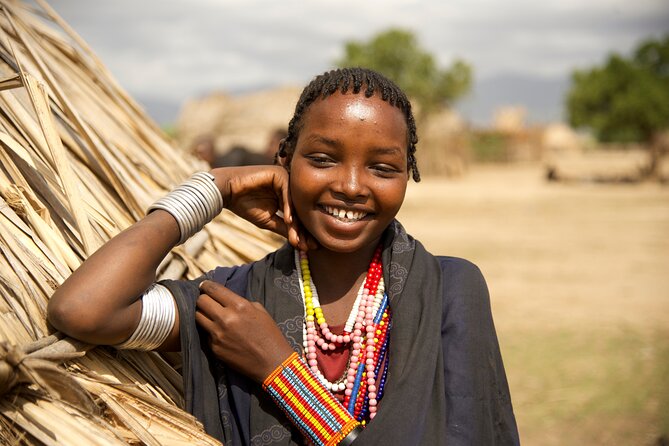
The fourth morning begins early with a drive to the edge of the Omo River. You cross by canoe to reach a Dassanech village, adding a real change of setting to the trip. The crossing itself is brief in the itinerary, but it makes the visit feel distinct from the road-based village stops.
The Dassanech are a semi-nomadic group of roughly 40,000 people, with clans extending across southern Ethiopia, Kenya, and Sudan. Their ornate hair buns are a major photographic feature, though the community’s movement across national borders is just as important for understanding its place in the region.
This is another portrait-focused visit, followed by a drive back to Turmi. The afternoon is left open for rest or photography around town. That pause is welcome after several early starts and long drives. You can use it to organize images, clean equipment, or make a slower study of local street life.
The day is listed at about four hours, making it one of the lighter days on paper. Even so, conditions in the Omo region can affect driving times, and the canoe crossing adds a practical element that may require patience. Keep essential camera gear protected and close at hand.
Day 5: The road to Arba Minch and Lake Chamo
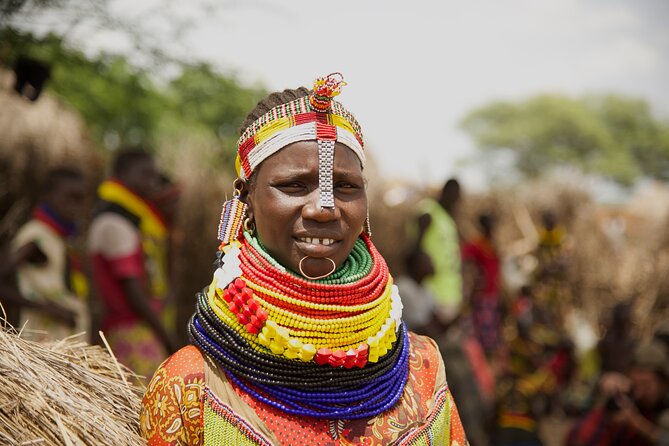
Day five shifts away from village photography and heads toward Arba Minch. The change is useful. After several days centered on people and cultural traditions, Lake Chamo brings wildlife and open water into the picture.
After 3 p.m., you take a boat trip on Lake Chamo. The northern shore is known for large crocodiles, which can often be seen resting in the heat. Hippos and aquatic birds add more subjects, including African fish eagles, flamingos, herons, storks, and kingfishers.
This outing suits photographers who enjoy variety. A long lens can help with crocodiles and birds, while a wider lens may be useful for the lake and boat setting. The information provided does not specify the boat duration or exact departure time beyond the afternoon window, so ask the operator about the schedule before planning your camera setup.
The day is listed at about four hours, though the morning drive from Turmi to Arba Minch is a major part of the day’s travel. This is not a lazy transfer. It is a relocation that opens the final section of the trip.
Day 6: Dorze houses, weaving, and the flight north
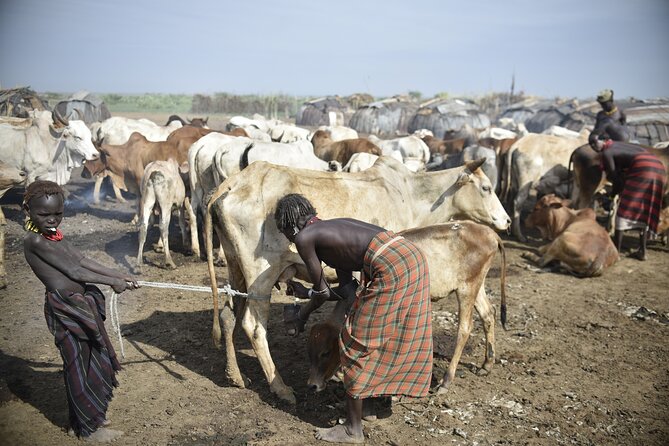
The final morning takes you about 40 kilometers northwest of Arba Minch into the Guge Mountains. You visit Dorze and Chencha villages, where the focus turns to farming, weaving, and distinctive houses.
Dorze people were once known as warriors and now earn a living through farming and weaving. Dorze cotton cloth is particularly well known, making this a good place to look beyond portraits and photograph hands, materials, looms, and finished textiles, if those subjects are available and permission is granted.
The beehive-shaped homes are made from organic materials and surrounded by small gardens with spices, cabbage, and tobacco. These houses are not just unusual backdrops. They show how architecture, food production, and household life fit together in the highlands.
After lunch, you transfer to Arba Minch Airport and fly back to Addis Ababa in the late afternoon. A day-use hotel room is provided in Addis Ababa for washing and changing before departure. That is a practical touch, especially after six active days, but it is not the same as an overnight hotel stay, so plan your international departure timing carefully.
What the $3,312.83 group price really covers
The listed price is $3,312.83 for a private group of up to seven people. If seven people share the full group price, the basic cost works out to about $473 per person. A smaller group pays more per person, but gains the privacy of having the vehicle and schedule reserved for its own party.
The package includes an air-conditioned vehicle, village entrance fees, photography fees, five lunches, five dinners, and five breakfasts. Those inclusions cover many of the costs that can make a remote trip hard to budget.
The itinerary includes flights between Addis Ababa and Jinka, and between Arba Minch and Addis Ababa, but the inclusion list does not clearly state whether domestic airfare is included in the quoted price. I would confirm this before paying. I would also ask about accommodation, since hotels are not listed among the included items.
Visa costs, international flights, personal expenses, tips, and alcohol are excluded. The cleanest value comparison is with other private Omo Valley trips that use similar domestic flights, vehicle service, village access, meals, and guide support. A cheaper headline price may not include photography fees or the same number of meals.
Who will enjoy this six-day route
I would recommend this trip to photographers who want a concentrated introduction to the Omo Valley and prefer a private vehicle. It also suits a small group of friends who want to share costs while keeping control of the pace.
You should be comfortable with long drives, early mornings, repeated transfers, and a schedule that covers a lot of ground. The tour is not designed as a slow village homestay or a single-location portrait workshop. It is a moving route with many cultural stops.
The tour information says most people can participate, and the activity is private. Still, the supplied details do not describe mobility conditions at villages, canoe access, road surfaces, or walking distances. If those points matter to you, ask before booking.
The photography emphasis is clear, but the trip also works for people who simply want to see southern Ethiopia. The mix of communities, wildlife, markets, river travel, and mountain villages gives you a broader picture than a program focused only on portraits.
Booking advice and cancellation terms
The experience offers pickup from Bole in Addis Ababa and ends back at the meeting point. Confirmation is provided when you book, and the activity requires a minimum number of participants. If that minimum is not reached and the trip is canceled, you are offered another date or experience, or a full refund.
You can cancel for a full refund up to 24 hours before the local start time. Changes or cancellations inside that window are not accepted for a refund. This is worth noting because domestic flights and a tightly timed southern route leave little room for last-minute changes.
The tour has a five-star rating from five submitted reviews. The strongest praise centers on planning, handling logistical problems, and support from the Ethiopian Photography Tours team. Mulugeta is named in connection with organizing the trip, and Captain is also mentioned as part of the guiding team. Confirm who will accompany your specific departure, since staffing can vary.
Should you book Photography Expeditions to Omo Valley?
Book it if you want a private, photography-led route that covers several Omo Valley communities in six days, and if you accept long travel days as the price of seeing so much. The included village and photography fees, meals, and vehicle service make the group price easier to assess.
Think twice if you want slow, unstructured time with one community, or if you need a fully detailed hotel and flight package spelled out before purchase. Confirm domestic airfare, lodging, exact photography arrangements, and the practical details of the canoe crossing.
For a small group with serious interest in portraits, cultural documentation, and southern Ethiopian scenery, this is a strong, efficient introduction. Go with patience, ask before photographing, and expect the road time to be part of the experience rather than a minor inconvenience.
FAQ
Where does the tour begin?
The tour begins at Bole in Addis Ababa, Ethiopia.
Where does the tour end?
The activity ends back at the meeting point in Addis Ababa.
How long does the experience last?
The tour lasts approximately six days.
How many people can join the private tour?
The price covers one private group of up to seven people.
Is pickup available?
Yes. Pickup is offered from the stated meeting point in Bole, Addis Ababa.
What transport is provided?
An air-conditioned vehicle is included. The itinerary also includes flights from Addis Ababa to Jinka and from Arba Minch back to Addis Ababa, but you should confirm whether those domestic flights are included in the quoted price.
Which meals are included?
Five breakfasts, five lunches, and five dinners are included.
Are village entrance and photography fees included?
Yes. Village entrance and photography fees are included.
What is not included?
Visa fees, international flights, personal expenses, tips, and alcohol are not included.
Can I cancel for a full refund?
Yes. You can cancel at least 24 hours before the experience start time for a full refund. Cancellations or changes made less than 24 hours before the start time are not accepted for a refund.
Just added around the world
- ️ Hanoi Instagram Tour: Most Famous Spots (Private & All-Inclusive)★ 5.0 · 12 reviews
- Hanoi Explorer Photo Tour★ 5.0 · 40 reviews
- Into the Thieves Market Hanoi Photo Tour★ 5.0 · 10 reviews
- Cultural Hanoi Photo Walk – A Street Photography Tour★ 5.0 · 6 reviews
- Hanoi Street Photography with a Pro – Phone & Camera★ 5.0 · 27 reviews
- ️ Ha Long Bay Instagram Tour: Most Famous Spots (Private & All-Inclusive)★ 4.5 · 4 reviews
- Private Hanoi Photoshoot – Iconic Spots & Hidden Gems★ 5.0 · 16 reviews
- 4 hour individual photo tour of Hamburg★ 5.0 · 2 reviews
Photo Tours & Photoshoots, side by side.
#1 Northern Lights Tour In Iceland from Reykjavik with PRO photos
Read our review →
️ Bali Instagram Tour: The Most Famous Spots (Private & All-Inclusive)
Read our review →
Silfra: Fissure Snorkeling Tour with Underwater Photos
Read our review →
The ‘OG’ Manatee Snorkel Tour with In-Water Guide/Photographer
Read our review →