
Review · PHOTOGRAPHY TOURS
Hai Van Pass Horizons Photo Tour
The best part of the Hai Van Pass Horizons Photo Tour is its change of pace. You begin with coffee and a Vietnamese breakfast, ride a local train through the mountains, step into the quiet fishing life around Lang Co lagoon, then finish above the coast with wide views in both directions. I like the way the tour turns one famous road into several different photo subjects. I also like the small group, capped at five, and the help with cameras, composition, and approaching people for portraits. The drawback is the 5:30 am start, plus the fact that much of the day depends on clear weather and train timing.
This is a private, seven-hour outing priced at $219 per person, with pickup from Da Nang or Hoi An, a professional photographer guide, breakfast, and private road transport. That is a serious price for a half-day tour, but it makes more sense if you want real instruction rather than a simple sightseeing run.
Key points to know before booking
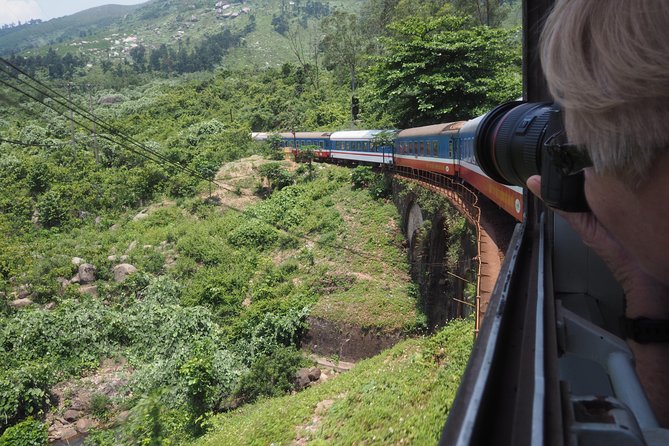
- Early train ride: You photograph mountain and sea views from a local passenger carriage, along with passengers and train staff.
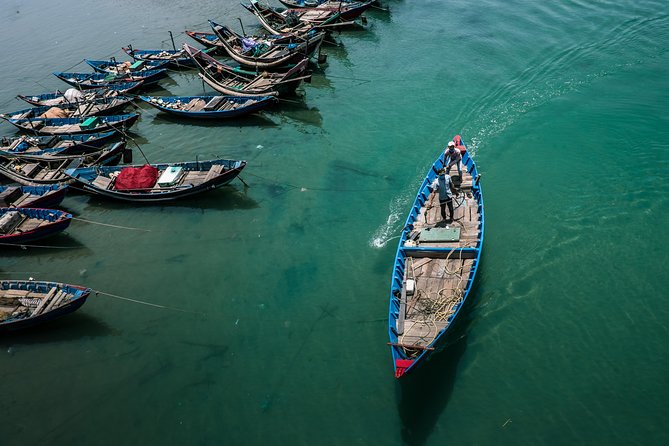
- Lang Co fishing life: Traditional hand-woven coracle boats give you a chance to make a small photo story about work on the lagoon.
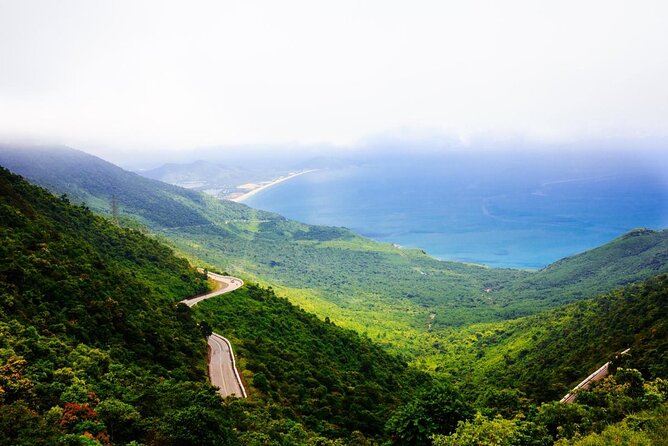
- Two-way Hai Van views: From the pass, you look north toward Lang Co and Hue, then south toward Da Nang.
- Small private group: Only your own group joins, with a maximum of five people.
- Hands-on guidance: Cristian, also called Chris in the tour information, helps with camera settings, composition, portraits, and finding better photo moments.
- Practical planning: Pickup begins around 5:30 am, weather matters, and cancellation is free up to 24 hours before departure.
Why the early start is worth considering
Your pickup begins at about 5:30 am from Da Nang or Hoi An. Exact pickup time is confirmed after booking, with hotel collection starting roughly 30 to 60 minutes before the stated start time.
That early hour is not a minor detail. You need to be ready before most sightseeing days begin, and the tour asks you to stay alert through a full morning and early afternoon. Still, the schedule gives the outing its shape. You reach Da Nang station early enough to settle in, check your camera, eat, and hear how the workshop will work before boarding.
The breakfast is Vietnamese, and coffee is part of the welcome. That matters on a morning like this. You are not expected to begin a photography lesson hungry, and the station stop gives you time to check batteries, memory cards, shutter speed, and other basic settings.
The tour is designed for a moderate level of fitness. You will move through a railway station, board and leave a train, walk around the fishing community, and stop at viewpoints along the mountain road. No special health restrictions are listed, and most people can take part, but this is not a stay-in-one-place photo class.
More Photography Tours in Vietnam
- Danang On the Waterfront Photo Tour
★ 5.0 · 3 reviews - Professional Photography Tour Optional Ao Dai Dress in Hoi An
★ 5.0 · 99 reviews - Private Sunrise Photography Tour – Down in Chinatown
★ 5.0 · 59 reviews
From Da Nang station to the Hai Van Pass by train
At Da Nang station, the guide gives you a preview of the route and workshop. This is a useful point to ask for help with your camera before the train moves, rather than trying to change settings while scenery flashes past the window.
Train delays can happen. Instead of treating that time as wasted, the guide may use it for composition advice or simple portraits around the station. That flexibility is useful because the first lesson is not tied to a particular view. You can start thinking about framing, light, people, and the story behind a picture before leaving the platform.
Once aboard, you ride in a local passenger carriage. The train winds through the Hai Van Pass, giving you changing views of the mountains and coast. The open window is important for photography, since it offers a more direct view than shooting through glass. You will need to work quickly, though. A moving train gives you short windows for a clean frame, and the best view may disappear in seconds.
The guide focuses on composition rather than simply pointing out scenic spots. You learn how to use the curve of the railway, the mountain slopes, the sea, and the train itself to give a picture structure. This is more useful than being told to photograph a pretty view. A large scene can easily become a flat record of what was outside the window, so advice on foreground, lines, and timing can make a real difference.
The carriage also becomes a people-photography classroom. Passengers and train staff offer chances for portraits, but the aim is not to photograph strangers carelessly. You work on different portrait styles and ways to approach people for pictures. That guidance can be one of the most valuable parts of the morning, especially if you usually hesitate before raising a camera toward someone.
Lang Co and the lagoon’s working boats
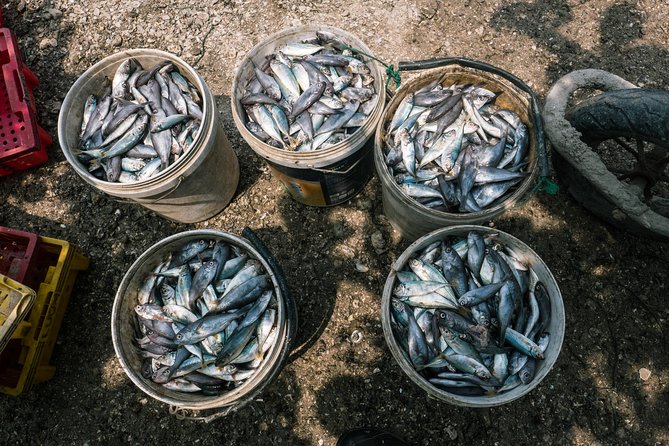
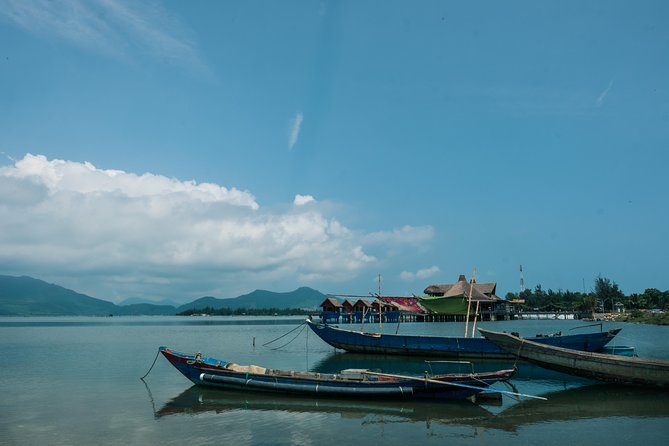
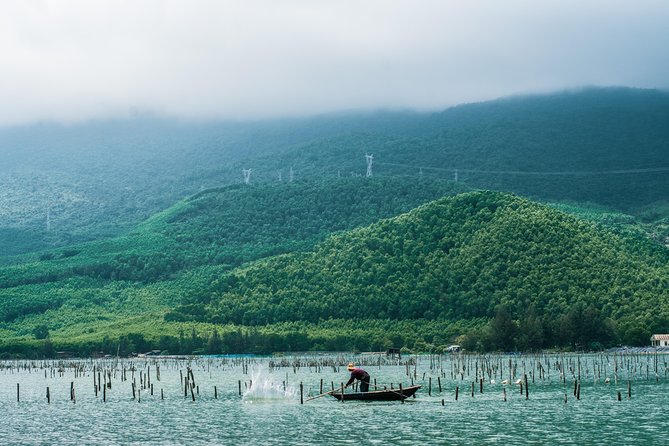
The train stops at the small station of Lang Co. The setting shifts quickly from rail travel to local working life. Near the station is a fishing community beside the lagoon, where people use traditional hand-woven coracle boats to bring in their catch.
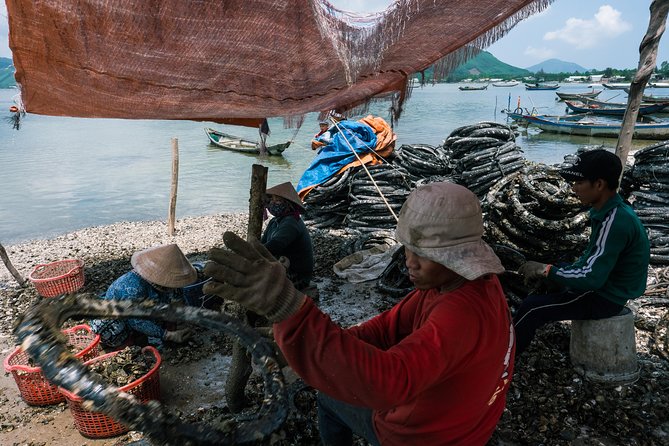
This is the heart of the tour for anyone who prefers people and stories to postcard views. The boats, water, fishing activity, and surrounding subtropical setting give you several connected subjects. Rather than making one isolated picture, you work on a small series that shows who is working, what they are doing, and where that work takes place.
The guide calls attention to relationship shots, meaning pictures that connect people with their surroundings and with one another. That approach helps you avoid a row of disconnected portraits. A fisher in a boat, a boat against the lagoon, and a wider frame showing the working setting can form a simple visual account of the morning.
You should also expect this section to be less predictable than a fixed viewpoint. People may be working at different speeds, boats may move out of position, and the best moment may last only a short time. That is part of the lesson. You learn to watch, wait, and respond instead of arranging every detail.
The information does not promise a long walk or a set number of boats, so you should view this as a focused visit rather than a full fishing excursion. The goal is photography in a local setting, not a boat ride or a formal cultural demonstration.
Returning up the coastal road
After Lang Co, you continue by road toward the top of Hai Van Pass. This private vehicle section gives you access to viewpoints that are separate from the railway route. As the road climbs, you can photograph Lang Co lagoon and the beach from above.
The road itself is part of the appeal. It offers a different sense of scale from the train, with wider views over the coast and water. You are not limited to the composition available from a carriage window, so the guide can help you work with broader scenes and stronger foreground elements.
This section lasts about an hour and a half, including the Lang Co visit and the road journey. The schedule is active, but it is not rushed from one named attraction to another. You get time to shift from people photography to coastal views, which makes the day feel like a workshop with several chapters rather than a single scenic stop.
Private transport also matters here. You do not need to arrange your own ride from Lang Co to the pass, and the vehicle brings your group back toward Da Nang after the train section. Pickup and drop-off are included, which is a meaningful part of the price, particularly if you are staying in Hoi An and need coordinated transport at dawn.
More Photography Tours in Da Nang:
- Tromso: Northern Lights Photography Tour
★ 4.2 · 843 reviews - Barcelona E-Bike Photography Tour
★ 5.0 · 843 reviews - Tromsø: Northern Lights Photography Tour
★ 4.8 · 788 reviews - Rovaniemi: Aurora Hunting Photography Tour with Barbeque
★ 4.4 · 433 reviews
At the summit, views in both directions
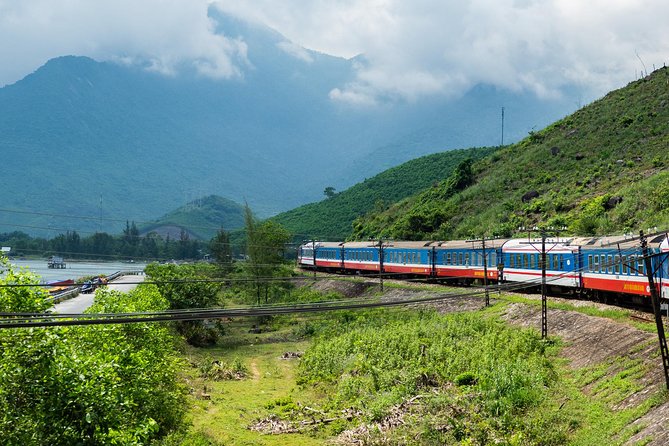
At the top of Hai Van Pass, the visual payoff is broad and immediate. Looking north, you can see toward Lang Co and Hue. Looking south, you see toward Da Nang. The pass marks a change between northern and central Vietnam, including a shift in climate and local character, and the views help make that divide clear.
Roadside snack shacks provide a simple place to pause, eat lunch, and have coffee. Nearby are old war-era bunkers and gun positions. These structures are useful photographic subjects because they give your wide coastal pictures a strong foreground. They also work as close-up subjects, with worn surfaces and solid shapes that contrast with the open sea and mountains beyond.
The bunkers add a layer of context without turning the tour into a formal history lesson. They are part of the pass’s physical story, and their current use as popular spots for wedding photographs gives the area a present-day local connection too.
This final section lasts about two hours, including lunch, coffee, and a picture review in a scenic place before returning to Da Nang. The review is a good feature for anyone who wants more than a pile of files on a memory card. You can look back at what worked, notice missed opportunities, and get advice while the morning is still fresh.
What the guide adds to the day
A photography tour is only as useful as its instruction. Here, the guide’s role goes beyond leading you from station to lagoon to summit. The focus includes camera settings, composition, portraits, working with local people, and making a short visual story.
Cristian is named as the guide in the tour information, while one piece of tour feedback refers to him as Chris. He is described as offering practical help with cameras, composition, and finding more photo opportunities. Vietnamese coffee is also part of his introduction to the day, which fits naturally with the station breakfast and early start.
The small group makes this instruction more workable. With no more than five people, you have a better chance of asking a specific question or getting advice on an individual image. Since the activity is private, only your own group takes part. That is especially helpful if one person wants portrait guidance while another needs help with settings.
The tour should suit photographers at different levels, but the information does not promise advanced technical instruction in a particular camera system. If you want a tightly structured course on studio lighting, advanced post-processing, or specialist equipment, this is not that. It is a field workshop built around changing subjects and real travel conditions.
Is $219 a fair price?
At $219 per person, this tour costs more than a standard Hai Van Pass sightseeing trip. The price covers hotel pickup and drop-off, private vehicle transport, breakfast, a professional photographer guide, the train portion, lunch and coffee arrangements during the day, and a maximum group of five.
The value depends on what you want from the pass. If your main aim is to reach the summit, take a few pictures, and move on, a cheaper road trip may suit you better. If you want help making stronger images and prefer a private schedule that combines rail travel, local work, coastal views, and guided picture review, the price is easier to justify.
The train and lagoon sections also add experiences that a standard road outing may not include. You are not only looking at the pass from a roadside viewpoint. You are photographing the route from a moving carriage, then building a people-focused story around coracle boats before returning to the mountain.
Group discounts are offered, but the amount is not specified. You should check the current price for your party before booking.
Who should book this photo tour?
I would recommend it most strongly to anyone who wants to improve travel photography while seeing Hai Van Pass in several ways. It suits people interested in portraits, daily work, transport, coastal scenery, and the challenge of changing subjects.
It is also a good fit if you are staying in Da Nang or Hoi An and do not want to organize the train, road transport, breakfast, and mountain stops yourself. The private format gives you a more personal day than a large coach trip.
You should think twice if you dislike early mornings, need a guaranteed timetable, or want a relaxed ride with little walking and no camera instruction. Train delays are possible, and poor weather can cancel the outing. If weather causes cancellation, you are offered another date or a full refund.
Free cancellation applies when you cancel at least 24 hours before the start time. Changes or cancellations inside that window are not accepted and are not refunded, so check your plans carefully.
The final call
Book the Hai Van Pass Horizons Photo Tour if you want to photograph the area rather than simply pass through it. The strongest reasons are the local train, Lang Co’s coracle boats, the small private group, and direct coaching from Cristian or Chris.
Skip it if you mainly want a low-cost scenic transfer or a later start. The 5:30 am pickup is demanding, the price is high for a seven-hour outing, and weather or train timing can alter the plan. For an eager photographer who values instruction and local subjects, though, this packs a lot into one carefully planned morning and afternoon.
FAQ
Where does the Hai Van Pass Horizons Photo Tour start?
Hotel pickup begins at about 5:30 am from Da Nang or Hoi An. The exact pickup time is advised after reconfirmation, and collection may begin 30 to 60 minutes before the stated start time.
How long does the tour last?
The experience lasts approximately seven hours, including the train journey, Lang Co visit, road trip to the pass, lunch, coffee, and picture review.
Is the tour private?
Yes. Only your own group takes part, and the maximum group size is five people.
What transport is included?
The tour includes the early train from Da Nang, private vehicle transport for the road sections, and hotel pickup and drop-off.
Is breakfast included?
Yes. A Vietnamese breakfast is included, along with coffee during the morning start.
What happens if the weather is poor?
The activity requires good weather. If it is canceled because of poor conditions, you are offered another date or a full refund.
Do I need advanced photography skills?
No specific advanced skill level is required. The guide works on camera settings, composition, portraits, and ways to photograph local working life. A moderate level of physical fitness is advised.
Can I cancel for a full refund?
Yes, if you cancel at least 24 hours before the experience start time. Cancellations or changes made less than 24 hours before departure are not accepted or refunded.
Just added around Da Nang
- MY SON Early Morning Tour to avoid crowd,Take Nice Photos &Back by Private Boat★ 5.0 · 3 reviews
- My Son Early Morning Tour to avoid Crowds & Take Nice Photos★ 5.0 · 2 reviews
- Golden Bridge via Cable Car in the Afternoon to Avoid Crowd & Take nice Pictures★ 5.0 · 2 reviews
- Hue Instagram Private Tour The Most Famous Spots All Inclusive★ 5.0 · 2 reviews
- Hoi An Instagram Tour: Most Famous Spots (Private & All-Inclusive)★ 5.0 · 5 reviews
- Danang On the Waterfront Photo Tour★ 5.0 · 3 reviews
- Private Photo Shoot in Da Nang★ 5.0 · 4 reviews
- Free E-sim Da Nang: Instagram Half-Day Tour with Local Guide★ 4.3 · 4 reviews
Photography Tours, side by side.

Rhodes: E-bike Highlights Sunset or Morning Photo Tour
Read our review →

Lists this one turns up in