
Review · PHOTOGRAPHY TOURS
DIJON: Enjoy a photo tour with a professional photographer
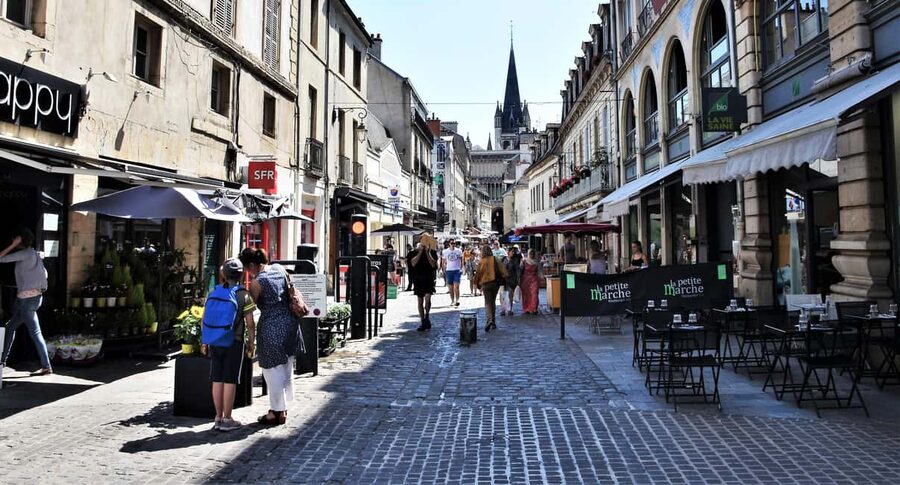
Dijon’s old center is a fine place to photograph, but its best details are easy to miss when you are simply following a map. On this two-hour walking tour, professional photographer Tony takes you to carefully chosen viewpoints and explains how the city’s period buildings fit together.
I like the small group limit of four, which gives you time to ask questions without turning the walk into a class. I also like the follow-up information document, sent after the tour, so you can match locations with your pictures later. The main consideration is that this is a friendly photo walk, not a demanding technical workshop, and entry fees, food, transport, and equipment are not included.
Key points before you book
- Meet Tony at Porte Guillaume: Look for the guide in a red Nationals baseball cap with a large W.
- Photograph Dijon’s historic center: The route focuses on period buildings and architectural details in the UNESCO-registered center.
- Small and personal: Groups are limited to four people, with larger groups possible only by arrangement.
- Useful for every skill level: Beginners receive guidance, while experienced photographers can use the route and local knowledge to sharpen their eye.
- Flexible two-hour pace: The walk is casual, and no extra charge applies if the tour runs beyond the advertised time.
- Bring your own gear: A camera or charged smartphone is required, while food, drinks, transport, museum entry, and equipment are your responsibility.
Why a photo walk works well in Dijon
Dijon rewards slow looking. The historic center contains old buildings and architectural details that can blur together when you rush from one major sight to the next. A photo guide gives you a reason to pause at a doorway, roofline, facade, or street view instead of treating the city as a checklist.
Tony brings two useful kinds of experience. He is a professional photographer and artist, and he also produces and sells postcards in tourist offices and other places around the region. That means his eye is not limited to camera settings. He pays attention to what makes an image work as a lasting record of a place.
You do not need expensive equipment. The tour is suitable for a camera or smartphone, and the stated aim is friendly guidance rather than a technical course. If you are new to photography, you can ask for help with framing and choosing a subject. If you already take photographs regularly, you can use Tony’s suggestions to look harder at shape, detail, and the way buildings relate to one another.
The tone matters here. This is designed as a relaxed walk, not a demanding lesson. You can enjoy the city while taking pictures, rather than spending two hours focused only on menus and settings.
More Photography Tours in France
- Private Historical Photo Tour in Paris
★ 5.0 · 43 reviews - Professional Eiffel Tower Photo Tour with VOGUE Photographer
★ 5.0 · 36 reviews - Private Photography Walking Tour of Paris: Latin Quarter or Montmartre
★ 4.5 · 18 reviews
Starting at Porte Guillaume
The meeting point is Porte Guillaume, also called William Gate, at Google coordinates 47.32336492621492, 5.034763803460934. Tony wears a red Nationals baseball cap with a large W, which should make him easier to identify in a busy city setting.
Starting at a city gate gives the walk a clear sense of place. You are not meeting at an anonymous shop or office. You begin beside a visible part of Dijon’s historic fabric, then move into the older center on foot.
Plan to arrive ready to walk. The route is not described as a fixed list of named monuments, so the exact sequence can depend on the day, the group, and the photographic opportunities Tony wants to show you. That flexibility is useful for photography, since the best position may not be the most famous building.
Wear comfortable shoes and clothing suited to the weather. A sun hat, sunscreen, rain gear, and a charged smartphone are all sensible additions. Drinks are not supplied, so bring your own water.
Looking closely at Dijon’s period buildings
The heart of the tour is Dijon’s historic architecture. The city’s old center was registered as a UNESCO World Heritage site in 2015, and the walk uses that architectural setting as its main subject.
You should expect historical and cultural buildings rather than a visit built around museum interiors. Tony explains the details that have survived through the city’s development and helps you connect those details with the photograph you are making.
That can change the way you walk through an old town. Instead of taking one broad picture of a street, you may begin noticing the smaller features that give it character. A facade can offer patterns, lines, textures, windows, and changing angles. The point is not to promise a particular famous view, but to help you use your imagination at each location.
Tony presents the stops as guidance rather than rigid assignments. You are encouraged to make your own choices, which is important if the group includes different types of photographers. One person may prefer a full building, while another may concentrate on a close detail or a less obvious angle.
The historical information adds value even if you are not especially interested in photography. It gives the buildings a setting and helps you understand why the old center looks the way it does. Kylie, a participant from France, particularly appreciated Tony’s advice about Dijon and the wider area, which suggests that the conversation can extend beyond the camera.
What the two-hour route feels like
The advertised duration is 120 minutes, with a casual walking pace. This is enough time for a focused introduction to Dijon’s center without taking up an entire morning or afternoon.
Do not expect a fast march from sight to sight. Photography needs pauses. You may stop to discuss a building, try a composition, compare a phone image with a camera image, or wait for a better position. The small group helps here. With no more than four participants, Tony has more room to respond to individual questions.
The tour can also run longer than planned without an additional charge. That is a useful policy because photo walks often need a little extra time. Still, you should keep your wider schedule sensible. An overrun is possible, not a promise of a much longer tour.
The group size is one of the strongest practical features. A large photo tour can become a series of instructions delivered to everyone at once. Here, you have a better chance to ask about your own image and to spend a few extra moments at a location that interests you.
Larger groups can be accommodated by arrangement, but the standard format is limited to four. If your party is bigger, confirm the arrangement before booking rather than assuming the same intimate format will apply.
Same backdrop, a different kind of shoot:
- Paris: Private Photoshoot at the Eiffel Tower
★ 4.7 · 2,636 reviews - Paris: Eiffel Tower Photoshoot
★ 4.7 · 2,351 reviews - Paris: Photoshoot Around Eiffel Tower with 55 Edited Photos
★ 4.8 · 702 reviews - Paris: Professional Photoshoot with the Eiffel Tower
★ 4.9 · 565 reviews
Guidance for beginners, freedom for experienced photographers
This walk is especially useful if you want help without signing up for a formal photography course. Tony can offer expert advice on creating memorable images, but the experience is not presented as a highly technical session.
For beginners, that may be a relief. You can concentrate on seeing the city, choosing a subject, and making a pleasing frame rather than worrying about specialist terminology. A smartphone is acceptable, so you do not need to buy or rent a camera to join.
For experienced photographers, the main benefit is access to a local eye. You may already know how to control your camera, but a person who works with regional images and postcards can point you toward subjects that make a strong record of Dijon. You remain free to follow your own ideas at each stop.
I would not book this expecting a detailed lesson in exposure, lenses, editing, or professional workflow. Those subjects are not promised. The emphasis is on locations, observation, historical context, and practical help while you take pictures.
That distinction makes the tour easier to judge. It is a city walk with photography at its center, not a studio workshop transported outdoors.
The follow-up document is more useful than it sounds
After the tour, Tony sends an information document covering the locations visited. This solves a common problem on walking tours: you take pictures quickly, forget the names of places, and later cannot remember which image belongs to which building.
You do not need to stop and write notes throughout the walk. That lets you keep your attention on the scene and the conversation. When you return home, the document can help you connect the images to Dijon’s architecture and remember the route.
This is also helpful if you plan to share your photographs. A picture has more staying power when you can identify what you photographed and explain why it matters. The document is not a replacement for your own notes if you want technical details, but it gives you a useful reference for the places themselves.
What the $70 price includes
The price is $70 per person. For a two-hour private-feeling experience in a group of up to four, that is a reasonable choice for someone who values personal attention and wants more than a general sightseeing walk.
You are paying for Tony’s time, photographic experience, local route planning, historical explanations, and advice while you work. The small group format matters to the value. Four people can ask questions and take pictures without the guide having to manage a crowd.
The price does not include a camera, smartphone, food, drinks, travel expenses, or entry to museums and historic buildings. Since the activity is built around walking and exterior photography, you should not expect admission to be part of the fee.
Bring your own camera or charged phone. Also bring drinks and weather protection. These are small costs, but planning for them keeps the tour simple.
If the walk runs longer than advertised, there is no added charge. That is a welcome detail for a photography activity, where stopping to find the right view can take time.
What past participants reveal about the guide
The strongest pattern in the feedback is Tony’s friendly, easy conversation. Joseph and his wife, visiting Dijon for the first time, found him welcoming and well informed about the city. Kylie also valued the broad advice about the surrounding area, not just the two-hour route.
That tells you something practical about the experience. Tony is not only there to point at buildings and talk about camera technique. You can ask questions about Dijon and the wider region as the walk develops.
One participant from Colombia summed up the appeal simply: seeing the city with someone who knows interesting places. That is the central benefit. The tour gives you a local person’s selection of places to look, rather than asking you to find every worthwhile angle on your own.
The rating is 4.8 from four submitted ratings, a strong result but still a small sample. I would treat the comments as useful evidence about Tony’s friendly style and city advice, not as proof that every group will have exactly the same experience.
Who should book this Dijon photo tour
I would recommend it to first-time visitors who want to get their bearings in the old center while producing better photographs. It also suits couples, solo photographers, and small groups of friends who enjoy walking and conversation.
It is a good match for:
- Smartphone photographers who want help seeing stronger compositions
- Beginners who prefer casual guidance to a technical class
- Experienced photographers looking for local subjects and angles
- Visitors who want historical context while making images
- Couples or small groups who value a quiet, personal format
It may not suit children under 16, since the activity is not suitable for them. It is also not the right pick if you want a museum-heavy outing, a formal photography course, or a tour with equipment supplied.
The walking format means you should be comfortable outdoors for two hours. Comfortable shoes are essential, and weather-appropriate clothing will make a clear difference.
Booking, cancellation, and language
The tour is conducted in English. You can reserve now and pay later, which keeps your plans flexible. Cancellation is free up to 24 hours before the start time for a full refund.
Starting times depend on availability, so check the date you want before building the rest of your Dijon plans around it. The meeting point is Porte Guillaume, and Tony’s red cap with the large W helps with identification.
My verdict: a personal way to photograph Dijon
Book this tour if you want to slow down, notice architectural detail, and come home with pictures tied to real places in Dijon. The combination of a four-person limit, Tony’s regional postcard work, historical explanation, and follow-up location document gives the experience more purpose than a casual walk with a camera.
Skip it if your main goal is advanced camera instruction or indoor sightseeing. For everyone else, $70 buys two hours of focused local guidance, with no extra charge if the conversation and photography take a little longer. Bring a charged phone or camera, wear good shoes, and let the city’s old buildings provide the subject.
FAQ
How long does the Dijon photo tour last?
The tour is scheduled for two hours, or 120 minutes. It may run longer when needed, with no additional charge.
Where do I meet the guide?
Meet Tony at Porte Guillaume, also called William Gate. The Google coordinates are 47.32336492621492, 5.034763803460934.
How will I recognize Tony?
Tony will be wearing a red Nationals baseball cap with a large W on the front.
What language is the tour conducted in?
The tour is conducted in English.
How many people can join the tour?
The standard group has no more than four participants. Larger groups may be accommodated by arrangement.
Do I need professional photography equipment?
No specific professional equipment is required. You should bring your own camera or a charged smartphone. Photographic equipment is not provided.
What is included in the $70 price?
The price includes Tony’s photographic guidance, historical information about Dijon, advice on creating memorable photographs, and a follow-up information document about the locations visited. Food, drinks, transport, museum or historic-building entry, and equipment are not included.
Just added around France
- Photographer EVJF Deauville★ 4.5 · 2 reviews
- Feel Good Private Photography for Amazing People in Chamonix★ 5.0 · 17 reviews
- Private Professional Photoshoot in Chamonix★ 5.0 · 9 reviews
- Private Photoshoot with a Professional Photographer in Cannes★ 5.0 · 2 reviews
- Photo Shooting in Bordeaux Explore the city with a photographer★ 5.0 · 3 reviews
- Photo tour in Bordeaux – the most beautiful spots of “the Port de la Lune”★ 4.5 · 11 reviews
- Romantic photo shooting on a private boat in Paris★ 5.0 · 3 reviews
- Proposal Photoshoot★ 5.0 · 11 reviews
Photography Tours, side by side.
Rhodes: E-bike Highlights Sunset or Morning Photo Tour
Read our review →
Lists this one turns up in