
Review · STREET PHOTOGRAPHY TOURS
Dhaka Popular Street Photography Tour
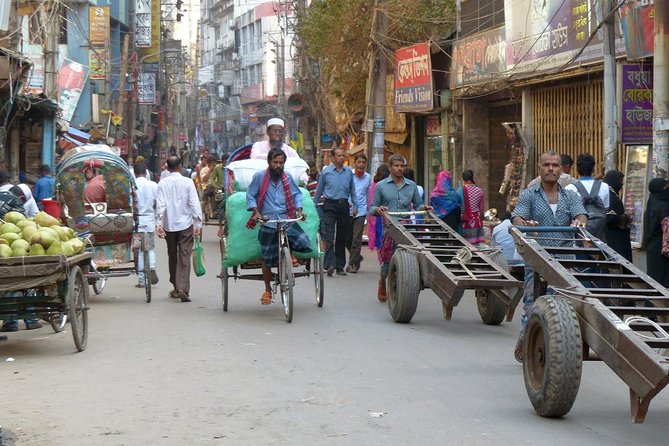
Dhaka reveals itself best at street level, and this tour puts you right there: among fish sellers at Kawran Bazar, flower traders at Shahbagh, book stalls, sari shops, temple courtyards, and the crowded river port at Sadarghat. You move by local vehicles, pulling rickshaw, horse cart, and wooden rowboat, so the city is not just something you look at through a car window.
I like the mix of ordinary daily life and major landmarks, and I like that the route includes time in small Old Dhaka lanes rather than only polished sightseeing stops. A possible drawback is the traffic and rough road travel. The rickshaw, tuk-tuk, and horse carriage rides can feel exciting, but they are not gentle or quiet.
Key points to know before booking
- Kawran Bazar and Shahbagh Flower Market: Start with two colorful working markets where photography comes naturally.
- A full Old Dhaka circuit: See Dhakeshwari Temple, Star Mosque, the Armenian Church, Shakhari Bazar, and the exterior of Ahsan Manzil.
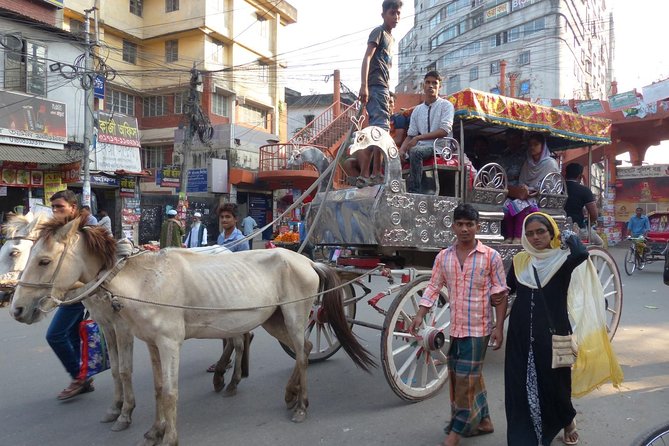
- Several local rides included: Expect communal transport, a traditional pulling rickshaw, a horse cart, and a wooden rowboat.
- A strong cultural focus: The route covers the Language Martyrs Monument, Dhaka University, Hindu and Muslim heritage, and artisan neighborhoods.
- Sadarghat is the grand finale: The Buriganga river port offers some of Dhaka’s most intense street scenes and a memorable boat ride.
- Private and practical: Hotel pickup and drop-off are included, and only your own group takes part.
Why this tour gets beyond Dhaka’s postcard view
The best feature here is its range. In roughly four to five hours, you move from wholesale commerce to university life, religious sites, colonial-era buildings, narrow craft streets, and the river economy of Old Dhaka.
That range matters because Dhaka can be hard to read on your own. The streets are crowded, the distances are deceptive, and many of the most interesting places are not obvious from the main roads. A guide helps connect the scenes. If Mahib is assigned to your group, expect detailed explanations of Bangladeshi life and culture, a quality specifically associated with this tour.
The schedule begins at 11:00 a.m., although the early markets are liveliest in the morning. That means Kawran Bazar and Shahbagh may not have their absolute earliest rush, but you still get a useful look at both places before heading into the older parts of the city.
This is a private experience, so the pace can work better for photography than a large group tour. You can spend a little longer on a street scene or pause when something catches your eye. The published route is full, though, and the listed stop times add up to a busy day. Expect movement, noise, and variety rather than long museum visits.
More Photography Tours in the world:
- Tromso: Northern Lights Photography Tour
★ 4.2 · 843 reviews - Barcelona E-Bike Photography Tour
★ 5.0 · 843 reviews - Tromsø: Northern Lights Photography Tour
★ 4.8 · 788 reviews
Kawran Bazar: Dhaka’s working market first
Kawran Bazar is a serious wholesale market, not a staged cultural display. Vegetables, fish, meat, and everyday consumer goods move through the district, with large numbers of merchants buying and selling each day.
For street photography, this is a strong opening. You can look for patterns in stacked produce, close work at the fish stalls, transport scenes, and the quick exchanges between sellers and buyers. The setting is active and crowded, so keep your camera secure and ask before making close portraits.
About 45 minutes is planned here. That is enough for a focused walk, but not enough to inspect every corner of a market of this size. Wear shoes suited to uneven or wet ground, especially around food areas.
Shahbagh Flower Market and Dhaka University
Shahbagh Flower Market changes the visual mood completely. Bouquets and loose flowers bring bright color, and the market supplies arrangements for weddings and other occasions. Sellers begin early, so the 30-minute stop works best as a quick photography session rather than a slow market visit.
You then connect with the University of Dhaka area, Bangladesh’s oldest university in the modern period, founded in 1921. The campus has played an important role in the country’s political and cultural life, including movements connected with Bengali nationalism and independence.
This pairing gives you two useful views of Dhaka. Shahbagh shows commerce built around ceremony and beauty. The university area adds a sense of education, public life, and national memory.
Shahid Minar and the story of language
The Language Martyrs Monument, commonly called Shahid Minar, honors people killed during the 1952 language movement. That movement helped make Bengali language and identity central to the country’s modern story.
The stop lasts about 15 minutes, so the guide’s explanation is especially useful. On February 21 each year, people gather here with flowers, and the date is now observed internationally as International Mother Language Day.
This is a place for respectful photography. The monument is visually simple compared with a palace or market, but its meaning is large. Take time to understand what you are seeing rather than treating it as another quick background for a picture.
More Street Photography Tours in the world:
- Tokyo Cyberpunk Street Photo Tour
★ 5.0 · 165 reviews - Saigon Street Photography Experience
★ 5.0 · 56 reviews - Learn the art of street photography in the heart of Montmartre!
★ 5.0 · 33 reviews - Istanbul Street Photo Tour
★ 5.0 · 31 reviews
Nilkhet books and Gausia saris
Nilkhet Book Market brings you into another working district, with more than a thousand small bookshops and a huge supply of books. The market serves students and people from across Bangladesh, and its narrow shopfronts can make for good photographs of everyday commerce.
The planned 40 minutes gives you time to browse and notice the difference between a tourist shop and a market used for practical needs. If you like books, this may be one of the most rewarding stops because it feels tied to ordinary Dhaka routines.
Gausia Market shifts the focus to clothing. It is known for wholesale saris, with additional shops and street stalls nearby. The area is large and heavily used, so the one-hour stop gives you more breathing room than the shorter visits.
This is a good place to observe color, fabric, bargaining, and shop displays. You do not need to buy anything to enjoy it, but personal shopping costs are not included. Keep an eye on your belongings in crowded areas and stay close to the guide when moving through the market.
Dhakeshwari Temple and Star Mosque
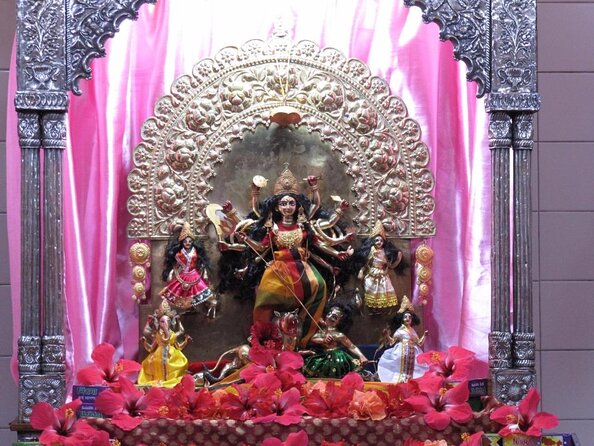
Dhakeshwari Temple is Bangladesh’s National Hindu Temple. Its name means Goddess of Dhaka, and the site is linked with the Sena Dynasty and the 12th century, although repeated repairs make the present structure difficult to date in a simple way.
The temple offers an important counterpoint to the Islamic architecture elsewhere on the route. It also shows how Dhaka’s religious heritage is woven into the city rather than isolated in a museum district.
At Star Mosque, or Tara Masjid, white marble and repeated star and floral patterns give the building its name. The mosque is associated with the Mughal period and is often dated by local trustees to 1711, though no founding inscription confirms the year.
Dress carefully here. Women need to cover their heads, and everyone should wear modest clothing. Shorts are not suitable for entry. Avoid visiting during prayer times. The visit is about 25 minutes, so follow the guide’s timing and allow the setting to remain a place of worship, not just a photo stop.
Armenian Church and Shakhari Bazar
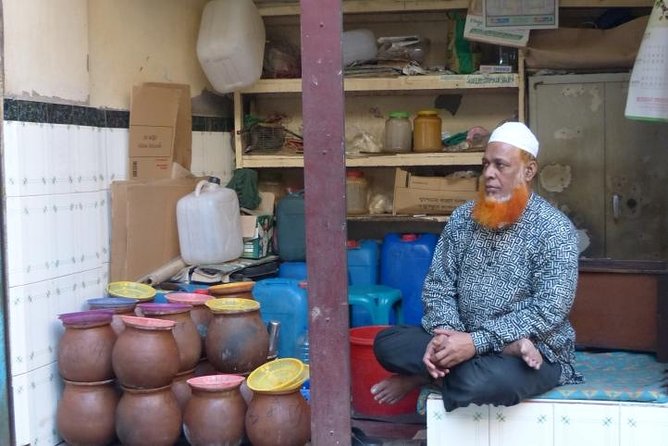
The Armenian Church of the Holy Resurrection dates from the 18th century and offers a glimpse of one of Old Dhaka’s older Christian communities. Its quiet character contrasts with the markets and traffic outside.
You then walk into Shakhari Bazar, one of the most distinctive parts of the tour. This neighborhood has served Dhaka’s Hindu community for more than 400 years. Its narrow lanes hold small workshops where artisans make items such as kites and jewelry.
The area is both residential and commercial. That means you are seeing a real neighborhood, not a preserved stage set. Be considerate with cameras, particularly near homes and workshops. The 40-minute walk is enough to get a sense of the place, but you should not expect a long craft demonstration at every shop.
This is one of the strongest sections for street photography because the lanes, tools, products, and old buildings create layered scenes. It is also one of the places where a guide adds real value by explaining the community and the work taking place around you.
Ahsan Manzil and the Pink Palace
Ahsan Manzil, known as the Pink Palace, sits near the Buriganga and recalls the world of Dhaka’s Nawabs. The building also had earlier connections with French traders and later changes under local ownership and colonial influence.
The experience includes the palace from outside rather than promising a full interior visit. That distinction matters if you are hoping to see rooms and exhibits. From the exterior, you can still appreciate its unusual color, scale, and place beside the old city.
Treat this as a short architectural pause between the narrow lanes and the river port. It helps explain the wealth and power that once shaped Old Dhaka, but the tour’s main strength remains the life happening around the monuments.
Sadarghat and the Buriganga by boat
Sadarghat is the tour’s most forceful stop. The central river port handles large and small passenger launches, with tens of thousands of people using the terminal on an average day. Boats arrive and leave constantly, and the river links Old Dhaka with communities beyond the city.
The port can be noisy, muddy, crowded, and difficult underfoot. That is part of what makes it such a revealing place. You see passengers, port workers, ferries, river traffic, and the practical importance of the Buriganga to city life.
A traditional wooden rowboat ride with local people is included, and it is one of the most memorable parts of the experience. From the water, you get a different angle on the port and the riverbank. The ride is not a luxury cruise. Expect a basic local boat and an immediate view of the river rather than comfort or quiet.
The Sadarghat portion is planned for about an hour. Keep your camera and phone secure, and listen carefully to the guide around the water and loading areas. This is the point where the tour feels least polished and most connected to working Dhaka.
Rides, lunch, and the real cost of the day
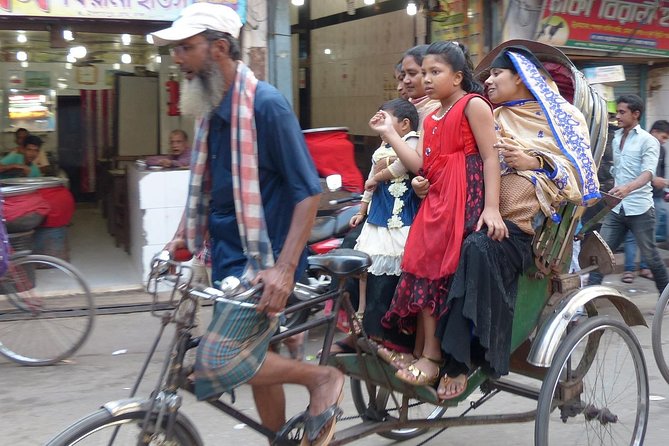
Transport is part of the experience, not just a way to fill gaps between attractions. Local communal vehicles, a pulling rickshaw, horse cart, and wooden rowboat all appear in the program.
The rides are fun, but comfort is not the goal. Roads can be rough, traffic can be intense, and the rickshaw and horse cart sections may feel exposed. If you want calm sightseeing, this may wear you out. If you want to understand how people move through the city, the inconvenience becomes part of the lesson.
Traditional Bangladeshi lunch is included in the tour description. Drinks are not included, so budget separately for soft drinks or other beverages. Personal purchases and guide tips are also extra.
At $82 per person, the price is reasonable for a private half-day experience if you value transport, a personal guide, lunch, and several included rides. Paying separately for every short transfer and arranging access to Old Dhaka’s markets would be harder and less efficient. The value is weaker if you want a slow photography workshop focused on only two or three locations, since this route covers many stops in a short period.
Who will enjoy this Dhaka experience
I would choose this tour if you want a first look at Dhaka that includes people, commerce, faith, history, and movement. It suits photographers who enjoy candid street scenes, travelers with limited time, and anyone who would rather see working neighborhoods than spend the day inside formal attractions.
It is also useful for first-time visitors who want hotel pickup and a private group. Most people can participate, and the tour is near public transportation, though the road travel and narrow lanes may be tiring.
I would think twice if you dislike crowds, loud streets, rough rides, or quick transitions. The itinerary is packed, and the city does not soften itself for sightseeing. That is precisely the appeal for some people, but it is not a restful outing.
Cancellation is free if you cancel at least 24 hours before the 11:00 a.m. start time. Changes or cancellations made later are not accepted for a refund.
Should you book it?
Book this Dhaka tour if you want a concentrated, people-focused introduction to New and Old Dhaka. The strongest reasons are the market access, the local transport, the Shakhari Bazar walk, and the rowboat ride at Sadarghat.
Choose something slower if your main goal is careful architectural study or formal photography instruction. For an energetic first encounter with the city, though, this route gives you far more than a checklist of monuments. It lets you see how Dhaka works.
FAQ
How long is the Dhaka street photography tour?
The experience lasts approximately 4 to 5 hours.
What time does the tour start?
The stated start time is 11:00 a.m.
Is hotel pickup and drop-off included?
Yes. Hotel pickup and drop-off are included.
Is this a private tour?
Yes. Only your own group participates in the activity.
What types of transport are included?
The tour includes local communal vehicles, a traditional pulling rickshaw, horse cart rides, and a traditional wooden rowboat ride with local people.
Is lunch included?
Yes. Traditional Bangladeshi cuisine lunch is included.
Are drinks included?
No. Soft drinks and alcoholic drinks are not included.
What should women wear at Star Mosque?
Women need to cover their heads to enter the mosque and should wear modest clothing. Shorts are not suitable for entry for either men or women.
Can I cancel for a full refund?
Yes, if you cancel at least 24 hours before the experience start time. Cancellations or changes made less than 24 hours before the start are not accepted for a refund.
Just added around the world
- ️ Hanoi Instagram Tour: Most Famous Spots (Private & All-Inclusive)★ 5.0 · 12 reviews
- Hanoi Explorer Photo Tour★ 5.0 · 40 reviews
- Into the Thieves Market Hanoi Photo Tour★ 5.0 · 10 reviews
- Cultural Hanoi Photo Walk – A Street Photography Tour★ 5.0 · 6 reviews
- Hanoi Street Photography with a Pro – Phone & Camera★ 5.0 · 27 reviews
- ️ Ha Long Bay Instagram Tour: Most Famous Spots (Private & All-Inclusive)★ 4.5 · 4 reviews
- Private Hanoi Photoshoot – Iconic Spots & Hidden Gems★ 5.0 · 16 reviews
- 4 hour individual photo tour of Hamburg★ 5.0 · 2 reviews
Street Photography Tours, side by side.
Learn the art of street photography in the heart of Montmartre!
Read our review →
Hanoi Street Photography with a Pro – Phone & Camera
Read our review →
Street photography with your smartphone, tour of Budapest
Read our review →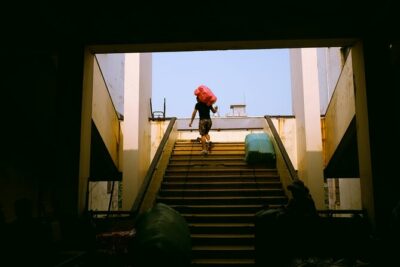
Cultural Hanoi Photo Walk – A Street Photography Tour
Read our review →Lists this one turns up in