Review · KIMONO & COSTUME PHOTOSHOOTS
Kyoto Tea Ceremony and Samurai Photo Session
The most unusual part of this Kyoto experience comes at the end: after preparing matcha and a latte, you can put on samurai armor for photographs. That mix of quiet tea ritual and playful costume makes this more than a standard cultural demonstration.
I like the hands-on format, since you whisk your own matcha instead of simply watching. I also like the friendly teaching style associated with Maya, whose clear English, humor, and patience make the ceremony approachable. The main consideration is time: the tea portion is described as about 50 minutes, while the full activity lasts roughly 1 hour 20 minutes, so this is an introduction rather than a full formal tea ceremony.
Key Points at a Glance
- A 100-year-old machiya: Learn inside a traditional Kyoto townhouse with a calm, historic setting.
- You make two drinks: Prepare matcha in the traditional style, then create a creamy Kyoto-style matcha latte.
- Seasonal wagashi included: Taste Japanese sweets selected to accompany the tea.
- Maya leads the session: Her English, humor, and patient instruction are repeatedly praised.
- Samurai photos finish the visit: Try on authentic armor for a memorable set of pictures.
- Small-group setting: The maximum is 10 people, keeping the class more personal than a large show.
A Short Tea Lesson in a Kyoto Machiya
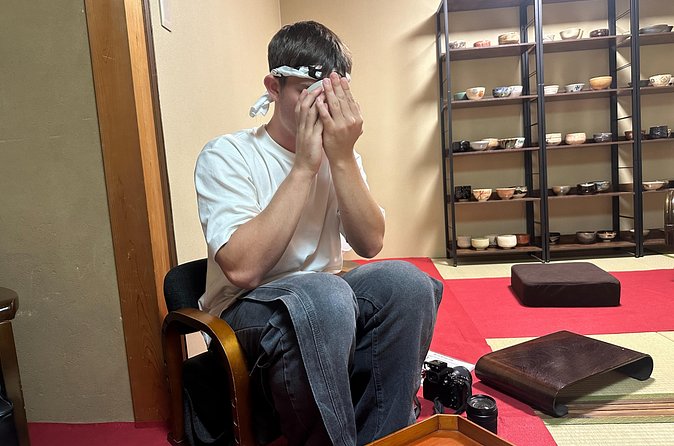
This experience takes place at Samurai Gyoza Factory Kyoto, at 230-1 Kamimyokakujicho in Nakagyo Ward. The setting is a 100-year-old machiya, the traditional wooden townhouse style closely associated with Kyoto.
That location matters. Tea preparation can feel flat in a modern classroom, but a machiya gives the session a stronger sense of place. You are not only learning how to whisk powdered green tea. You are doing it in a building connected to the kind of urban architecture that shaped old Kyoto.
The setting is also practical. The activity stays in one location and ends where it begins, so you do not lose time moving between several attractions. The meeting point is near public transportation, making it a reasonable addition to a day in central Kyoto.
The group limit is 10 people. That is small enough for the instructor to watch your technique and answer questions, but it is not a private lesson. If you prefer complete quiet and strict formality, the social class atmosphere may feel more casual than expected.
More Kimono and Costume Photoshoots in Japan
- Kyoto: Maiko Makeover and Photoshoot Experience
★ 4.7 · 239 reviews - Kyoto: Tea Ceremony with Kimono and Photoshoot
★ 4.9 · 90 reviews - Kyoto Gion Kiyomizudera Kimono Yukata Hairstyle | Photoshoot
★ 4.9 · 55 reviews
Maya Makes the Ceremony Easy to Follow
Maya is the instructor most closely associated with the experience. Her approach combines an explanation of tea ceremony history with practical teaching. Her English is described as clear, and her style is warm, funny, and encouraging.
That combination is useful for first-time participants. Japanese tea ceremony has its own manners, movements, and ideas about attention and calm. Without explanation, the small gestures can seem mysterious. Maya places them in context before asking you to try them yourself.
The lesson also includes the idea of mindfulness. This is not presented as a difficult spiritual exercise. Instead, it helps you notice the simple actions involved in preparing and drinking tea: measuring, whisking, serving, and taking a moment with the cup in front of you.
I would choose this class if you want cultural context without a long lecture. You learn enough to understand why the process matters, then put the lesson into practice. The humor helps keep the mood relaxed, especially for anyone worried about making a mistake.
Watching the Traditional Matcha Preparation
The session begins with a demonstration of the traditional method. You can expect an explanation of the process, the history of tea ceremony, and the use of good-quality matcha.
This first part gives you a model to follow. Pay attention to the rhythm of the whisking and the way the tea is handled. The point is not to produce a perfect bowl on your first attempt. It is to understand the basic method and the care behind it.
The activity is designed for beginners. You do not need previous tea experience, and the teaching style is meant to be easy to understand. That makes it a good choice for families, couples, friends, and solo visitors who want to take part without preparing in advance.
The class is not described as a fully formal ceremony with every traditional rule observed from start to finish. It is better understood as a guided introduction with a demonstration, historical explanation, tasting, and practical lesson. That is a strength for most people, but those seeking a highly formal tea school experience may want something longer and more specialized.
Whisking Your Own Matcha
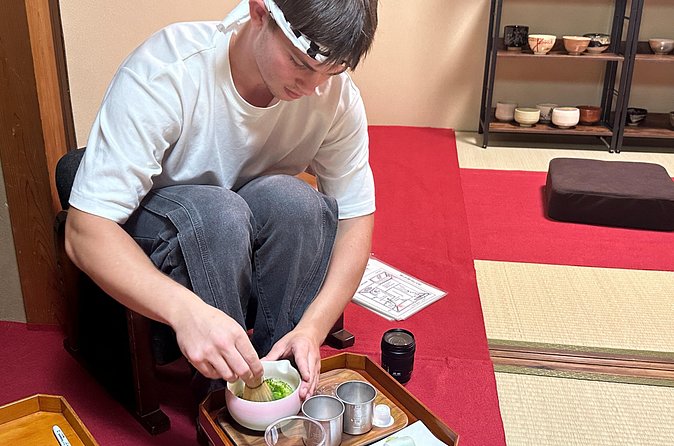
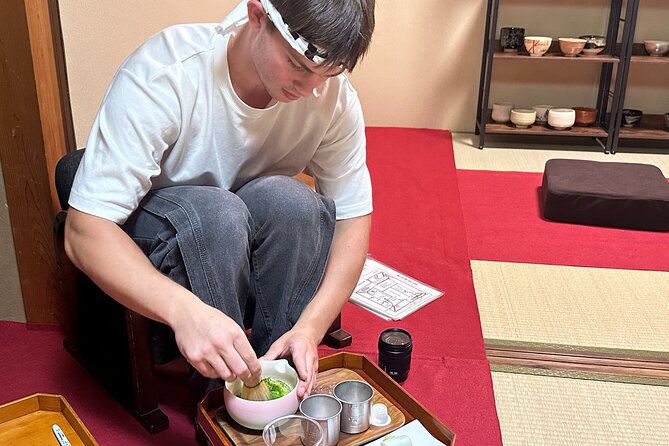
After watching the demonstration, you get to make matcha yourself. This is where the activity shifts from cultural presentation to participation.
You will learn the basic method for turning powdered tea and water into a smooth, frothy drink. The instructor can correct your technique and encourage you to try. Since the group is capped at 10, you should have a better chance of receiving individual help than in a large workshop.
The hands-on element is one of the strongest reasons to book. You leave with a clearer idea of what is involved in making matcha at home, rather than only a memory of someone else preparing it.
The flavor may surprise you. Matcha is not simply sweet green tea. It has a distinct, concentrated taste, and the quality of the powder matters. The use of good-quality matcha is an important detail for anyone who already enjoys tea.
More Kimono and Costume Photoshoots in Kyoto
- Kyoto kiyomizu Temple : Maiko and Samurai Couple Photoshoot
★ 4.8 · 25 reviews - Kyoto Kimono Professional Photoshoot
★ 4.0 · 10 reviews - Kyoto : Kiyomizu-dera Temple : kimono and Indoor photo shoot
★ 4.6 · 5 reviews - Kyoto Kiyomizu-dera Temple : Samurai Costume Photo Shoot
★ 5.0 · 2 reviews
Wagashi Adds a Seasonal Taste
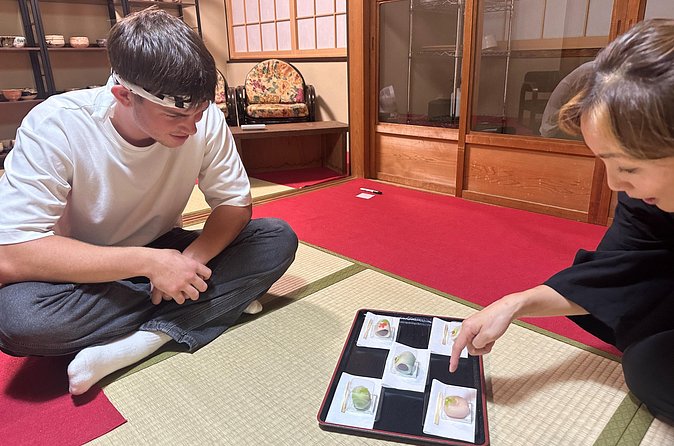
The matcha is served with seasonal wagashi, traditional Japanese sweets made to accompany tea. These sweets provide a gentle contrast to the tea’s more intense flavor.
Wagashi is part of the cultural lesson, not just a snack. Its shape, color, and ingredients can reflect the season, and it helps show how Japanese tea service balances taste and appearance. The sweets are described as delicious, but the larger value is the pairing itself.
If you have never tried wagashi, this gives you an easy introduction. You do not need to visit a specialty shop or know the names of different sweets before arriving. The instructor can explain the role they play alongside matcha.
The portion is part of a short class, so do not book this expecting a full meal. Eat beforehand if you need lunch or dinner. The wagashi is a tasting that supports the tea experience.
Making a Kyoto-Style Matcha Latte
The modern turn comes with the matcha latte. After learning the traditional preparation, you make a creamy latte yourself.
This is a smart addition because it connects an old tea custom with the way many people already enjoy matcha today. The latte is less formal and familiar to anyone who has ordered matcha in a café. Learning to prepare it gives the class a useful take-home element.
A recipe is provided, so you can try making the drink after returning home. That makes the latte lesson more than a one-time novelty. You can practice the method later and adjust it to your own taste.
The traditional matcha and the latte also let you compare two different ways of using the same tea. One emphasizes the tea itself. The other softens it with milk and creates a more accessible drink.
The session does not ask you to choose between old and new. It shows how both can fit into a single Kyoto experience.
Samurai Armor and the Final Photos
Once the tea activities are finished, the experience shifts tone completely. You can wear authentic samurai armor and take photographs.
This is a playful ending, and it helps explain why the activity appeals to people who want more than a standard tea lesson. The photos give you a physical reminder of the visit, rather than leaving you with only a cup of tea and a short explanation.
The samurai theme also creates a striking contrast. The tea portion is calm and careful. The armor session is more theatrical and energetic. Some people will love that change of pace. Others may find it less connected to the refined mood of the ceremony.
That contrast is worth considering before booking. If you want a quiet, strictly traditional tea service, the costume photographs may feel like an add-on. If you want a cultural activity with a memorable visual finish, they are a major advantage.
One participant also described receiving an official certificate. The provided details do not confirm whether a certificate is included for every booking, so ask the operator if that matters to you.
Timing, Cost, and Overall Value
The listed price is $71.74 per person. For that amount, you receive a tea ceremony introduction, matcha preparation, seasonal wagashi, a matcha latte lesson, instruction in English, and samurai armor photographs.
I see the price as fair if you value participation and photos. You are paying for a compact class with several distinct parts, not merely a drink in a traditional room. The small group and the instructor’s personal guidance also add value.
The main limitation is the short schedule. The full experience lasts approximately 1 hour 20 minutes, while the tea ceremony portion is described as about 50 minutes. That is enough for a useful introduction, but not enough for a long study of tea history, advanced preparation, or a slow formal ceremony.
Book this when you want a focused activity that fits between larger Kyoto sights. It can work well on a busy sightseeing day because the class does not occupy half a day. If you want a major cultural centerpiece, choose a longer tea program instead.
The activity is often booked well in advance, with an average booking window of about 72 days. That suggests you should reserve ahead if your Kyoto dates are fixed, especially if you want a particular session.
Who Will Enjoy This Most
I would recommend this experience to first-time matcha drinkers, curious food lovers, couples, families, and friends who want a shared activity. You get to make something, taste something, learn a little history, and take photographs together.
It also suits people who want English-language instruction. Clear explanations matter here because the value is not only in drinking tea. You are learning why the ceremony is performed in a particular way and how to repeat the basic steps.
Tea enthusiasts should appreciate the use of good-quality matcha and the chance to compare traditional tea with a latte. The take-home recipe is a useful extra for anyone who likes to recreate food and drink experiences at home.
I would be more cautious about recommending it to someone seeking strict silence, a long formal ceremony, or an advanced lesson in Japanese tea arts. The class is friendly and interactive, with a light tone and a costume-photo finale.
Practical Details Before You Book
The meeting point is Samurai Gyoza Factory Kyoto, 230-1 Kamimyokakujicho, Nakagyo Ward, Kyoto, 604-0025, Japan. The activity ends back at this same location.
A mobile ticket is available, and confirmation is provided at booking. Since the experience is near public transportation, it should be simple to reach, though you should still allow enough time to find the townhouse and check in.
The maximum group size is 10 people. The activity is suitable for beginners, and the instruction is given in English according to the available details.
Free cancellation is available if you cancel at least 24 hours before the start time. Cancellations made less than 24 hours ahead are not refunded, and changes inside that period are not accepted. The cut-off follows Kyoto local time, so check the clock carefully if you are booking from another time zone.
Should You Book This Kyoto Tea Experience?
Book it if you want an easy, hands-on introduction to matcha rather than a long and highly formal tea ceremony. The old machiya, patient English instruction, seasonal wagashi, latte lesson, and samurai photographs create a varied 80-minute visit.
I especially like the balance between tradition and everyday use. You learn the proper way to prepare matcha, then make a latte you can try again at home. Maya’s friendly teaching style is another reason this should work well for beginners.
Skip it if your main goal is a silent, formal ceremony with extensive rules and history. The activity is designed to be fun and interactive, and the samurai armor photos make that clear.
For most first-time visitors to Kyoto, the $71.74 price is reasonable because you take part in several activities rather than simply watching. Reserve early if your schedule is fixed, and arrive ready to whisk, taste, learn, and pose.
FAQ
Where does the tea ceremony and samurai photo session take place?
It takes place at Samurai Gyoza Factory Kyoto, 230-1 Kamimyokakujicho, Nakagyo Ward, Kyoto, 604-0025, Japan.
How long does the experience last?
The full activity lasts approximately 1 hour 20 minutes. The tea portion is described as taking about 50 minutes.
What will I do during the tea ceremony?
You will learn about tea ceremony history, watch a demonstration, prepare your own traditional matcha, taste seasonal wagashi, and make a Kyoto-style matcha latte.
Is the activity suitable for beginners?
Yes. The experience is designed for beginners and includes step-by-step instruction.
Is the experience conducted in English?
The instructor, Maya, provides English instruction. The available details describe her English as clear and easy to understand.
How many people can join the group?
The activity has a maximum of 10 participants.
Are the matcha and sweets included?
Yes. The experience includes matcha and seasonal wagashi, along with the ingredients needed to make a matcha latte.
Do I get to wear samurai armor?
Yes. The activity includes the opportunity to put on samurai armor and take photographs.
What is the cancellation policy?
You can cancel for a full refund up to 24 hours before the experience starts. Cancellations and changes made less than 24 hours before the start time are not accepted, and the payment is not refunded.
Just added around Kyoto
- Kyoto: Private romantic photoshoot for couples★ 5.0 · 4 reviews
- Kyoto:Private Tour/Luxury Vehicle with Guide & photographer★ 4.8 · 35 reviews
- Kyoto: Private Photoshoot in Arashiyama, Bamboo Forest★ 5.0 · 2 reviews
- Kyoto: Private Photoshoot Experience in Arashiyama Bamboo★ 4.9 · 55 reviews
- Kyoto Kiyomizu-dera Temple : Samurai Costume Photo Shoot★ 5.0 · 2 reviews
- Kyoto kiyomizu Temple : Maiko and Samurai Family Photoshoot★ 5.0 · 2 reviews
- Kyoto: Photo Shoot with a Private Vacation Photographer★ 5.0 · 8 reviews
- Kyoto: Fushimi Inari Shrine Private Photoshoot★ 5.0 · 3 reviews
Kimono & Costume Photoshoots, side by side.
Kimono Dressing, Walking, and Photography Session
Read our review →
Hanbok Photoshoot and History Tour at Gyeongbokgung Palace
Read our review →

Witch Costume Photo Shoot – Olde Salem Village theatrical set
Read our review →
Professional Hanbok Photography at Gyeongbok Palace
Read our review →
Witch Costume Photo Shoot – Witch Cottage theatrical set
Read our review →