
Review · NIGHT & ASTRO PHOTOGRAPHY
Mauna Kea Stargazing Experience + Photos
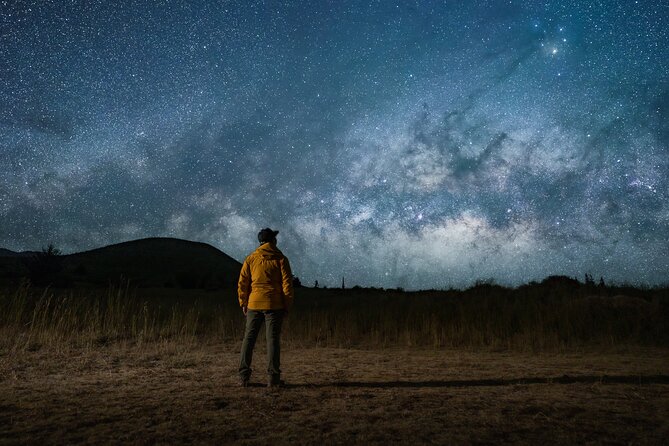
Mauna Kea is famous for its dark skies, but this experience adds something you cannot get from simply pulling over at a roadside viewpoint: an astronomer-led sky talk, close-up telescope images, and portraits with the Milky Way behind you. The team may include guides such as Dylan and James, with a dedicated photographer handling the night shots.
I like the remote viewing locations, which avoid the headlights and crowds around the usual visitor-center gathering spots. I also like the stargazing guarantee: if clouds block the stars, you receive a full refund rather than paying for a night of gray sky.
The catch is the price, $299 per person, and the fact that you must drive yourself to a dark, remote meeting point. The mountain road can be narrow and very dark, and the cold can reach about 30°F. You need warm layers, patience, and a willingness to sit outside for roughly 90 minutes to two hours.
What makes this Big Island stargazing outing different
- A smart telescope brings galaxies and nebulae into view, with the Celestron Origin system used during the guided astronomy talk.
- The location can shift between Mauna Kea and Mauna Loa to find darker, clearer skies away from crowds and headlights.
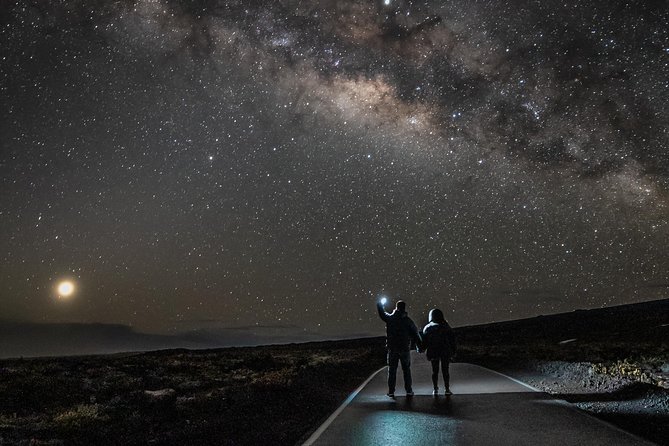
- A professional photographer takes Milky Way portraits for each private group, with medium-resolution images included.
- The schedule is chosen around moonlight, helping keep the sky as dark as possible.
- Parka jackets, blankets, and chairs are provided, though you still need proper cold-weather clothing.
- Clouds do not automatically mean wasted money, since a weather cancellation or a sky too cloudy for stargazing comes with a refund or a new date.
Why the stars look different here
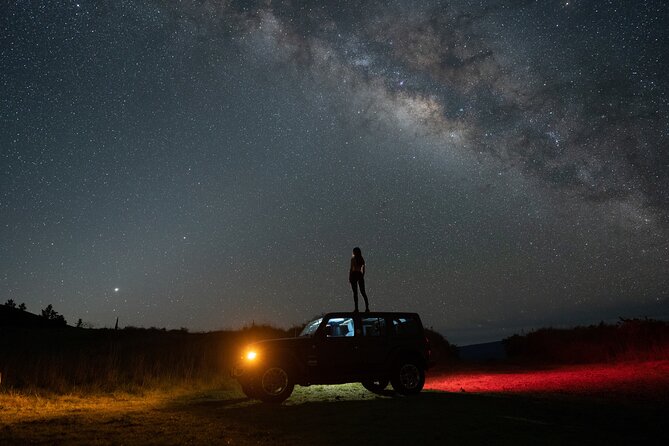
The Big Island gives you a rare chance to see a truly dark sky without leaving the United States. Away from resort lights and city glare, the Milky Way can look broad and textured rather than like a faint white stripe. On a clear night, you may see far more stars than you are used to seeing at home.
That does not mean every night is perfect. Clouds, wind, moonlight, and changing mountain conditions are part of the deal. The company chooses time slots to avoid bright moonlight and may move the meeting location to Mauna Loa or another remote spot when conditions call for it.
I consider that flexibility useful, but it can make the evening feel less fixed. You may receive updated instructions or a changed location before the tour. Keep your phone available and read every message carefully. A few people have had trouble with late changes or unclear directions, while others received timely updates and found the communication excellent.
The meeting point is at the Puʻu Huluhulu cinder cone parking area, or at another location supplied by the team. There is no hotel pickup or drop-off. You drive yourself, and the final stretch may involve a dark, narrow, winding mountain road. If you dislike night driving, ask the company for the clearest possible directions before setting out.
More Night and Astro Photography in the USA:
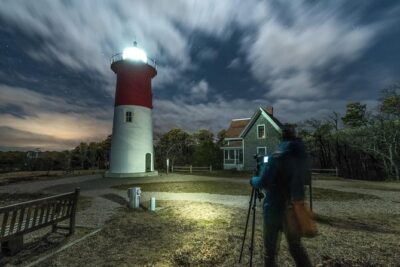
- Private Guided Night Photography Tours on Cape Cod (for one photographer.)
★ 5.0 · 38 reviews - Moab: The Windows Astro-Photography and Stargazing Hike
★ 4.8 · 36 reviews - Brooklyn Bridge at Night Photography Tour
★ 5.0 · 10 reviews
Arriving at the Puʻu Huluhulu meeting point
This is not a polished resort excursion with a bus waiting at your hotel. You meet the group at the designated parking area, where the team sets out chairs, parkas, blankets, and the telescope equipment.
That self-drive format keeps the tour flexible and helps the company reach quieter locations. It also shifts some work onto you. Plan extra time for the drive, do not rush on the mountain road, and arrive with enough fuel and phone battery to manage directions.
The group limit is 30 people. That is not an intimate private tour, but the remote setting can make the experience feel less crowded than the number suggests. The company specifically avoids the busy Onizuka Visitor Center area and other popular roadside viewing sites.
You will spend most of the evening seated outdoors. Chairs make a real difference, especially during a long astronomy talk, but this is not an activity for someone who needs to keep moving to stay warm. The company describes the physical demand as moderate and does not recommend the outing for people with mobility limits, back or heart problems, hearing problems, or other serious medical conditions.
A 90-minute to two-hour astronomy session
The advertised experience lasts about two hours, while the core guided session is described as 90 minutes. In practice, allow a full two hours so you are not watching the clock.
The evening begins with a talk led by an astronomer. Dylan is praised for mixing astronomy, humor, traditional stories, and current ideas in astrophysics. James also serves as a guide and manager on some outings. The style is interactive, so bring questions about planets, galaxies, black holes, relativity, UFOs, or anything else that has puzzled you.
A green laser pointer helps connect the explanations to the actual sky above you. This is more useful than simply opening a stargazing app because you learn how the stars relate to one another in the real sky, not just on a bright phone screen.
The length of the talk can vary with the group. If people keep asking questions, the astronomy presentation may continue for two hours or more. That will delight a space fan and test the patience of someone who came mainly for a photo.
What you see through the Celestron Origin telescope
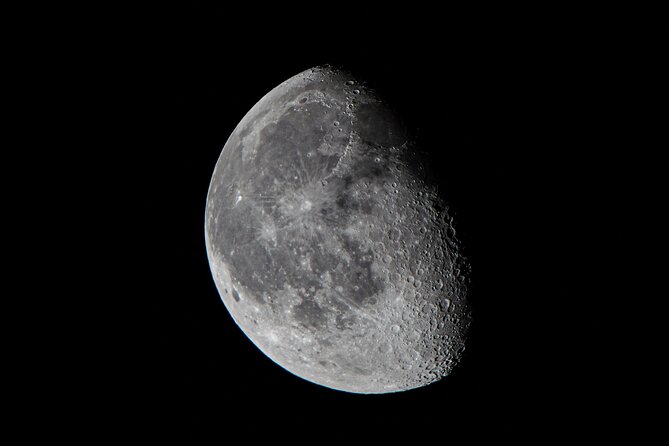
The Celestron Origin is described as a smart telescope, and it is used to show objects that are difficult to see clearly with the naked eye. Expect guided views of nebulae, star clusters, and galaxies.
This equipment is worth understanding before you book. You are not looking through a giant observatory eyepiece at a summit facility. The telescope uses a camera-based system to produce close-up views on a screen or display. One harsh assessment described it as a zoom camera rather than a traditional telescope, while the company presents it as a high-powered smart telescope.
Both descriptions point to the same practical fact: this is a technology-assisted viewing experience. If you want the romance of peering through a classic eyepiece, you may find the setup less satisfying. If you want to see objects such as the Andromeda Galaxy, the Horsehead Nebula, Orion Nebula, or star clusters in greater detail than your eyes can manage, the system adds real value.
The telescope also gives the guide something concrete to explain. You are not only told where a galaxy is. You can see the object enlarged while hearing how far away it is, what it contains, and why it looks the way it does.
More photo tours and shoots in the USA:
- The ‘OG’ Manatee Snorkel Tour with In-Water Guide/Photographer
★ 5.0 · 2,539 reviews - Manatee Swim Tour with In Water Photographer
★ 5.0 · 2,300 reviews - Guided Small Group Manatee Snorkeling Tour with In-Water Photographer
★ 5.0 · 1,336 reviews - LA: Hollywood Sign Tour with Comedians, Dogs, & Epic Photos
★ 4.9 · 1,193 reviews
Milky Way portraits and included photos
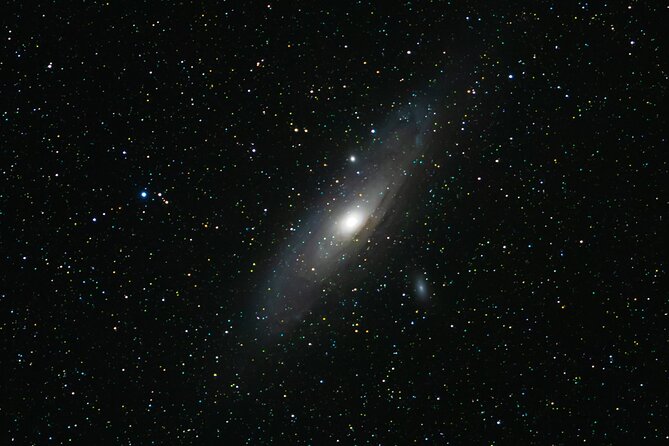
The photo session is one of the strongest reasons to choose this tour over simply driving up the mountain with a phone. A professional astro-photographer takes portraits of your group with the Milky Way behind you, and the basic package includes medium-resolution images at no extra cost.
The photographers named in the supplied trip details include Shannon and Malia, depending on the outing. They take multiple images, and you can ask for additional poses. The best results depend on your position, the darkness of the sky, cloud cover, and the photographer’s timing. One photo captured a shooting star, while other images included the Milky Way, the Andromeda Galaxy, and even volcanic glow on a special night.
Set your expectations correctly. The included files are medium or low resolution and are intended mainly for social media and ordinary digital sharing. Some people have found the complimentary portraits excellent, while one person felt the face was too dark or unclear. Night photography is tricky, and a single pose may not be perfect.
Larger files or the full photo collection may cost extra. The supplied information gives different upgrade prices, including $99 for a full collection in one response and $200 in another. Confirm the current price and exactly what the upgrade includes before purchasing. If printed photos or large files matter to you, this detail can affect the real cost of the experience.
Cold-weather planning at around 30°F
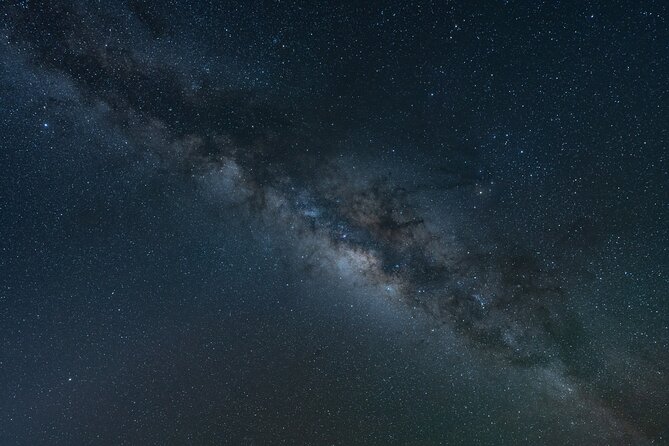
The mountain cold is the easiest part of this outing to underestimate. The company provides parka jackets, and the team may also have blankets and hand warmers. Coffee, tea, and hot chocolate have been served on some evenings, but I would not book this tour assuming refreshments are guaranteed.
Wear long pants and closed-toed shoes. Add a warm base layer, thick socks, a hat, and gloves. The provided parka has a hood and pockets, but it may not be enough by itself when you are sitting still in mountain air.
A warm jacket from your hotel is useful even if a parka is supplied. Closed shoes also give you better footing around a dark parking area and along rough ground. This is not the place for sandals, shorts, or a light sweater.
The cold can affect your photos, too. Shivering makes it harder to pose, and numb hands make it harder to use your phone or camera. Dress for the temperature, not the beach weather you may have enjoyed earlier that day.
The value of $299 per person
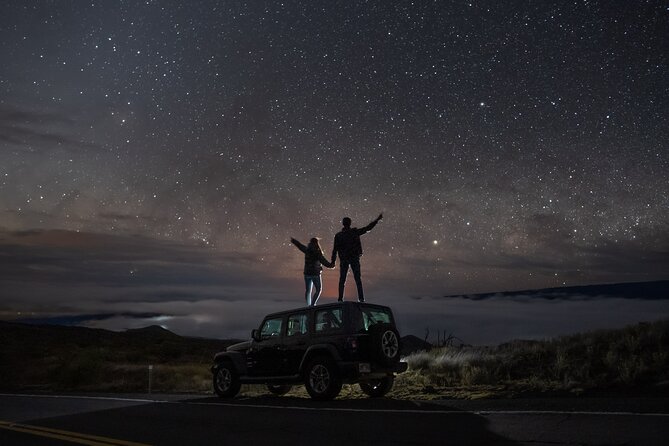
At $299, this is a premium evening activity. You are paying for more than a place to sit under the stars. The package includes an astronomer, a dedicated photographer, telescope viewing, chairs, parkas, and medium-resolution images.
I think the price makes the most sense for couples, families celebrating something special, and anyone who places real value on photographs. Buying a professional Milky Way portrait session separately could cost a great deal, so the included photography changes the calculation.
The value is weaker if you mainly want to look at stars in silence. You can find dark areas on the Big Island without paying for a tour, although you would not have the same equipment, guidance, or organized photo session. The included files are also not the same as a full-resolution professional collection.
The weather guarantee helps protect the purchase. If clouds prevent stargazing, the company says you receive a full refund. A poor-weather cancellation may also be handled with a new date or a refund. That policy matters because mountain weather can change quickly.
You can cancel for a full refund up to 24 hours before the start time. Changes or cancellations inside 24 hours are normally not refunded, except when the company cancels because of weather or an insufficient number of bookings.
Who should book this experience
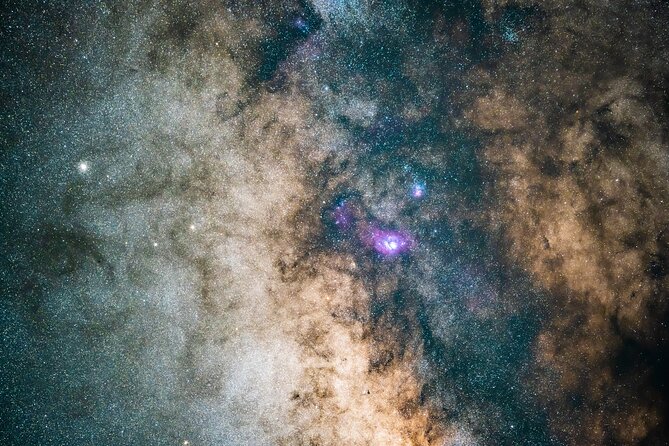
I would choose this outing if you want a guided night sky lesson, strong photo opportunities, and a quieter location than the usual public viewing areas. It suits people who enjoy asking questions and can happily sit outside while an enthusiastic guide explains the universe.
It is especially good for:
- Couples who want a memorable portrait beneath the Milky Way
- Families with older children who are interested in space
- Amateur photographers who want to see how night portraits are made
- Visitors who prefer a small, remote setting to a crowded roadside stop
- Anyone who wants a weather guarantee before committing $299
I would think twice if you dislike cold, remote driving, or long talks. It is also a poor fit if you need hotel transportation, have serious mobility or medical limits, or want a short photo stop rather than a full astronomy session.
Children must be accompanied by an adult. Service animals are allowed, but the company says the activity is not suitable for some older people or anyone with certain mobility, back, heart, hearing, or other medical concerns. Pregnant people should speak with a doctor beforehand.
Should you book the Mauna Kea stargazing experience?
Book it if you want the full package: dark skies, an astronomy talk, smart telescope views, and a professional Milky Way portrait. The strongest part is the combination of Dylan or James explaining the sky while a photographer creates a lasting image. The guarantee also removes much of the risk of paying for a cloudy night.
Skip it if $299 feels too high for an outdoor astronomy lesson, or if you would be happy using your own camera and a free stargazing app. Before booking, confirm the meeting point, the expected drive, the current photo upgrade price, and whether refreshments will be served.
For the right person, this is not just a quick look at the stars. It is a structured night under one of the Big Island’s darkest skies, with enough equipment and human guidance to help you understand what you are seeing.
FAQ
Where does the experience meet?
The listed meeting point is the Puʻu Huluhulu cinder cone parking lot on the Island of Hawaii. The company may use a remote location on Mauna Kea or Mauna Loa depending on conditions.
Is hotel pickup included?
No. Hotel pickup and drop-off are not included. You must drive to the meeting point.
How long does the stargazing session last?
The experience is listed at approximately two hours, while the core session is described as 90 minutes. Allow up to two hours for the full outing.
What telescope is used?
The guide uses a Celestron Origin smart telescope to show objects such as nebulae, star clusters, and galaxies.
Are photos included?
Yes. Medium-resolution photos are included at no additional cost. Optional photo upgrades for larger or higher-resolution files are available.
What should I wear?
Wear pants and closed-toed shoes. Bring warm layers, gloves, and a hat because temperatures can reach about 30°F. Parka jackets are provided, but they may not be enough by themselves.
What happens if the night is cloudy?
If clouds prevent stargazing, the company offers a full refund under its stargazing guarantee. A weather cancellation may also be handled with a different date or a refund.
Can children join?
Yes, but children must be accompanied by an adult. The activity has a maximum of 30 people.
Can I cancel my booking?
You can cancel up to 24 hours before the start time for a full refund. Cancellations or changes made less than 24 hours before the experience are normally not accepted or refunded.
Just added around the USA
- Focus on Haines Private Nature / Photography tour★ 5.0 · 38 reviews
- Exclusive Photography Tour Haines Departure★ 5.0 · 19 reviews
- Private Proposal Professional Photo Shoot – Grand Canyon★ 4.5 · 2 reviews
- Hire Photographer, Professional Photo shoot – Grand Canyon★ 5.0 · 29 reviews
- Photoshoot in Grand Canyon★ 5.0 · 2 reviews
- Full Day Guided Wildlife Photography Tour In Yellowstone★ 5.0 · 6 reviews
- Miami incredible Photoshoot – Private Session with a Professional Photographer★ 5.0 · 2 reviews
- Modern Vibe Fort Lauderdale Las Olas Photography Session★ 5.0 · 2 reviews
Night & Astro Photography, side by side.
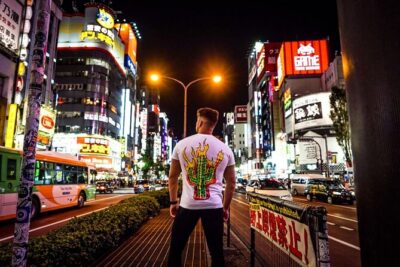
Tokyo by Night Photography Tour (Private Option Available)
Read our review →
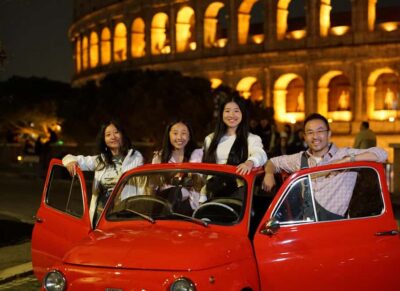
Night Photo Session in a Fiat 500 with Aperol Spritz
Read our review →
Private Guided Night Photography Tours on Cape Cod (for one photographer.)
Read our review →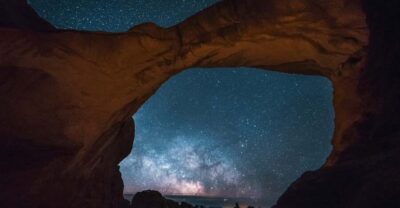
Moab: The Windows Astro-Photography and Stargazing Hike
Read our review →
Doha Night Desert Safari, Stargazing, Photography، Relaxation
Read our review →Lists this one turns up in