Review · PHOTOGRAPHY TOURS
Photo Walking Tour Sagrada Familia and Gaudí in Barcelona
Barcelona’s Gaudí buildings are easy to admire and surprisingly hard to photograph well. Their curves, tiles, balconies, towers, and small details can turn a picture into a busy mess. This small-group photo walk gives you a way to make sense of it, using your phone or camera as you move from Passeig de Gràcia to the Sagrada Família.
I like two things right away: you need no photography experience or special equipment, and the group is limited to ten people. Guides such as Leonardo focus on practical advice, history, and one-to-one help rather than rushing from one stop to the next. The main drawback is clear: you do not enter Casa Batlló, La Pedrera, or Sagrada Família, so this is an exterior photography tour, not an architectural interiors tour.
Key points before you book
- Phone-friendly instruction: Any Android phone, iPhone, or camera works, so you can learn with the equipment already in your pocket.
- A compact Gaudí route: The walk links Casa Lleó Morera, Casa Batlló, La Pedrera, Casa Comalat, Palau Malaya, Sagrada Família, and a Modernist streetlamp.
- Personal help in a group of up to ten: The guide spends part of the walk giving individual tips on composition and street photography.
- No admission fees included: You photograph the buildings from outside, keeping the price focused on instruction rather than entry tickets.
- A guide-led look at Barcelona: Leonardo’s explanations connect the architecture with local history, while other guides such as Charlotte and Gustavo have also led sessions.
- Weather matters: The activity can be canceled in poor weather, with a new date or full refund offered.
What you are really buying for $60.23
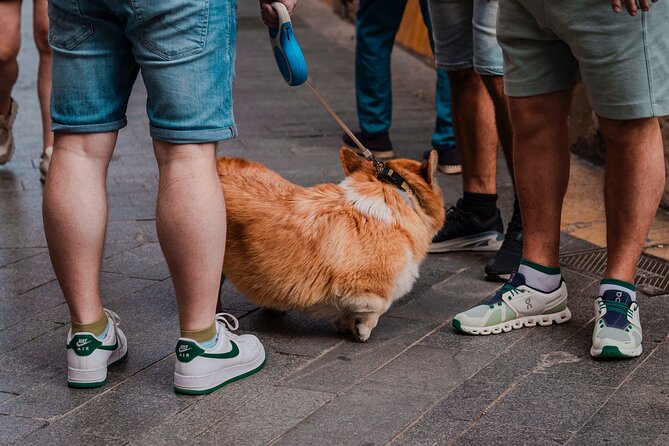
At $60.23 per person, this costs more than a basic self-guided walk along Passeig de Gràcia. That is fair only if you want help improving your pictures. You are paying for about two and a half hours of instruction, a small group, and a guide who can point out angles and details you might otherwise miss.
You are not paying for building admission, food, drinks, or transportation. That keeps the cost from climbing, but it also means you should budget separately if you want to tour Casa Batlló, La Pedrera, or Sagrada Família from the inside on another visit.
The value improves if you are new to photography or keep taking pictures that feel flat, crowded, or ordinary. The guide works on composition at each stop, then gives one-to-one advice while you walk. That kind of immediate correction can be more useful than watching a general photography video before your trip.
It is less useful if your main goal is to enter Gaudí’s buildings. You will see them, photograph them, and learn about them, but the tour does not replace an admission ticket. Think of it as an outdoor photo lesson with Barcelona as the classroom.
The rating is listed at 4.9 out of 5, with 96 percent of customers recommending the experience. The strongest praise centers on the guides’ patience, historical explanations, personal attention, and ability to make the walk interesting for both beginners and families.
More Photography Tours in Barcelona
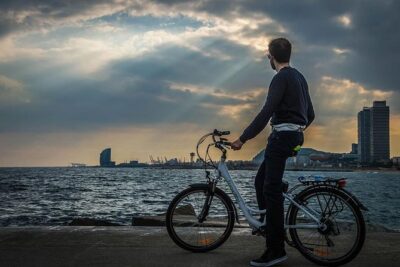
- Barcelona E-Bike Photography Tour
★ 5.0 · 843 reviews - Photo Walking Tour Sitges Experience Beaches and Town
★ 5.0 · 65 reviews - Photo Walking Tour Barcelona Cathedral Gothic Quarter El Born
★ 5.0 · 37 reviews
Starting with composition at Casa Lleó Morera
The meeting point is outside Safestay Barcelona Passeig de Gràcia at Passeig de Gràcia 33 in the Eixample. The first stop is Casa Lleó Morera, part of the famous block known as the Manzana de la Discordia, or Block of Discord, where several major Modernist buildings face one another.
You begin with basic composition here. That is a smart starting point because the building gives you a chance to learn before the walk becomes more demanding. The guide can show you how to frame a facade, control distractions, and decide what deserves the viewer’s attention.
Expect about 15 minutes at this stop. You will not enter the building, and admission is not included. The point is to learn how to look at the outside of a structure rather than simply aim your phone upward and tap the shutter.
This is also where the personal nature of the walk matters. The guide can look at your screen and suggest a change to your position, framing, or use of detail. You do not need to arrive knowing terms such as leading lines or visual balance. The activity is designed for beginners.
Photographing Casa Batlló without going inside
Casa Batlló is one of Barcelona’s most recognizable buildings, but its fame creates a problem for photographers. You can easily make the same front-on picture seen in hundreds of guidebooks. The lesson here is how to present the building in a more interesting way from the street.
You spend about 20 minutes at the site. The guide shows you ways to work with the facade, its shapes, and its decorative details without entering. That makes the stop useful even if you plan to tour the interior separately, since the exterior offers a different set of photographic challenges.
A practical benefit is that you can concentrate on the camera rather than ticket timing. There is no interior visit to hurry through. On the other hand, the street can be a busy place, and you should expect the exercise to involve working with the setting as it is rather than getting a perfectly empty view.
This is a good point to ask direct questions. The guide’s role is not just to explain Gaudí, but to help you improve the image in front of you. Leonardo has received particular praise for taking time with people, explaining ideas clearly, and answering questions without making the group feel rushed.
Finding the story in La Pedrera’s details
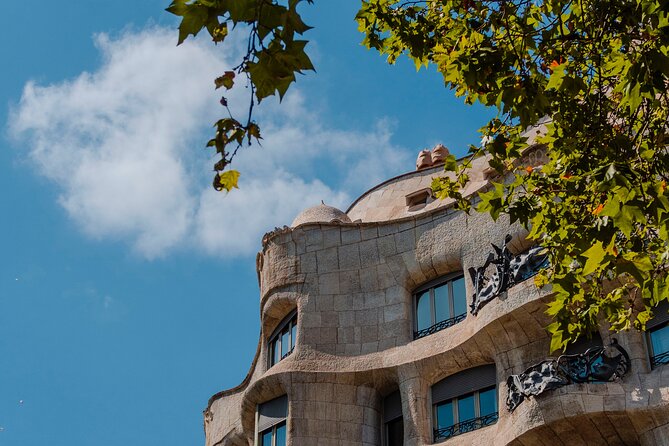
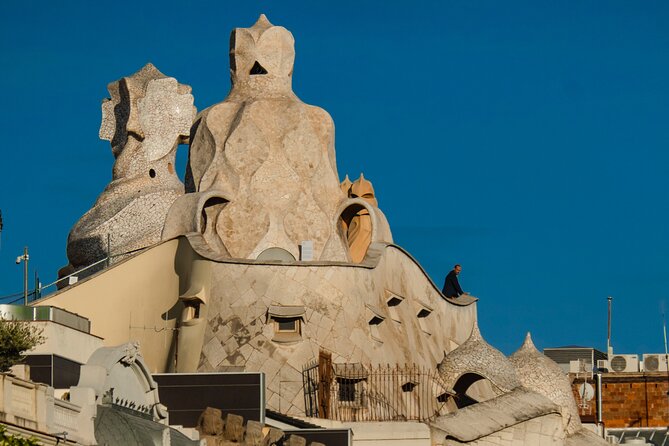
The walk continues to Casa Milà, better known as La Pedrera. Here the emphasis shifts from basic composition to details and storytelling. That change keeps the lesson moving. Instead of trying to photograph the whole facade, you look for smaller features that can say something about the building.
You have about 20 minutes at La Pedrera. The guide may point out ways to include textures, lines, balconies, or other architectural elements so your picture has a clear subject. The larger lesson is simple: a good architectural photograph does not always need to show the entire building.
You should find this stop especially useful if your phone produces wide pictures that feel distant. A closer detail can be easier to frame and can give the image a stronger sense of place. The guide can help you decide when to step back and when to crop your attention to one element.
Again, there is no admission. That is a limitation if you hoped to see La Pedrera’s famous interior spaces, but it also makes the walk more focused. You are learning how to photograph what is available from the pavement, which is how much of your Barcelona sightseeing will happen anyway.
More Photography Tours in Spain
- Barcelona: 4-Hour E-Bike Photography Tour
★ 4.8 · 36 reviews - Private Photography Walking Tour with a Local
★ 5.0 · 32 reviews - Private Barcelona E-Bike Photography Tour
★ 5.0 · 26 reviews - Barcelona Photo Walking Tour Instagrammable Portraits
★ 5.0 · 13 reviews
Casa Comalat and Palau Malaya: smaller discoveries along the way
The route also passes Casa Comalat and Palau Malaya. These are not presented as long formal stops with a set amount of time, but they add variety to the walk. They give you a chance to see less obvious Modernist details between the major landmarks.
Casa Comalat is useful for the idea that Barcelona’s architecture rewards looking up and around. The guide points out details that can be easy to pass without noticing. Palau Malaya adds another stop where the city’s decorative style can be photographed without the same focus on one famous facade.
These short passages are important because the tour is not only a sequence of postcard locations. You spend the rest of the time walking, practicing street photography, and receiving tips on the spot. That means the lesson continues between the official stops.
I like this part of the route for a practical reason. You get to test the advice immediately. If the guide has just explained how to isolate a detail, you can try it on the next building rather than waiting until you get home.
Sagrada Família from the outside
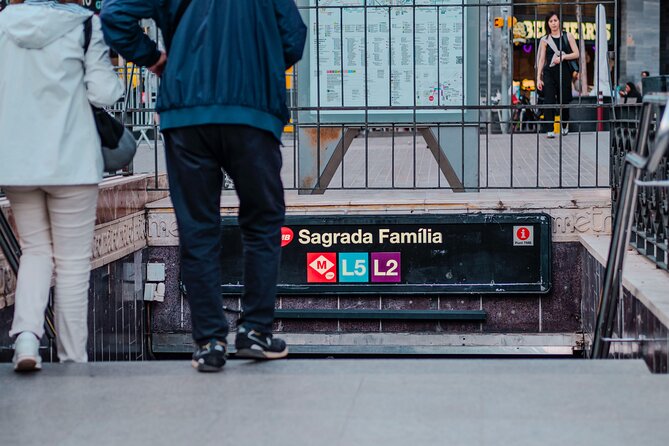
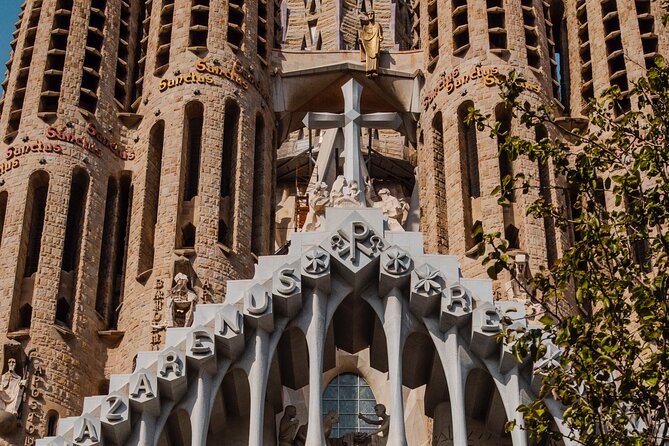
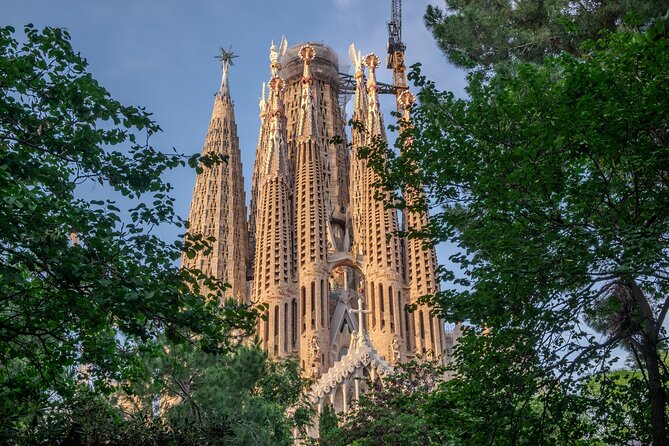
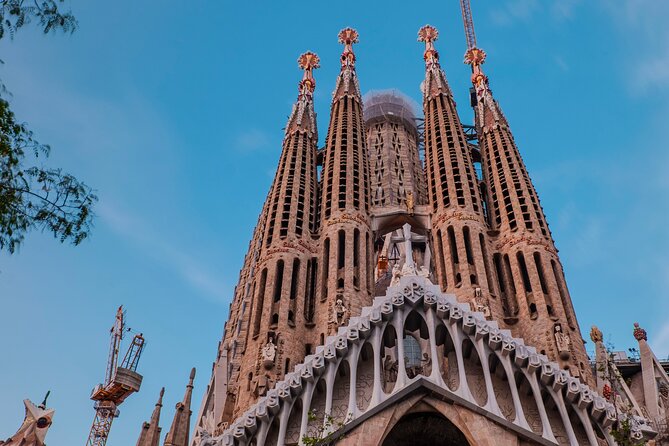
The Basilica de la Sagrada Família is the largest subject on the route and one of the hardest to fit into a photograph. Its height, ornament, and surrounding city streets can overwhelm a small phone screen. The guide spends about 20 minutes showing you different ways to capture the building, its details, and its overall character without going inside.
This is not an entrance tour. You will not receive access to the basilica, and admission is not included. If you want to see the interior, you need a separate ticket and visit.
For photography, though, the exterior offers plenty to work with. You can think about the difference between a full-building view and a detail shot. You can also ask how to frame a large structure so it feels intentional rather than simply too big for the phone.
The guide’s historical explanations add another layer. One of the most praised parts of the experience is the way Barcelona’s architectural story is connected to what you are seeing. Leonardo has been described as clear, kind, and able to relate the city’s past to its buildings. That context can help you choose what to photograph because you understand more about the subject.
Families may appreciate this stop as well. A review from a Spanish-speaking family praised Gustavo’s work and the family pictures taken during the walk. The available information does not promise a dedicated family photo session, but it does show that the format can work for people who want useful pictures of a shared day.
Ending at Barcelona’s Modernist streetlamp
The tour ends at Fanal modernista, near Avinguda Gaudí, beside a Modernist streetlamp described as one of the prettiest in town. You spend about ten minutes here.
This is a fitting finish because it shifts attention from famous buildings to a small urban object. A streetlamp may not be the reason you came to Barcelona, but it gives you a final chance to apply the lessons about detail, framing, and visual storytelling.
The end point is in the Eixample, at Eixample 08025 Barcelona. You will need to arrange your own way back from there. The route is near public transportation, but transportation to and from the start and finish is not included.
How the small group changes the experience
The maximum group size is ten people. That is small enough for individual help, though the amount of attention you receive can still depend on the group and the pace of the walk.
The format combines short explanations with time for one-to-one tutoring. That is better suited to learning than a large sightseeing group where the guide speaks continuously and everyone takes the same picture.
The guides have different names in the available feedback. Leonardo receives the most detailed praise, while Charlotte is described as working with him as a strong pair, and Gustavo is praised for a Spanish-language family experience. The important practical point is that your guide may not be Leonardo, so you should treat the named guides as examples rather than a guaranteed assignment.
The language offered is English. No previous photography skill is required. Bring your own phone or camera, and do not worry about professional equipment. The activity specifically accepts Android phones, iPhones, and cameras.
Who should book this photo walk?
I would recommend it most strongly to four kinds of people:
- First-time visitors who want better pictures: You get practical help while seeing major Barcelona sights.
- Phone photographers: The activity is built for ordinary mobile devices, not specialist cameras.
- Architecture fans who enjoy details: You will spend time looking at facades, decoration, and smaller Modernist features.
- Small groups and families: A ten-person limit gives you a better chance to ask questions and receive personal guidance.
It may not suit you if you want a fast overview of Barcelona, a full Gaudí history lecture, or interior access to the buildings. The route takes about two and a half hours, and some of that time is spent practicing rather than simply sightseeing.
Wear comfortable shoes and arrive ready to walk between stops. Food and drinks are not provided, so plan those separately. Since the experience depends on good weather, keep a little flexibility in your schedule.
Free cancellation is available up to 24 hours before the start time. Cancellations made less than 24 hours in advance are not refunded, and changes inside that window are not accepted. If poor weather or an insufficient number of bookings causes cancellation, you are offered another date or a full refund.
Should you book it?
Book this tour if you want to see Gaudí’s Barcelona while learning how to take more thoughtful pictures with the device you already own. The strongest reasons are the small group, personal instruction, and guides who combine architectural context with practical advice.
Skip it if your priority is entering Casa Batlló, La Pedrera, or Sagrada Família. In that case, spend the money on admission tickets and explore the interiors at your own pace.
For the right person, $60.23 is a reasonable price for a focused outdoor lesson in one of Europe’s best cities for architectural photography. You leave with no entrance ticket and no meal, but you may leave with a better eye for composition, a stronger set of Barcelona photographs, and a clearer sense of why these buildings look the way they do.
FAQ
How long does the Photo Walking Tour Sagrada Família and Gaudí last?
The tour lasts approximately 2 hours and 30 minutes.
What landmarks does the walking tour visit?
The route includes Casa Lleó Morera, Casa Batlló, Casa Milà, also called La Pedrera, Casa Comalat, Palau Malaya, Sagrada Família, and the Modernist streetlamp at the end near Avinguda Gaudí.
Do I need a professional camera?
No. Any Android phone, iPhone, or camera is suitable. You must bring your own equipment because the tour does not provide cameras.
Does the tour enter Casa Batlló, La Pedrera, or Sagrada Família?
No. The tour explains how to photograph the buildings from outside, and entrance tickets are not included.
What language is the tour offered in?
The tour is offered in English.
What happens if the weather is bad?
The experience requires good weather. If it is canceled because of poor weather, you are offered a different date or a full refund.
Just added around Barcelona
- Private Photography Walking Tour with a Local★ 5.0 · 32 reviews
- Private and Personalized Photography Adventure in Barcelona★ 5.0 · 51 reviews
- Shine in the Streets of Barcelona: cinematic & candid photos★ 5.0 · 3 reviews
- Private Tour: Personal Travel Photographer Tour in Barcelona★ 5.0 · 2 reviews
- Timeless Barcelona: Your Personal Photoshoot★ 5.0 · 39 reviews
- Private Photo Session with a Local Photographer in Barcelona★ 4.5 · 3 reviews
- Private Barcelona E-Bike Photography Tour★ 5.0 · 26 reviews
- Proposal Photographer in Barcelona★ 5.0 · 9 reviews
Photography Tours, side by side.
Rhodes: E-bike Highlights Sunset or Morning Photo Tour
Read our review →