Review · PHOTOGRAPHY TOURS
Photo Walking Tour Barcelona Cathedral Gothic Quarter El Born
Barcelona is especially rewarding when you stop chasing postcard views and start looking at angles, reflections, arches, and small details. This two-hour photo walk takes you from Estació de França through El Born and the Gothic Quarter, finishing at Plaça Reial, with practical help from guides such as Leonardo.
I like the small group limit of 10, which gives you a fair chance to ask questions. I also like that you can use the phone already in your pocket, while still getting useful advice for a DSLR or other camera. The main drawback is pace: 11 stops in about two hours means quick visits and plenty of walking between them.
Key points at a glance
- Start with Barcelona’s grand railway architecture: Estació de França gives you strong lines, polished surfaces, and a striking opening subject.
- Learn with the equipment you already own: Bring any working Android phone, iPhone, or camera. No previous photography experience is needed.
- Practice composition across very different settings: You’ll photograph a park, triumphal arch, Modernist architecture, medieval streets, public squares, and a colorful urban artwork.
- Get personal coaching rather than a generic city walk: The guide can help with angles, reflections, framing, and ways to make familiar sights look less ordinary.
- Expect a fast, compact route: The group visits 11 places in roughly two hours, so this works best if you prefer variety over long stops.
- Pay for instruction as much as sightseeing: At $59.90, the value depends on how much you want to improve your own photography during and after the walk.
A photo lesson that uses Barcelona as your classroom
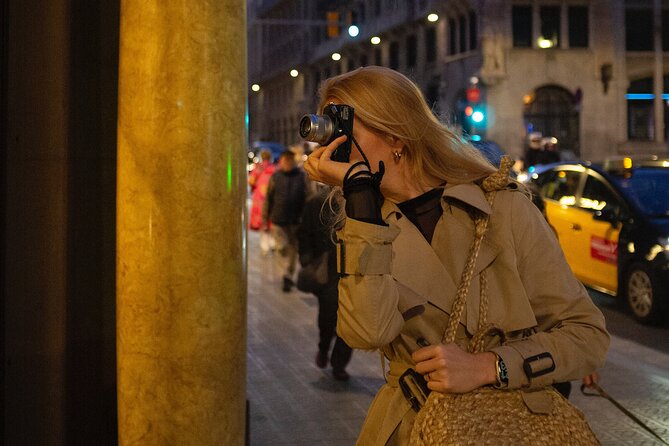
The heart of this experience is not simply seeing famous places. It is learning how to see them through a camera. Barcelona gives the guide a useful set of subjects: formal station interiors, leafy park paths, bold public architecture, narrow medieval streets, and open squares with changing light.
You do not need a special lens or expensive camera. The tour specifically welcomes any mobile phone or camera that works for you. That matters because the advice can go straight into your normal holiday photos. You are not learning a system that only works with professional equipment.
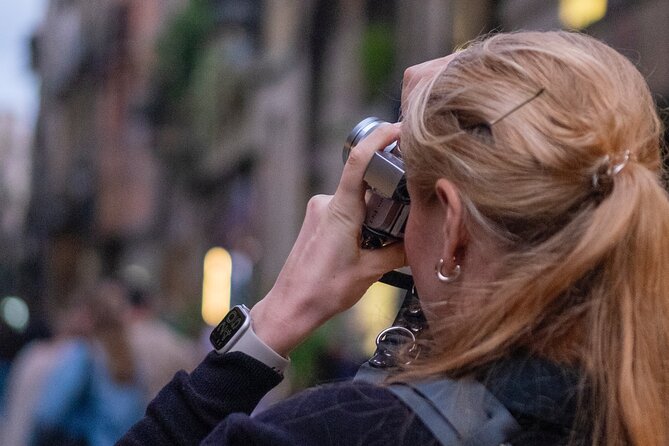
Guide Leonardo has a particular interest in Barcelona’s past and in unusual photo angles. His approach, as described by participants, includes showing how angles and reflections can change a familiar view. He has also helped people frame urban scenes with both mobile phones and DSLR cameras.
The group can have as many as 10 people, though it may be smaller. One session had only a single participant, which allowed for very personal instruction. You should not count on having a private tour, but the maximum is small enough for questions and individual tips.
The pace is the one point to consider carefully. The route lists 11 stops, with most visits planned for 10 minutes and 20 minutes at Parc de la Ciutadella. Add the walks between sites and the photography advice, and you will need to keep moving. Think of this as a fast photo lesson with a city walk attached, not a slow architectural tour.
More Photography Tours in Barcelona
- Barcelona E-Bike Photography Tour
★ 5.0 · 843 reviews - Photo Walking Tour Sitges Experience Beaches and Town
★ 5.0 · 65 reviews - Barcelona: 4-Hour E-Bike Photography Tour
★ 4.8 · 36 reviews
Beginning at Estació de França
The meeting point is Estación de Francia, officially Estació de França, at Av. del Marquès de l’Argentera, 6. It is in Ciutat Vella near El Born and can be reached by public transportation.
This is a smart place to begin because the station gives you a clear lesson in structure. Its elegant design and historical connection to the 1929 International Exposition provide plenty of straight lines, repeated forms, and broad architectural views. Your guide can use the station to show how to frame a large building without losing its shape.
You have about 10 minutes here. That is enough for a few guided exercises, but not a full architectural study. If you like photographing ceilings, entrances, symmetry, or formal interiors, this first stop should get your camera working quickly.
Bring your phone out before the walk begins so you are ready at the meeting point. The tour does not provide equipment, and food, drinks, and transport are not included.
From Ciutadella Park to the Arc de Triomf
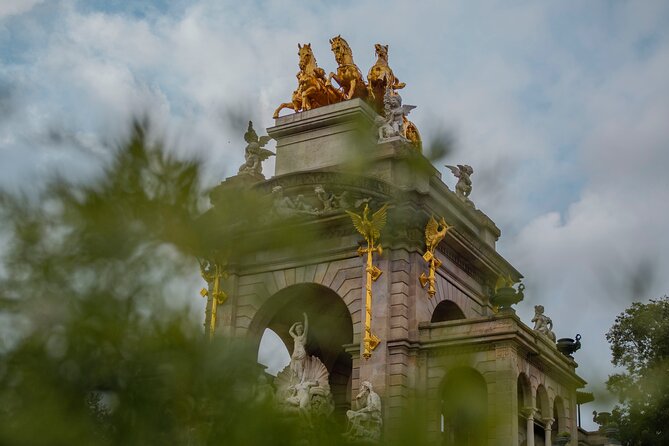
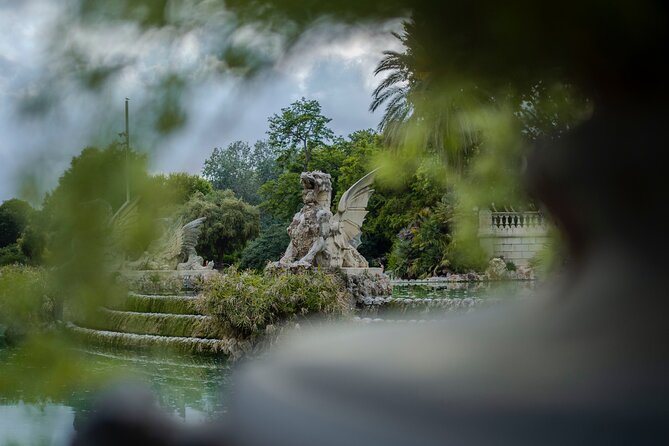
The next stop is Parc de la Ciutadella, about 20 minutes. Designed for the 1859 Barcelona Universal Exposition, the park gives you a different kind of subject from the station.
Here you can practice framing paths, trees, open spaces, and architectural details against greenery. The change in setting is useful. A technique that works on a grand building may need adjustment in a park, where the challenge is choosing a clear subject instead of including too much in the frame.
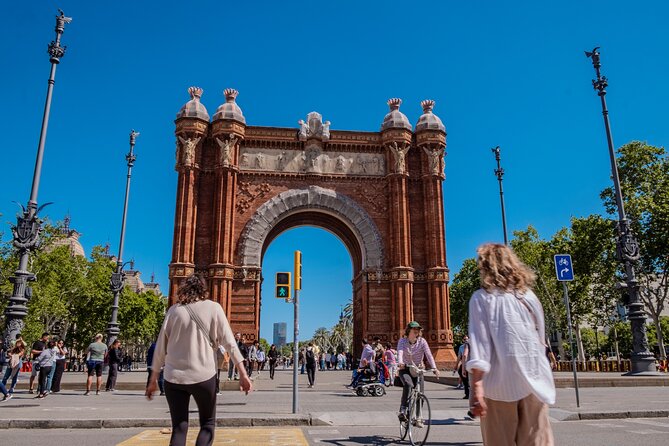
After the park comes the Arc de Triomf, a short walk away. Built for the 1888 Universal Exposition, this red-brick triumphal arch is known for its Neo-Mudéjar design. Its strong shape makes it easier to practice straight-on compositions, off-center framing, and views that include the surrounding avenue.
You get about 10 minutes here. That is enough to learn a few ways to photograph a large landmark, but you will not have unlimited time to wait for a perfect moment. The guide’s role is useful because a quick suggestion about where to stand can save you from taking a dozen nearly identical pictures.
The Palau de la Música and the kissing mural
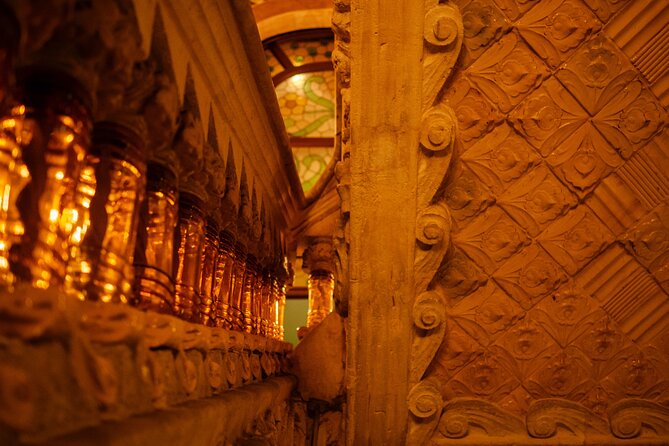
The route continues to the Palau de la Música Catalana, one of Barcelona’s major Modernist buildings. Designed by Lluís Domènech i Montaner, it is a good place to consider decorative detail and color rather than only large shapes.
The stop lasts about 10 minutes and admission is not included, so you should expect to photograph the exterior rather than take an included interior visit. The building’s ornate design can easily overwhelm a small phone screen. A guide can help you choose one detail, doorway, balcony, or section instead of trying to capture everything at once.
Next comes El Mon Neix En Cada Besada, translated as The World Begins in Every Kiss. This artwork at Plaça de Isidre Nonell is made from many small images that form a larger scene when viewed from a distance. It gives you a practical lesson in scale and viewpoint.
You may photograph it close up for texture, then step back to see the full design. That contrast is exactly the kind of exercise that can improve your future city pictures. The stop is listed as 10 minutes, so the guide will likely keep the group focused on a few useful approaches.
The location is identified with El Raval, even though much of the walk centers on El Born and the Gothic Quarter. That is not a problem, but it helps to know that the route crosses several central districts rather than staying within one small neighborhood.
More Photography Tours in Spain
- Private Photography Walking Tour with a Local
★ 5.0 · 32 reviews - Photo Walking Tour Sagrada Familia and Gaudí in Barcelona
★ 5.0 · 28 reviews - Private Barcelona E-Bike Photography Tour
★ 5.0 · 26 reviews - Barcelona Photo Walking Tour Instagrammable Portraits
★ 5.0 · 13 reviews
Barcelona Cathedral and the medieval streets
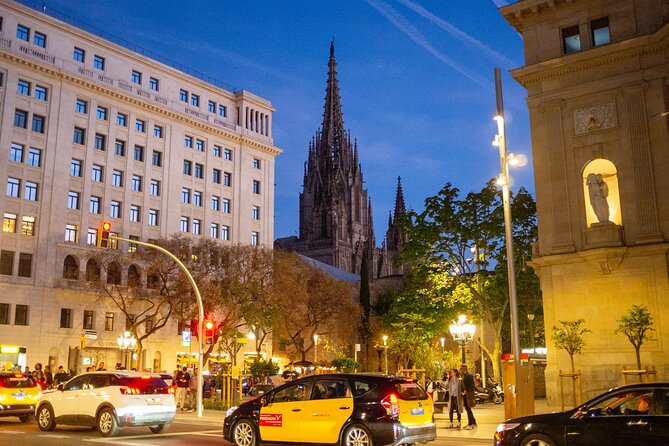
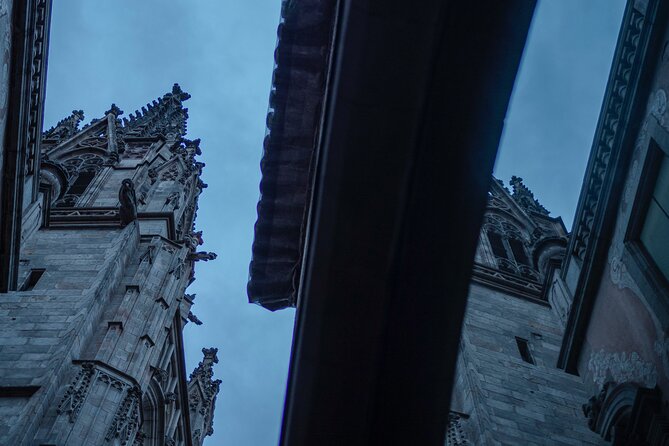
The Barcelona Cathedral, officially Catedral de la Santa Creu i Santa Eulàlia, brings the group into the Gothic Quarter. At Pla de la Seu, it gives you a large Gothic subject after the Modernist buildings and public artwork earlier in the walk.
The cathedral is a good place to practice photographing vertical lines, pointed forms, and the relationship between a major building and the surrounding square. You have about 10 minutes, so this is an outside look and a composition lesson rather than a full cathedral visit.
Casa de l’Ardiaca follows at Carrer de Santa Llúcia, 1. The building is linked to the archdeacon of the medieval cathedral and has both religious and civic associations. Its details help shift the lesson from famous façades to smaller architectural features.
The Pont del Bisbe is next. This picturesque bridge connects two buildings associated with the Palau de la Generalitat and was designed in a Gothic Revival style. It is one of the most recognizable photo subjects in the Gothic Quarter, which also means many people try to photograph it from the same spot.
That is where the guide’s advice about angles becomes valuable. A small change in position, framing, or the amount of surrounding street you include can make the result feel more personal. Do not expect a long wait for an empty view. The practical goal is to work with the scene in front of you.
Squares that change the mood of the walk
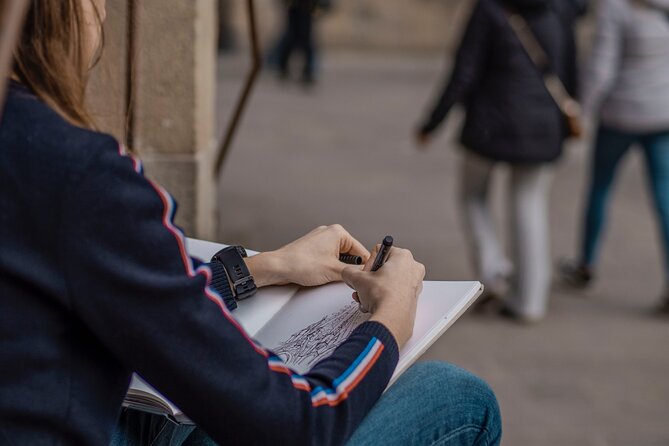
Plaça de Sant Jaume is one of the Gothic Quarter’s main public squares. It has played a central role in Barcelona’s civic life for centuries and remains an important meeting place.
The open space gives you a break from narrow streets. You can practice fitting large buildings into one frame and deciding how much empty space to leave around them. Since the stop lasts about 10 minutes, you will need to make choices quickly.
Plaça Sant Miquel is smaller and quieter. It offers a more modest look at the medieval quarter and local city life. This stop may appeal to you if you prefer intimate street scenes to major monuments. It is also a useful reminder that good photographs do not always need a famous subject.
The route ends at Plaça Reial, just off La Rambla. The square is known for its architecture, arcades, and active atmosphere. It gives you a final chance to work with repeated shapes, open space, and changing movement around the edges of a composition.
The activity ends back at the meeting point, according to the tour details, so confirm the exact return arrangements with the operator when you book. The listed route itself covers a broad section of central Barcelona, and the return adds to the need for comfortable shoes and a charged phone.
What you actually learn during the walk
The included feature is individual guidance on improving your images. That wording matters. You are not simply receiving a history talk while taking your own pictures. The guide is expected to look at how you are composing and offer direct suggestions.
The most useful lessons mentioned in connection with this experience include:
- Finding stronger angles for familiar buildings
- Using reflections to make a picture more interesting
- Framing urban scenes with a phone or DSLR
- Thinking about composition instead of pressing the shutter repeatedly
- Using viewpoints that make ordinary tourist photographs feel more personal
You should still keep expectations realistic. This is not a full photography course, and two hours cannot cover exposure, editing, lenses, and advanced camera controls in depth. Its strength is immediate practice. You see a subject, try an approach, receive a tip, and then use that tip at the next stop.
I especially like that the advice can transfer to future trips. A lesson about reflections at a Barcelona building can help you with windows in London, canals in Amsterdam, or polished interiors anywhere. The value is not limited to the photographs you take that day.
Is $59.90 a fair price?
At $59.90 per person, this is more expensive than a basic free walking route, but it offers something different. You are paying for a guide, a planned route, and personal photography coaching, not just directions between landmarks.
The price makes the most sense if you already enjoy taking pictures and want help improving. It can also suit a beginner who wants a simple introduction without buying equipment or taking a formal class. Group discounts may lower the cost for people booking together.
The value is weaker if you mainly want detailed historical explanations or interior visits. The schedule is too tight for long stops, and admission tickets are not included. Food, drinks, and transportation to and from the meeting point are also your responsibility.
A 4.9 rating from 37 published ratings and a 97 percent recommendation figure suggest strong satisfaction overall, but one practical problem should not be ignored. On one occasion, the guide did not appear at the scheduled start, and the participant learned about the change 15 minutes later. The operator later arranged another time that same day and sent the photographs taken during the walk. That response helped, but you should still confirm the meeting details before setting out.
Who should book this Barcelona photo walk?
This is a good match for you if you:
- Take holiday pictures with a phone and want better results
- Use a DSLR or other camera but want help with composition
- Prefer a small group to a large city tour
- Enjoy both famous sights and smaller street details
- Want a compact introduction to Barcelona’s central districts
- Like learning by taking pictures rather than sitting in a classroom
It is less suitable if you want a slow Gothic Quarter history tour, extensive time inside the cathedral, or a relaxed route with few stops. It may also frustrate you if you need long periods to set up a tripod or adjust advanced camera settings.
Book with a charged device and enough storage for photographs. Comfortable shoes will help because the route moves between El Born, the Gothic Quarter, El Raval, and nearby central areas. Check the weather forecast, too. The experience requires good weather and may be moved or refunded if conditions are poor.
Free cancellation is available if you cancel at least 24 hours before the start time. Changes made within 24 hours are not accepted, and no refund is offered for a late cancellation. If the minimum group size is not met, you will be offered another date or experience, or a full refund.
Should you book it?
Book this walk if you want to return from Barcelona with better photographs and a clearer sense of how to frame city scenes. The strongest part is the direct coaching, especially the practical help with angles, reflections, and composition.
At $59.90, it is a reasonable purchase for someone who values instruction and small-group attention. Just remember that the route is fast, equipment is your responsibility, and the stops are short. If that sounds like the right balance, this is a useful way to connect Barcelona sightseeing with a skill you can keep using long after the walk ends.
FAQ
How long does the photo walking tour last?
The tour lasts approximately two hours.
Where does the tour begin?
It begins at Estación de Francia, at Av. del Marquès de l’Argentera, 6, Ciutat Vella, 08003 Barcelona, Spain.
Where does the activity end?
The activity is listed as ending back at the meeting point.
Do I need a professional camera?
No. You can bring any working mobile phone, including an Android or iPhone, or use another camera that suits you. The tour does not provide camera equipment.
Do I need photography experience?
No previous photography experience is required.
How many people can join the tour?
The maximum group size is 10 people.
Can I cancel for a full refund?
Yes, if you cancel at least 24 hours before the experience start time. Cancellations made less than 24 hours in advance are not refunded. If poor weather or an insufficient minimum group causes the operator to cancel, you will be offered another date or experience, or a full refund.
Just added around Barcelona
- Private Photography Walking Tour with a Local★ 5.0 · 32 reviews
- Private and Personalized Photography Adventure in Barcelona★ 5.0 · 51 reviews
- Shine in the Streets of Barcelona: cinematic & candid photos★ 5.0 · 3 reviews
- Private Tour: Personal Travel Photographer Tour in Barcelona★ 5.0 · 2 reviews
- Photo Walking Tour Sagrada Familia and Gaudí in Barcelona★ 5.0 · 28 reviews
- Timeless Barcelona: Your Personal Photoshoot★ 5.0 · 39 reviews
- Proposal Photographer in Barcelona★ 5.0 · 9 reviews
- Private Photo Session with a Local Photographer in Barcelona★ 4.5 · 3 reviews
Photography Tours, side by side.
Rhodes: E-bike Highlights Sunset or Morning Photo Tour
Read our review →