
Review · NIGHT & ASTRO PHOTOGRAPHY
Milky Way Photography Workshop in Acadia National Park
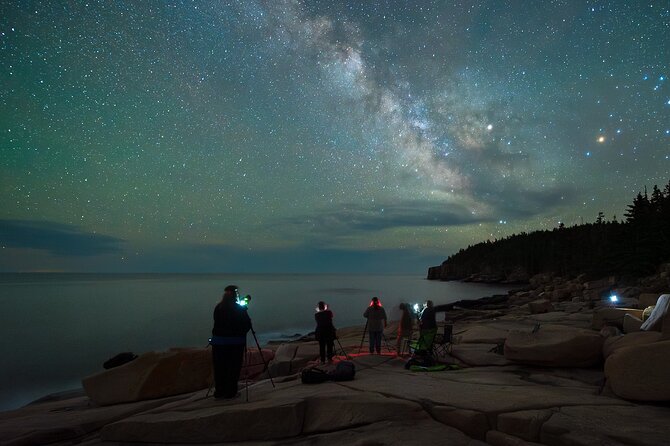
The best part of this Acadia workshop is that it treats night photography as more than a lesson in camera settings. You’ll work on celestial storytelling, using stars, rock, water, and coastal shapes to make images with a sense of place. Christopher, or Chris, guides the work from planning in PhotoPills through shooting and editing.
I like the small maximum of five people, which gives you room to ask questions in the dark without waiting behind a crowd. I also like the mix of field work and a private post-processing session, since many astrophotography workshops stop once the shutter closes. The main drawback is the price: at $2,500 per person, this is a serious investment, and meals and lodging are extra.
Key points at a glance
- Five nights of focused instruction: The workshop lasts about five days and works in late-night and evening time slots suited to night-sky photography.
- Five Acadia locations: You’ll work at Jordan Pond, Otter Cliff, Bubble Pond, Sand Beach, and Eagle Lake.
- Chris teaches the full process: Instruction covers planning, manual camera work, stacking, focus stacking, time-lapse photography, Lightroom, and Photoshop.
- A genuinely small group: No more than five people take part, with private transportation inside Acadia National Park.
- A useful camera requirement: Bring a DSLR or mirrorless camera, a wide lens at f/2.8 or faster, a sturdy tripod, and an intervalometer.
- Weather matters: Poor conditions can cancel the workshop, with a new date or full refund offered.
What this Acadia workshop is really about
This is not a casual stargazing outing with a few quick tips. It is a structured photography workshop for people who want to make polished night images and understand how those images come together.
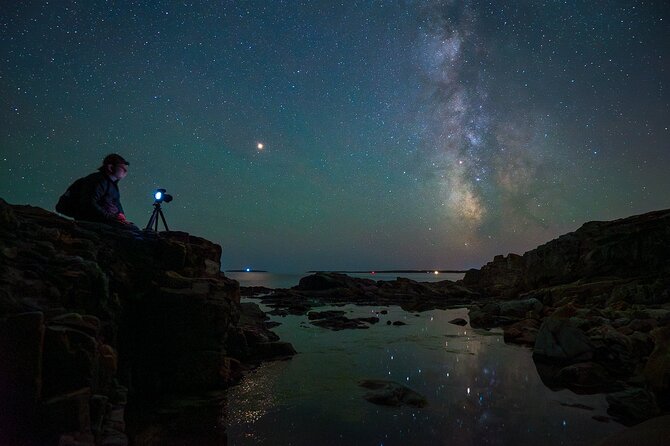
The work begins before you reach the viewpoint. You’ll learn to use PhotoPills to plan the Milky Way’s position and line it up with foreground subjects. That planning matters in Acadia, where a small change in viewpoint can place the galaxy above a cliff, pond, beach, or stand of trees.
In the field, Chris covers single exposures and stacked images. You may make one exposure for the stars and another, longer exposure for the foreground, then blend them in Photoshop. This is a practical way to handle the limits of night photography while keeping the final picture believable.
The workshop also reaches beyond still images. Instruction has included focus stacking, time-lapse photography, moving clouds, star movement, panoramic Milky Way images, and software for turning time-lapse frames into video. You should not expect to master every one of these topics equally in five days, but the range gives you tools that can serve well after you leave Maine.
More Night and Astro Photography in the USA:
- Mauna Kea Stargazing Experience + Photos
★ 5.0 · 261 reviews - Private Guided Night Photography Tours on Cape Cod (for one photographer.)
★ 5.0 · 38 reviews - Moab: The Windows Astro-Photography and Stargazing Hike
★ 4.8 · 36 reviews
Why the group size matters after dark
A maximum of five people is one of the strongest features here. Night photography involves slow setup, repeated test shots, focusing in low light, and checking images on a small screen. With a large group, a teacher can easily spend several minutes at each tripod while everyone else waits.
Here, you should have a better chance to get direct help with the details that cause trouble: finding focus, choosing exposure settings, composing a foreground, or deciding when a stacked sequence is worth the effort. Private transportation also keeps the group together as you move among Acadia’s locations.
Water and snacks are provided in the vehicle. That is a modest inclusion, but useful when the schedule runs late and normal meal times no longer apply. Meals themselves are not included, and neither is lodging, so you’ll need to build those costs into the trip.
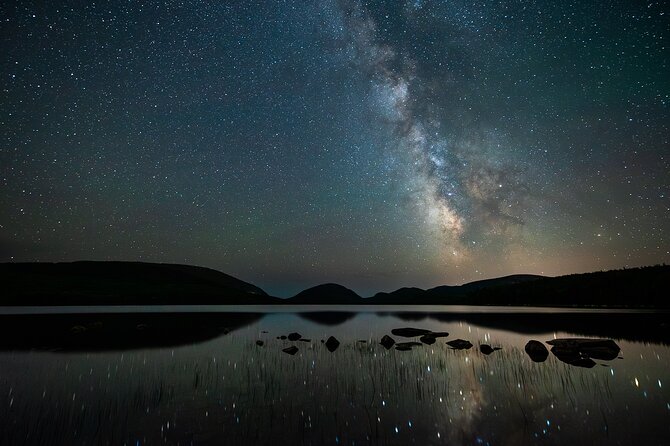
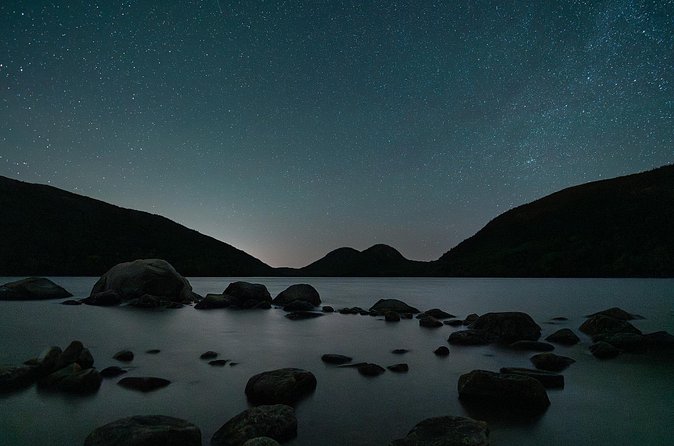
Jordan Pond: reflections and careful composition
Jordan Pond is the first listed stop, and it gives the workshop a strong setting for learning how to balance sky and foreground. The pond can provide a dark, simple lower half to the frame, while the surrounding shapes give the Milky Way somewhere to lead the eye.
This is a good place to work on composition rather than simply pointing upward. Chris can help you decide how much water, shoreline, and sky belong in the picture. If your foreground is too dark, you’ll learn why a separate exposure or focus stack may help.
The drawback is that night scenes beside water can be demanding. Reflections, wind, and changing light can complicate a clean image. That is exactly why Jordan Pond has value as a teaching location, but you should not expect every frame to work on the first try.
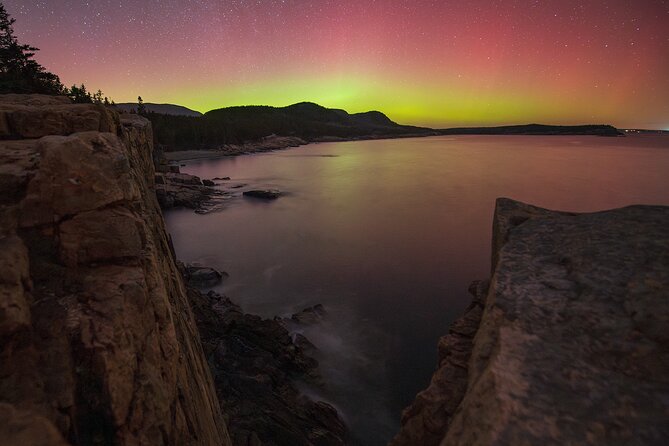
Otter Cliff: the coastal story
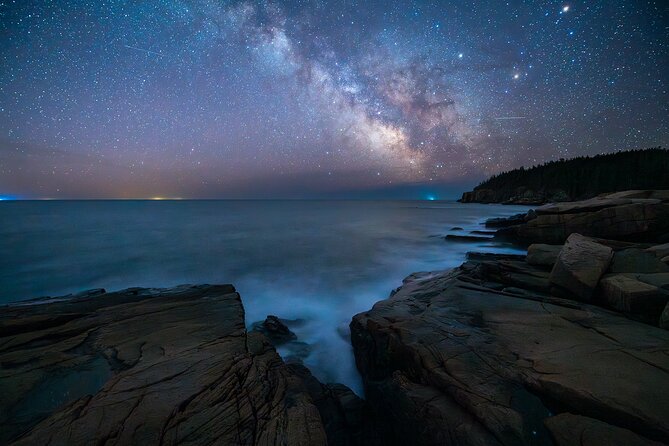
Otter Cliff brings the Atlantic coast into the picture. Its rock forms can give a Milky Way image a stronger sense of scale and place than a plain sky photograph. The goal is not only to record stars, but to show where you are.
This stop is especially suited to the workshop’s focus on foreground elements. You’ll work on using the cliff and shoreline as visual anchors, rather than treating them as dark shapes at the bottom of the frame. A well-planned alignment can make the sky appear to grow out of the coastal setting.
Coastal shooting has practical limits. You should expect uneven ground and a need for care around rocky areas, which helps explain the moderate physical fitness requirement. A sturdy tripod is essential here, and you should be comfortable carrying and setting up your own equipment.
More Photography Workshops and Lessons in the USA:
- 2-Hour Photography Class While Touring Downtown Santa Fe, Smart Phones Welcome!
★ 5.0 · 108 reviews - Custom Half-Day Photo Tour with Photography Lessons from Asheville
★ 5.0 · 43 reviews - Private Digital Photography Workshop
★ 5.0 · 4 reviews - Paris Photography Masterclass – Private Photography Lesson
★ 5.0 · 112 reviews
Bubble Pond: quieter frames and layered depth
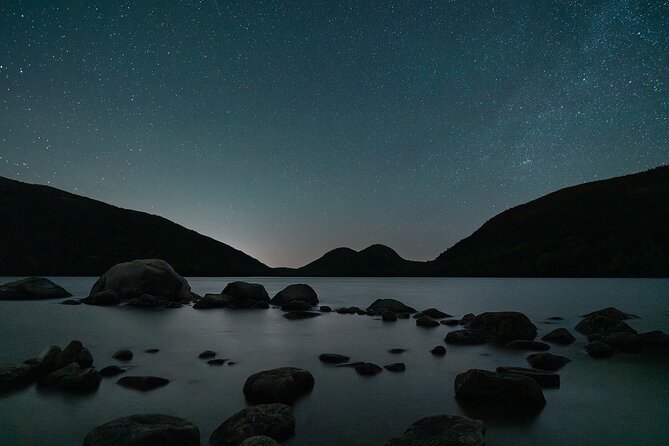
Bubble Pond offers another kind of foreground. Instead of an open ocean edge, you’ll work with water and surrounding natural forms to create layers in the image. This can be a useful setting for learning how different distances affect focus and depth.
The instruction on focus stacking fits naturally into this type of scene. You might make a series of frames with different focus points, then combine them so the foreground and sky remain sharp. The method requires patience, but it can produce a cleaner result than forcing one exposure to do everything.
The setting also gives you a chance to compare compositions. A workshop is more useful when you learn why one angle works better than another, not just where to put the tripod. Chris’s teaching style, described as calm and patient, should suit photographers who prefer to test ideas rather than rush from one setup to the next.
Sand Beach: a clear sense of place
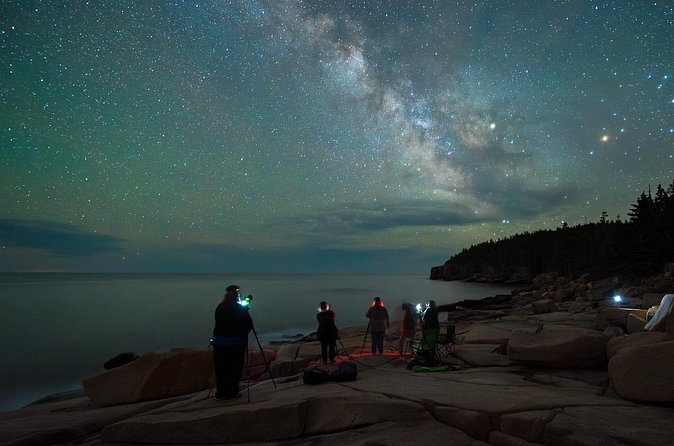
Sand Beach gives the workshop a broad coastal view and a foreground with a different texture from the rocky stops. It is a useful place to think about simple compositions, strong lines, and the way the Milky Way can guide the eye across an open scene.
You’ll likely spend time making several versions of the same basic idea: a single exposure, a stacked sky, and perhaps a separate foreground exposure. The point is not to collect the most files. It is to understand which method gives you the best balance of detail, noise, movement, and mood.
The beach setting can also expose the limits of night work. If the sky is bright, hazy, or clouded, the Milky Way may not appear as planned. The operator requires good weather, so a poor forecast can change the schedule or lead to cancellation. That risk is part of any night-sky workshop, not a flaw unique to this one.
Eagle Lake: a final test of your skills
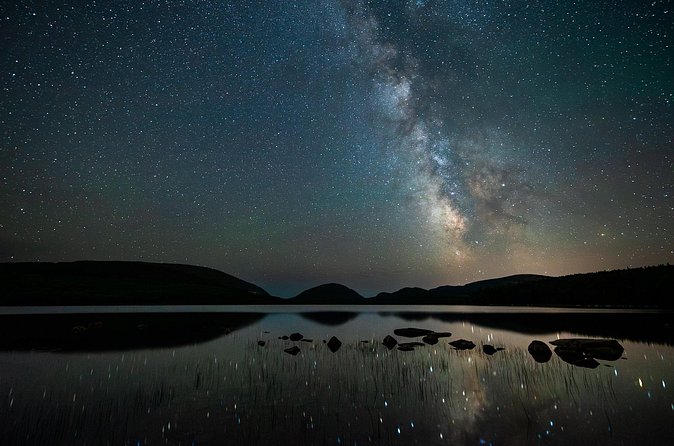
Eagle Lake rounds out the route with another water-based setting. By this point, you should have had several chances to practice planning, tripod setup, focus, exposure, and composition. The value of a later stop is that you can make more of the creative decisions yourself.
This is where the workshop can shift from following instructions to solving problems. You may decide how much sky to include, whether a single exposure is enough, or if you want to build a panorama or stacked sequence. The five locations are not interchangeable, and comparing them helps you see how foreground choice changes the story.
Conditions remain the wild card. Clear skies on one night do not guarantee clear skies on another. One especially successful outing described in the supplied information benefited from clear weather on the first night, which shows both the reward and the uncertainty of this kind of trip.
The classroom work is as important as the night shoots
Many people can make a technically decent star photograph and still struggle with the final file. This workshop places unusual weight on post-processing, with instruction in Lightroom and Photoshop and a one-on-one session through Discord after the field work.
That private follow-up is valuable because editing questions often appear later. You may not notice a problem with noise, color, blending, masking, or focus until you review the files at home. A personal session gives you a place to ask about your own images rather than watch a general demonstration.
The editing topics are broad. You may work with a Milky Way exposure, a longer foreground exposure, focus-stacked frames, panoramic sequences, or time-lapse material. You will need a basic understanding of manual settings and post-processing before joining, so this is not designed as a first-ever camera course.
What equipment you need
The equipment list is practical but firm. Bring:
- A DSLR or mirrorless camera that handles long exposures
- A wide-angle lens with an aperture of f/2.8 or faster
- A sturdy tripod
- An external intervalometer, unless your camera has one built in
You should also know the basics of manual camera operation and simple editing. The workshop focuses on improving your technique, not teaching every camera control from scratch.
A fast wide-angle lens matters because night photography demands as much light as possible. A solid tripod matters because the exposures and stacked sequences cannot tolerate movement. An intervalometer helps you fire a run of images without touching the camera, which is useful for stacking and time-lapse work.
The price and what you receive for it
At $2,500 per person, this is not a low-cost add-on to a Bar Harbor holiday. The price makes more sense if you see it as a multi-day private photography course with transportation, field instruction, access to five Acadia locations, water and snacks, and a personal editing session.
The group cap helps the value. You are not paying only for admission to a scenic spot. You are paying for repeated opportunities to ask questions, test methods, and receive help with your own files. Past participants have returned for the workshop more than once, which suggests the format can reward photographers who want to build on earlier skills.
Still, you must add lodging, meals, and the park entry cost. The supplied details list a $20 entrance fee and refer to a valid Yellowstone National Park pass, which does not match an Acadia National Park workshop. Confirm the correct pass or fee with Wildscape Adventure before paying, rather than assuming a Yellowstone pass applies.
Timing, weather, and physical demands
The listed operating window runs from April 26, 2024, through June 20, 2026, with Tuesday through Saturday sessions shown from midnight to 3:30 a.m. and from 7 p.m. to 11:30 p.m. These are sensible hours for a night-sky program, but they can be hard on your sleep schedule.
Plan your Bar Harbor stay around late nights and possible recovery time. The workshop lasts about five days, and astrophotography often requires patience rather than constant motion. You will also need moderate physical fitness for carrying gear and working at outdoor locations.
Weather can change everything. If poor weather forces a cancellation, you are offered another date or a full refund. If you cancel, you must do so at least 24 hours before the start time for a full refund. Changes or cancellations inside that period are not accepted.
Who should book this workshop
I would recommend it to a photographer who already understands aperture, shutter speed, ISO, manual focus, and basic editing, but wants a stronger night-sky workflow. It also suits someone who wants instruction in several related fields, including time-lapse, panoramas, focus stacking, and Photoshop blending.
It is less suitable if you want a relaxed sightseeing trip with only a few photo stops. The late hours, gear requirements, weather risk, and high price make this a focused course. You should also be comfortable spending time on editing, since the final image is an important part of the teaching.
Chris’s reported strengths are his patience, calm approach, and ability to guide people from pre-shoot planning through final edits. That full process is the main reason to choose this workshop over a simple guided drive through Acadia at night.
Should you book it?
Book this experience if you want to leave Acadia with a repeatable method for making night photographs, not just a handful of lucky files. The small group, private transport, five distinct locations, and one-on-one editing session give it real value for serious photographers.
Skip it if $2,500 feels strained, if you need lodging and meals included, or if you are still learning basic camera controls. For the right photographer, Wildscape Adventure offers a concentrated way to work with Acadia’s ponds, cliffs, beach, and stars while building skills that continue to serve long after the Milky Way has moved out of frame.
FAQ
How long does the Milky Way Photography Workshop last?
The workshop lasts approximately five days.
Where does the workshop take place?
It takes place in and around Acadia National Park, with Bar Harbor listed as the location.
Which Acadia locations are included?
The listed stops are Jordan Pond, Otter Cliff, Bubble Pond, Sand Beach, and Eagle Lake.
How many people can join?
The workshop has a maximum of five travelers.
Is transportation included?
Yes. Private transportation is included for travel within Acadia National Park during the workshop.
What camera equipment do I need?
You need a DSLR or mirrorless camera capable of long exposures, a wide-angle lens with an aperture of f/2.8 or faster, a sturdy tripod, and an external intervalometer unless your camera has one built in.
Are lodging and meals included?
No. Lodging and meals are not included. Water and snacks are provided in the transport vehicle.
What happens if the weather is poor?
If poor weather causes the experience to be canceled, you will be offered a different date or a full refund.
More National Park Trips around the USA
- Half-Day Rocky Mountain National Park “Mountains to Sky Tour” – RMNPhotographer
★ 5.0 · 89 reviews - Private Guided Photography & Walking Tour of Zion National Park
★ 5.0 · 75 reviews - Full-Day Rocky Mountain National Park “Over The Top Tour” – RMNPhotographer
★ 5.0 · 42 reviews - Exquisite Wildlife & Wilderness Photo Tour Anchorage -Whittier
★ 5.0 · 12 reviews
Just added around the USA
- Focus on Haines Private Nature / Photography tour★ 5.0 · 38 reviews
- Exclusive Photography Tour Haines Departure★ 5.0 · 19 reviews
- Private Proposal Professional Photo Shoot – Grand Canyon★ 4.5 · 2 reviews
- Hire Photographer, Professional Photo shoot – Grand Canyon★ 5.0 · 29 reviews
- Photoshoot in Grand Canyon★ 5.0 · 2 reviews
- Full Day Guided Wildlife Photography Tour In Yellowstone★ 5.0 · 6 reviews
- Miami incredible Photoshoot – Private Session with a Professional Photographer★ 5.0 · 2 reviews
- Modern Vibe Fort Lauderdale Las Olas Photography Session★ 5.0 · 2 reviews
Night & Astro Photography, side by side.
Tokyo by Night Photography Tour (Private Option Available)
Read our review →
Night Photo Session in a Fiat 500 with Aperol Spritz
Read our review →
Private Guided Night Photography Tours on Cape Cod (for one photographer.)
Read our review →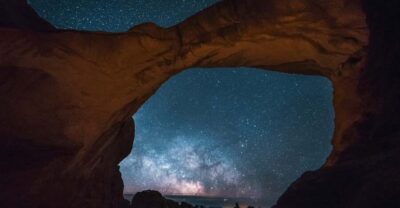
Moab: The Windows Astro-Photography and Stargazing Hike
Read our review →Lists this one turns up in