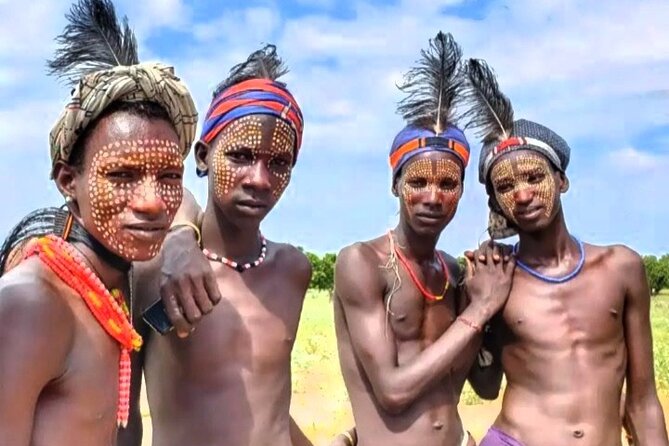
Review · PHOTOGRAPHY TOURS
9 days Omo Valley Tribes and Photography Tour
The heart of this journey is the Lower Omo Valley, where you visit Mursi, Hamer, Dassanech, Karo, and Konso communities rather than simply passing through Ethiopia’s southern towns. I like the mix of village life, open-air markets, wildlife, and big views. I also like that the route includes both a flight to Jinka and a boat trip on Lake Chamo, so the nine days do not feel like one long road transfer.
The main tradeoff is distance. Several days involve seven or eight hours on the road, and the final return to Addis takes about ten hours before your evening airport transfer. You need a moderate fitness level, and the operator says the trip is not suitable for people with health problems.
Key points before you book

- Five major cultural stops: Visit Mursi, Hamer, Dassanech, Karo, and Konso communities across southern Ethiopia.
- A private trip for your group: Only your party takes part, with private transport and accommodation included.
- One flight saves time: You fly from Addis Ababa to Jinka on Day 2, then travel overland through the Omo Valley and onward to Hawassa.
- Strong photography variety: Expect people and village scenes, tribal markets, bamboo houses, crocodiles, water birds, mountains, and sunset views.
- Long driving days: The route includes seven to ten-hour days, especially between Turmi, Konso, Arba Minch, Hawassa, and Addis Ababa.
- Meals are included: Breakfast, lunch, and dinner are listed for all nine days. Alcoholic drinks and tips are extra.
Addis Ababa gives you a useful first look

Your first day begins with a city tour of Addis Ababa. This is not just a gentle introduction before the real trip. It gives you a quick look at Ethiopia’s human past, Orthodox Christian tradition, highland scenery, and everyday commerce.
At the National Museum of Ethiopia, you see the famous fossil remains of Lucy. The visit takes about an hour, and admission is included. For many people, Lucy is the headline, but the museum also gives you a starting point for understanding Ethiopia’s place in human history and its long cultural story.
From there, you go uphill to Entoto Natural Park. The view back over Addis Ababa is the reason to come. You can see the city spread below the high ground, with open scenery around the park. It is a good place to take photographs and adjust to the altitude and pace of the capital.
The Holy Trinity Cathedral was built by Emperor Haile Selassie in 1944. It is one of the most important Ethiopian Orthodox churches and adds a religious and architectural layer to the day. Allow about an hour here.
You finish at Merkato, one of Africa’s largest open markets. This is the least polished and most energetic stop on the city route. You see different sections where local people conduct business, and you get a clearer sense of Addis as a working city rather than a collection of museums and viewpoints.
The full first day has several short stops, so it should suit you if you prefer variety. It may feel busy if you want a slow introduction. The good news is that the schedule places the major sights close together in theme: origins, city views, religion, and commerce.
More Photography Tours in the world:
- Tromso: Northern Lights Photography Tour
★ 4.2 · 843 reviews - Barcelona E-Bike Photography Tour
★ 5.0 · 843 reviews - Tromsø: Northern Lights Photography Tour
★ 4.8 · 788 reviews
Flying to Jinka and meeting the Ari community
On Day 2, you fly from Addis Ababa to Jinka. That flight matters because it prevents the southern portion of the trip from becoming an exhausting overland journey from the capital. The schedule gives you about three hours in Jinka for the museum and an Ari village.
Jinka is an important base for visiting the Omo Valley. The Ari are one of the local communities in the area, and the village visit gives you an early cultural encounter before the route reaches the more remote communities farther south.
The day is short compared with what follows. That is useful. You can settle into Jinka, visit the museum, and see an Ari village without immediately adding a long drive. From here on, the road becomes a much bigger part of your experience.
Mursi country and the road to Turmi
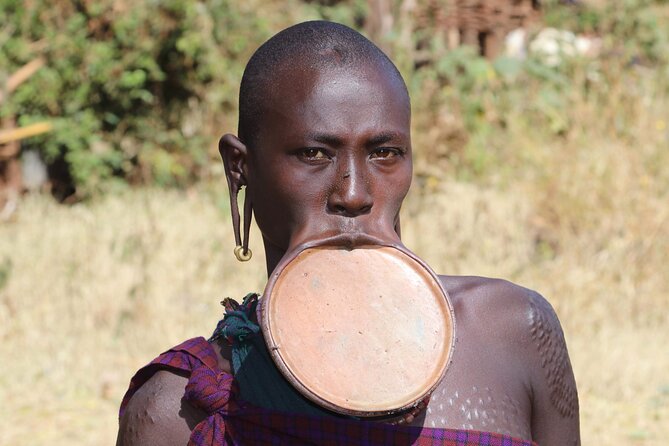
Day 3 starts with a morning drive into Mago National Park to visit a Mursi village. The Mursi are widely known for the lip plates worn by some women, but it is important to look beyond the most photographed detail. The visit is about a living community, not a staged museum display.
You should approach photography with care and follow your guide’s advice about when and how to take pictures. A photography trip gives you more chances to make strong images, but it also creates a responsibility to treat people with respect. Ask before taking close portraits and keep your camera from becoming the only reason you are present.
After the Mursi visit, you drive southwest toward Turmi, the main center associated with the Hamer. The day is listed at about seven hours, so expect an early start, road time, and changing scenery between stops.
Turmi is a practical base for the next part of the route. It is also the point where the trip shifts from one cultural visit to a fuller sequence of villages, markets, and river country.
Dassanech villages and a local boat on the Omo River
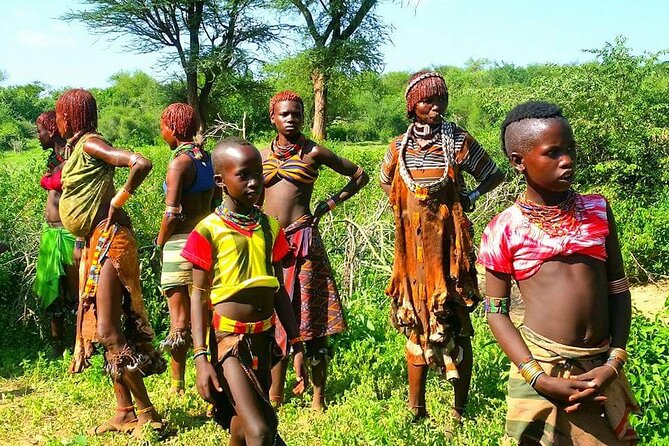
Day 4 takes you south from Turmi to Omorate. The Dassanech communities live close to the Ethiopian and Kenyan border, along the Omo River. This is one of the most distinctive parts of the route because you cross the river by local boat.
The Omo flows toward Lake Turkana in Kenya, and the river gives this cultural trip a strong geographic sense. You are not just visiting isolated villages. You are following a major river through a dry southern region where water shapes settlement, movement, and daily life.
After the Dassanech visit, you return to Turmi for lunch. The afternoon continues with a Hamer village, timed to include sunset. That combination is excellent for photography: a village setting late in the day, warmer light, and time to work on images instead of rushing through a single stop.
The day runs about seven hours. The boat crossing is a simple local transport experience rather than a luxury cruise, so keep your expectations practical. Its value comes from place and access, not comfort or onboard facilities.
More photo tours and shoots in the world:
- Bali: Full-Day Instagram Highlights Tour
★ 4.8 · 7,817 reviews - #1 Northern Lights Tour In Iceland from Reykjavik with PRO photos
★ 4.5 · 2,887 reviews - ️ Bali Instagram Tour: The Most Famous Spots (Private & All-Inclusive)
★ 5.0 · 2,857 reviews - Silfra: Fissure Snorkeling Tour with Underwater Photos
★ 4.9 · 2,731 reviews
Karo, Dimeka market, and the long run to Konso
Day 5 is one of the hardest-driving days, at about eight hours. You leave early to visit the Karo, who live near the Omo River, then return toward Turmi before continuing to Konso.
The Karo stop adds another distinct community to the route. Afterward, the trip passes through Dimeka, a small Hamer town with a major tribal market held on Saturdays. If your dates place you there on Saturday, this can be one of the most useful stops for seeing local trade and a wider mix of people in one place.
Market visits often offer more context than a quick village stop. You see goods being exchanged, people arriving from surrounding areas, and the social role of the town. Still, the timing matters. The schedule specifically identifies Saturday as market day, so do not assume the full market experience will be available on another day.
The road to Konso goes through Woyto, with striking scenery along the way. You arrive in Konso late in the afternoon and spend the night there. This is a day for patience. The payoff is not only the Karo visit or Dimeka market, but the change from the Omo Valley toward the terraced highlands around Konso.
Konso terraces and the road to Arba Minch
Konso is known for its terraced fields and distinctive villages. On Day 6, you visit a nearby Konso community and then the Konso Museum before lunch.
The terraces are especially valuable because they show how people have shaped difficult ground for farming. The villages are not simply scenic backdrops. They reflect an organized way of living adapted to the local terrain. The museum helps put the visit into a wider cultural setting.
After lunch, you drive north to Arba Minch, the capital of the Gamo zone. The trip takes about eight hours in total, and you should expect to reach Arba Minch in the late afternoon. There is some time to relax at your hotel and enjoy the town’s views.
This is a welcome change after the more remote Omo Valley stops. Arba Minch acts as both a rest point and a base for the next day’s water and village excursions.
Lake Chamo crocodiles and Dorze bamboo houses
Day 7 begins with a short drive to Lake Chamo, about 12 kilometers from Arba Minch. A boat trip takes you out to see large Nile crocodiles and aquatic birds. This is the clearest wildlife portion of the tour, and it breaks up the long sequence of cultural visits.
The boat trip lasts until around midday. Keep your camera ready for animals and birds rather than expecting a guaranteed close encounter at a precise moment. The lake is also a chance to enjoy open water and a quieter setting after several road-heavy days.
After lunch in Arba Minch, you drive about 30 kilometers to Dorze village. Dorze is known for traditional bamboo houses and weaving. The houses give you something very different from the village styles seen earlier in the Omo Valley, while the weaving adds a practical craft element to the visit.
You return to Arba Minch at the end of the day. The schedule lasts roughly seven hours, but the distances are shorter than on the Omo Valley transfer days. I see this as one of the tour’s best-balanced days because it combines wildlife, food, architecture, and craft without requiring an all-day drive.
Hawassa, Wolayta, Sidamo, and the lake
After breakfast on Day 8, you drive 272 kilometers to Hawassa. The road passes through green mountain scenery, and you stop around Sodo to see Wolayta and Sidamo villages.
This is another transfer day, listed at about seven hours. The scenery does much of the work, and the route gives you a sense of how quickly southern Ethiopia changes from dry river country to greener highland areas.
You arrive in Hawassa around midday. The afternoon is devoted to Lake Hawassa and the main sights of the city. After several demanding days, the lake provides a slower finish to the regional portion of the trip.
The day will suit you if you enjoy seeing how communities and scenery change along a road route. It may feel thin if you prefer a fixed base with several substantial activities. The schedule is best understood as a scenic transition with a lake visit, not as a full city sightseeing day.
Fish market, Lake Ziway, and the return to Addis
The final day starts with a visit to the fish market in Hawassa. This is a practical, local stop and a different kind of photographic setting from the villages. It gives the morning a clear purpose before the long drive north.
On the road back to Addis Ababa, you pass Lake Ziway and see birds around the lake. The drive takes about ten hours, so this is the trip’s most demanding day. You arrive in Addis in the late afternoon, then have a farewell program before the airport transfer.
Do not schedule an independent activity for this day. The road distance, stops, and airport timing leave little room for delays. The farewell program is a pleasant close, but the real value of the day is the final look at Ethiopia’s lakes and birdlife before departure.
What the price and inclusions mean
The supplied price is shown as $0.00, which is not a usable final price for a nine-day private trip with accommodation, transport, meals, entrance fees, and a domestic flight. Ask Sycamore Ethiopia Tours for the current quotation before booking and confirm exactly what is covered.
The listed inclusions are substantial:
- Private transport
- Accommodation
- All fees and taxes
- One flight per person
- Nine breakfasts
- Nine lunches
- Nine dinners
That package can offer good value if the quoted amount is reasonable, especially because the route includes a flight, private driving, a local boat trip, and several entrance or activity costs. You still need to budget for visa fees, international airfare, alcoholic drinks, and tips.
A private format matters here. The route has long days and several cultural visits where timing and local guidance affect the experience. A private vehicle also means your group does not need to match the pace of strangers. The tradeoff is that a private trip can cost more than a shared departure, and the per-person cost depends heavily on the size of your group.
Haile is the named organizer associated with the trip, and direct accounts describe unusually personal attention, including a feeling of being treated like family rather than as a booking number. That is useful information if you value close support during a complicated route, but you should still confirm who will guide each day and who will drive the vehicle.
Who should book this Omo Valley journey
I would choose this trip if you want a broad southern Ethiopia route in a short period. It works especially well for you if your priorities are:
- Indigenous communities and village visits
- Portrait and documentary photography
- Wildlife and birds
- A private vehicle and private group
- A mixture of road travel, flying, and boating
- A first look at Addis Ababa, Arba Minch, Hawassa, and the Omo Valley
You should think twice if you dislike long drives, early departures, hot or remote conditions, or changing accommodation. The operator asks for moderate physical fitness and says the experience is not recommended for anyone with health problems.
Cultural visits also require maturity. The Mursi lip plates and other visual traditions can attract intense camera attention, but the people you meet are not props. Use your guide’s direction, ask permission for portraits, and take time to observe village life beyond the most famous images.
Cancellation is flexible only up to a point. You receive a full refund if you cancel at least three full days before the start time. Cancellations or changes inside that window are not refunded or accepted. The trip also depends on suitable weather, with a new date or full refund offered if poor weather causes cancellation.
Should you book it?
Book this tour if you want the Omo Valley as part of a larger southern Ethiopia journey rather than a narrow tribal excursion. The strongest features are the range of communities, the private format, the Jinka flight, the Dassanech boat crossing, the Lake Chamo wildlife, and the photography time around Turmi.
Before paying, get the real price in writing and ask for the exact accommodation list, flight details, vehicle arrangements, guide assignments, and plan for photography permissions. If you are comfortable with long road days and a full schedule, this is a well-shaped introduction to southern Ethiopia. If you want slow travel, luxury, or guaranteed close wildlife sightings, choose a shorter and more focused trip.
FAQ
How long is the Omo Valley photography tour?
The experience lasts approximately nine days, with travel from Addis Ababa through Jinka, Turmi, Konso, Arba Minch, and Hawassa before returning to Addis Ababa.
Is transport included?
Yes. Private transport is included, along with one flight per person, accommodation, fees, and taxes.
Which communities can I visit?
The route includes Ari, Mursi, Hamer, Dassanech, Karo, Konso, Dorze, Wolayta, and Sidamo communities.
Are meals included?
Yes. Breakfast, lunch, and dinner are listed for all nine days. Alcoholic drinks are not included.
Is this a private tour?
Yes. Only your group participates in the activity.
What happens if I need to cancel?
You can receive a full refund if you cancel at least three full days before the experience begins. Cancellations or changes made less than three full days before the start time are not refunded or accepted.
Just added around the world
- ️ Hanoi Instagram Tour: Most Famous Spots (Private & All-Inclusive)★ 5.0 · 12 reviews
- Into the Thieves Market Hanoi Photo Tour★ 5.0 · 10 reviews
- Hanoi Explorer Photo Tour★ 5.0 · 40 reviews
- Cultural Hanoi Photo Walk – A Street Photography Tour★ 5.0 · 6 reviews
- Hanoi Street Photography with a Pro – Phone & Camera★ 5.0 · 27 reviews
- ️ Ha Long Bay Instagram Tour: Most Famous Spots (Private & All-Inclusive)★ 4.5 · 4 reviews
- Private Hanoi Photoshoot – Iconic Spots & Hidden Gems★ 5.0 · 16 reviews
- 4 hour individual photo tour of Hamburg★ 5.0 · 2 reviews
Photography Tours, side by side.



Rhodes: E-bike Highlights Sunset or Morning Photo Tour
Read our review →