Review · PHOTO TOURS & PHOTOSHOOTS
TRIBES OF THE OMO VALLEY – 8 Days PHOTOGRAPHY EXPEDITION
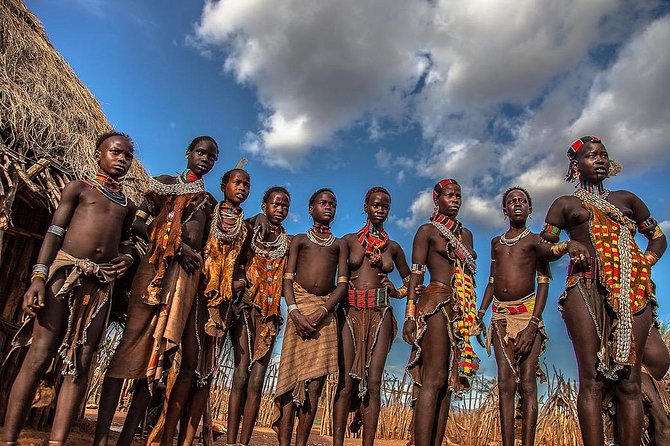
The heart of this expedition is not a quick cultural stop, but several days among Omo Valley communities, where village life, cattle, body painting, farming, and ceremonies provide the raw material for serious photography. You travel east of the Omo River by 4×4, with time to work in morning and afternoon light rather than snatch a few hurried portraits.
I like the mix of remote village access and clear regional variety. Konso’s terraced hills, the Hamer’s painted bodies and elaborate hairstyles, the Mursi village near Mago National Park, and the Dassenech visit by boat each offer a different visual story. I also like the private format, which gives your group more control over stops and shooting time. The tradeoff is the road travel: long drives, basic lodging in some places, a moderate fitness requirement, and extra costs for the domestic flight and photography fees.
Key things to know before you book
- Several days in the Omo Valley: You have time around Jinka and Turmi, not just a single village visit squeezed between transfers.
- A strong range of subjects: The route includes Konso, Mursi, Ari, Hamer, and Dassenech communities, with additional tribal visits possible depending on local conditions.
- Long 4×4 transfers: The road connections include drives of roughly 142 to 290 kilometers, so this is an expedition, not a relaxed resort holiday.
- Photography costs extra: The advertised price includes entrance fees, but domestic air travel and photography fees are not included.
- Private group format: Only your own party participates, a useful advantage when you need to manage lenses, light, and timing.
- Addis Ababa bookends the trip: You arrive through Bole International Airport and return for a traditional Ethiopian dinner before your flight home.
Why this Omo Valley expedition is different
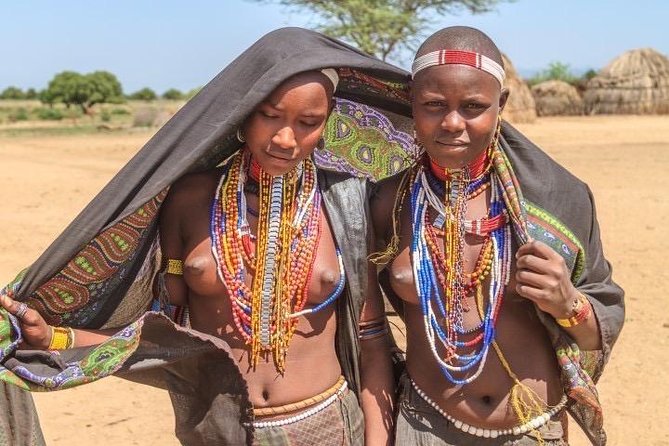
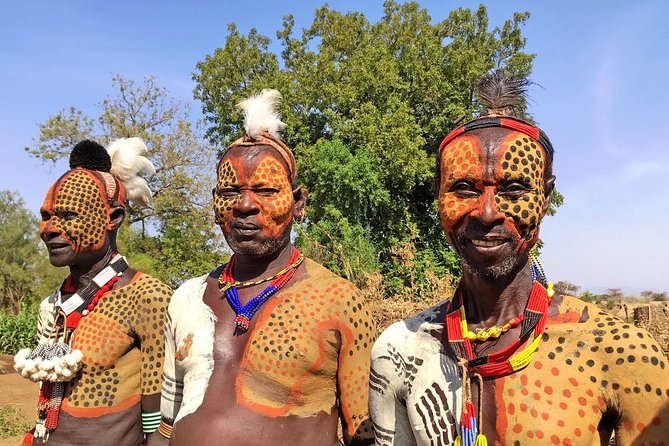
The Omo Valley is a powerful place for photography because the trip gives you more than staged costume portraits. You may work around daily tasks, cattle, farming, face and body painting, hairstyles, village homes, and market activity. The strongest images often come from watching patiently, not firing off a quick frame and moving on.
That patience is easier here than on a standard sightseeing circuit. The schedule places you in the southern region for several nights, with a second afternoon around Turmi available for another Hamer village or your own photography plan. Conditions can still change, and ceremonies are not guaranteed, but the structure leaves room for better light and repeat visits.
The route is also useful for photographers who want contrasts. Konso brings terraced agriculture and carved wooden grave markers. Mursi culture near Jinka is known for women who wear large clay plates in their lower lips. Hamer villages offer striking hair design and pigment patterns. Around Omorate, the Dassenech, also called Geleb, live along the Omo River, and reaching their village by boat adds a memorable travel element.
You should approach these communities with care. The people you photograph are not scenery. Ask your guide how to handle photography fees, when to put the camera away, and how to avoid turning a village visit into a parade of cameras. The fact that photography fees are separate is important: carry a budget for them and clarify the system before you begin shooting.
More photo tours and shoots in the world:
- Bali: Full-Day Instagram Highlights Tour
★ 4.8 · 7,817 reviews - #1 Northern Lights Tour In Iceland from Reykjavik with PRO photos
★ 4.5 · 2,887 reviews - ️ Bali Instagram Tour: The Most Famous Spots (Private & All-Inclusive)
★ 5.0 · 2,857 reviews
Addis Ababa: a soft landing at 2,500 meters
Your trip begins at Bole International Airport, with pickup scheduled for 6:30 am and transfer to the Golden Tulip Hotel. Addis Ababa sits at about 2,500 meters, or roughly 8,000 feet, so the first day is best used to rest, drink water, and adjust before the southern journey.
The city has wide avenues, jacaranda trees, museums, and the Mercato, one of Africa’s largest open-air markets. This program does not build in a full city tour, so do not book it expecting extensive Addis sightseeing. The opening night is mainly practical: meet the local tour leader, settle into the hotel, and prepare for an early start.
A pre-tour briefing takes place on Day 2. Pay attention here. This is your chance to confirm the route, driving times, photography etiquette, expected fees, and how the group will handle stops. For a photo expedition, that conversation matters as much as the camera gear.
Arba Minch and Chencha: the first change of pace
After breakfast and the briefing, you transfer to Addis Ababa airport for a roughly 40-minute domestic flight to Arba Minch. The domestic flight is not included in the tour price, so confirm the current fare before booking. It saves a long road transfer and gets you quickly into southern Ethiopia.
From Arba Minch, the road climbs toward Chencha, a mountain village on the southwestern edge of the Great Rift Valley. Chencha is associated with the Dorze people, once known in the region as warriors. The high setting provides an early contrast with the hotter Omo Valley areas farther south.
This is a good first photography day because the subject is not limited to close-up portraits. You can look for architecture, clothing, hillside farming, and the relationship between people and their surroundings. The supplied schedule does not give a precise length of time in Chencha, so treat it as an important stop but not a guaranteed full-day photo workshop.
Konso: terraces and carved memorials
Day 3 begins with breakfast and a long drive toward Jinka. The route passes through Konso, about 90 kilometers from Arba Minch, where you visit a Konso village and stop for lunch before continuing south. The full drive toward Jinka is listed at about 270 kilometers from Arba Minch, making this one of the days when patience matters.
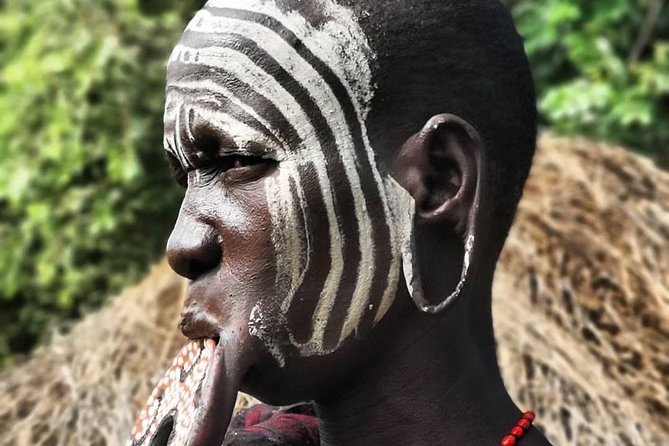
Konso is one of the most visually distinctive parts of the route. The area is known for carefully built agricultural terraces, colorful clothing, and engraved wooden statues used as grave markers. The terracing gives you broader scenes to work with, while the carved figures and clothing invite closer compositions.
I would plan your camera bag carefully for this day. Keep one versatile lens ready for village scenes and people, then change lenses only when you have a clean, respectful place to do so. Dust, heat, and repeated loading in and out of the 4×4 can become tiring, so simple gear often beats a heavy setup.
After lunch, you continue to Jinka and check into NASA Hotel. Jinka functions as a base for the next day’s visits. Expect dinner and a night at the hotel rather than a late photography session.
Same backdrop, a different kind of shoot:
- Silfra: Fissure Snorkeling Tour with Underwater Photos
★ 4.9 · 2,731 reviews - Paris: Private Photoshoot at the Eiffel Tower
★ 4.7 · 2,636 reviews - The ‘OG’ Manatee Snorkel Tour with In-Water Guide/Photographer
★ 5.0 · 2,539 reviews - Paris: Eiffel Tower Photoshoot
★ 4.7 · 2,351 reviews
Mago National Park and the Mursi visit
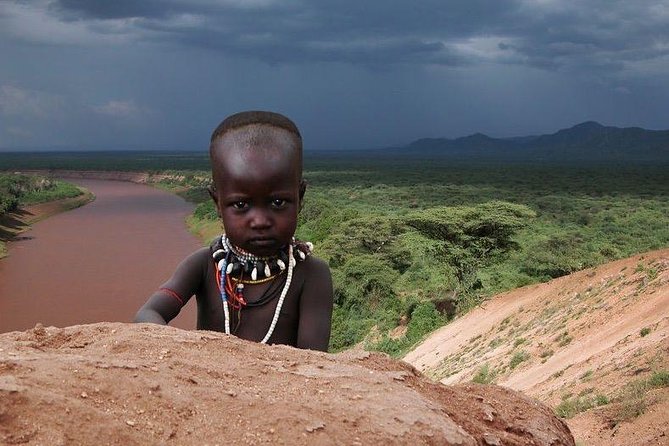
From Jinka, the road to the Mursi area is about 55 kilometers. The visit is connected with Mago National Park, and the Mursi are widely known for the large clay plates worn in the lower lips of some women. This is a place where your conduct matters greatly.
Portrait photography can become uncomfortable when a camera is treated as a passport to constant access. Your guide should help explain local expectations and photography fees. Slow down, ask before photographing, and remember that a technically striking portrait is not automatically a good travel photograph.
The route returns to Jinka for lunch, followed by a visit to a nearby Ari village and museum. This adds useful context after the Mursi stop. Instead of treating the morning as a checklist of unusual appearances, you can use the afternoon to understand another local community and place the region’s cultures in a broader setting.
You spend another night at NASA Hotel. Two nights in the Jinka area are practical for a photography trip, since they reduce the pressure to drive onward every evening.
Turmi and the Hamer villages
Day 5 shifts south toward Turmi, about 142 kilometers from Jinka. You stop at an interesting village along the route, check into a lodge, and have lunch before walking to a Hamer village described as non-touristic.
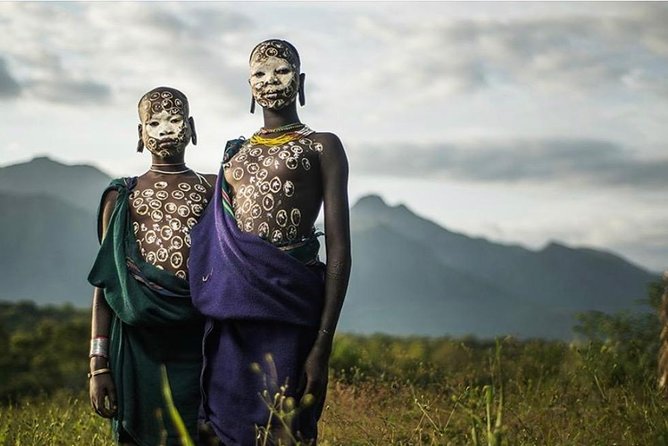
The Hamer are known for elaborate hairstyles and body painting made with clay and vegetable pigments. The patterns may cover faces, chests, arms, and legs, making this one of the strongest sections for detail work, color, and environmental portraiture. You may also find opportunities connected with cattle, farming, and ordinary village activity.
The phrase non-touristic should not be taken to mean untouched or free of visitor impact. Any organized photography visit changes the setting to some degree. Your best approach is to spend time observing first, follow local instructions, and photograph people as participants in their own lives, not as props.
The walking element is worth noting. The tour asks for moderate physical fitness, and this day combines road travel with time on foot. Bring practical footwear, sun protection, and a way to carry camera gear without making the walk harder than it needs to be.
Omorate and the Omo River by boat
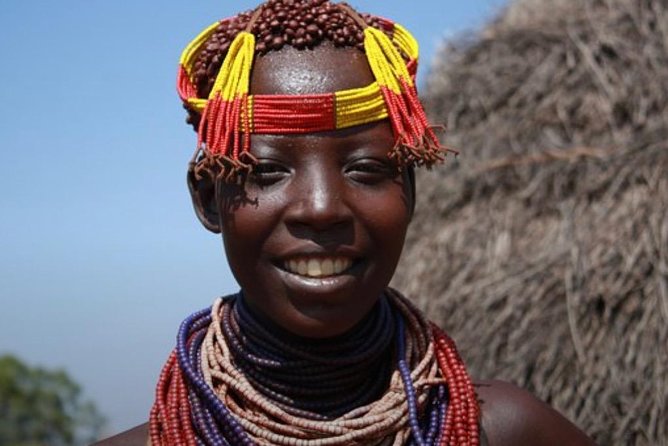
Day 6 starts early with a drive of about 75 kilometers from Turmi to Omorate. There you take a boat on the Omo River to visit a Dassenech, or Geleb, village.
This is one of the trip’s most distinctive changes of scene. The river journey gives you a different way to approach the community and breaks up the repeated pattern of road, village, lunch, and lodge. It also offers photographic possibilities connected with the water, boats, riverbanks, and daily life near the Omo.
You return to Turmi for lunch. The afternoon is free for your own plan, and you can explore another Hamer village. For a photographer, this open block is valuable. You might use it to revisit a subject, wait for better light, edit files, clean equipment, or simply rest after the early start.
The schedule lists dinner and another night at the lodge. Alcoholic drinks are not included, and the trip’s included meals are breakfast for eight days, so check exactly which lunches and dinners are covered when you confirm the booking.
The long return through Konso and Arba Minch
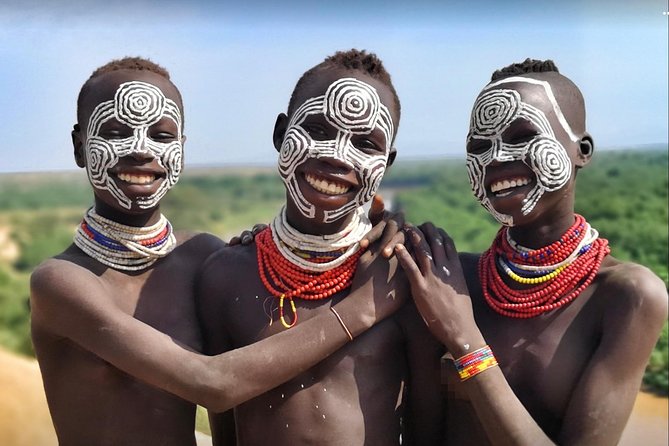
Day 7 is mostly a transfer day, with a drive of about 290 kilometers from Turmi to Arba Minch. Lunch is planned in Konso before continuing to Arba Minch for a lodge stay and dinner.
After several days in remote communities, this long road day can feel demanding. It is also part of the price of reaching the Omo Valley by land. The itinerary does not pretend that the region is easy to access, and the 4×4 is essential for connecting the stops.
Use this day to back up photographs, charge batteries, clean dust from equipment, and keep essential items within reach. Do not pack everything deep in your luggage. Roads and temperatures can make a small amount of preparation very helpful.
Addis Ababa and the final Ethiopian dinner
On Day 8, you drive back to Addis Ababa. The return is not described as a short transfer, so expect to arrive in the late afternoon. An optional stop at the Tiya and/or Melka-Kuntare archaeological sites may be possible on the way, but you should confirm whether time allows both.
The trip ends with a traditional Ethiopian dinner at a restaurant such as Habesha 2000 or YOD Abyssinia. You can expect Ethiopian food and drinks, along with live music and dance, before the airport drop-off.
This is a fitting finish because the journey begins and ends in Addis Ababa, while the middle days focus on the southern communities. Still, keep your departure timing in mind. The schedule places the farewell dinner before the airport transfer, so confirm the exact sequence against your flight time.
What the $2,933 price really gets you
At $2,933.08 per person, this is not a cheap southern Ethiopia tour. The value depends on what you want. You are paying for an eight-day private expedition, an air-conditioned 4×4 Land Cruiser, local driving and guiding, accommodation, entrance fees, breakfast, village access, and the logistical work needed to reach a remote region.
The price looks stronger for photographers who would otherwise need to arrange several vehicles, hotels, local guides, park access, and regional transfers alone. A private group also matters. You are not competing with a large coach for time at a village or trying to keep up with strangers who have no interest in photography.
You must budget beyond the advertised rate. The domestic flight is excluded, as are photography fees and alcoholic drinks. The description also confirms breakfast for eight days, but you should clarify the exact lunch and dinner coverage before paying. These extras can affect the final cost.
The route is most valuable when you use its time well. If you want a quick highlight tour with little road travel, the price will feel high. If you want repeated access to several communities and are prepared for basic, tiring travel, it becomes easier to justify.
Who should book this expedition?
I would choose this trip if you care more about access and photographic opportunity than comfort. It suits photographers who can handle long drives, early mornings, village walking, changing conditions, and the need to work respectfully around people.
It also suits a small private party with a shared interest in photography. The format lets you discuss timing and subjects with your guide rather than follow a fixed large-group schedule. One guide connected with previous departures was Dr. Turmi, who was praised for balancing information with a relaxed manner. Guide assignments can change, so confirm who will lead your dates.
You should think twice if you dislike rough road travel, need a polished hotel every night, or want a tightly guaranteed list of ceremonies. The route includes cultural visits and opportunities to attend rituals, but ceremonies depend on local timing and circumstances. The region’s remoteness is the attraction, and it is also the source of the discomfort.
The tour requires moderate physical fitness. Pickup is offered, mobile tickets are available, and confirmation is provided at booking. Cancellation is free up to 24 hours before the start time for a full refund. Poor weather can lead to a different date or a full refund, but changes within 24 hours are not accepted.
Should you book the Omo Valley photography expedition?
Book it if you want a serious, people-focused journey through southern Ethiopia and accept that the best photographs may require patience, dusty roads, early starts, and extra fees. The combination of Konso terraces, Mursi and Ari villages, Hamer photography, a Dassenech river visit, and time in Jinka and Turmi gives you more depth than a one-day cultural outing.
I would not book it simply to collect dramatic portraits. Book it if you are ready to ask permission, pay the required photography fees, listen to your guide, and give communities the respect they deserve. For the right photographer, the long drives and basic logistics are a fair trade for access to one of Ethiopia’s most distinctive regions.
FAQ
Where does the tour start?
The tour starts at Bole International Airport in Addis Ababa, Ethiopia. The listed start time is 6:30 am.
How long does the experience last?
The expedition lasts approximately eight days, beginning in Addis Ababa and ending with an airport drop-off after the farewell dinner.
Which communities are included?
The route includes visits connected with the Dorze, Konso, Mursi, Ari, Hamer, and Dassenech, also called Geleb, communities. The overview also refers to Kara and Nyangatom, so confirm the final route and community visits for your departure.
Is the domestic flight included?
No. The domestic flight from Addis Ababa to Arba Minch is not included in the advertised price.
Are photography fees included?
No. Photography fees are listed as an extra cost. Entrance fees are included.
What type of vehicle is used?
Transport is provided in an air-conditioned 4×4 Land Cruiser.
Is this a private tour?
Yes. The activity is private, meaning only your own group participates. It is suitable for people who want to focus on photography and manage their time as a group.
What happens if the weather is poor?
The experience requires good weather. If it is canceled because of poor weather, you will be offered another date or a full refund.
Just added around the world
- ️ Hanoi Instagram Tour: Most Famous Spots (Private & All-Inclusive)★ 5.0 · 12 reviews
- Hanoi Explorer Photo Tour★ 5.0 · 40 reviews
- Into the Thieves Market Hanoi Photo Tour★ 5.0 · 10 reviews
- Cultural Hanoi Photo Walk – A Street Photography Tour★ 5.0 · 6 reviews
- Hanoi Street Photography with a Pro – Phone & Camera★ 5.0 · 27 reviews
- ️ Ha Long Bay Instagram Tour: Most Famous Spots (Private & All-Inclusive)★ 4.5 · 4 reviews
- Private Hanoi Photoshoot – Iconic Spots & Hidden Gems★ 5.0 · 16 reviews
- 4 hour individual photo tour of Hamburg★ 5.0 · 2 reviews
Photo Tours & Photoshoots, side by side.
#1 Northern Lights Tour In Iceland from Reykjavik with PRO photos
Read our review →
️ Bali Instagram Tour: The Most Famous Spots (Private & All-Inclusive)
Read our review →
Silfra: Fissure Snorkeling Tour with Underwater Photos
Read our review →
The ‘OG’ Manatee Snorkel Tour with In-Water Guide/Photographer
Read our review →